

North-East landscape of India comprises the states of Arunachal Pradesh, Assam, Manipur, Mizoram, Nagaland, Sikkim, Tripura, and hilly districts of northern West Bengal. This landscape can be further classified as North Bengal Dooars, Brahmaputra flood plains, and North-East hill region. It is situated alongside international borders with Nepal, Bhutan, People’s Republic of China (China occupied Tibet), Myanmar, and Bangladesh, and connected to peninsular India through a narrow strategic stretch, Siliguri Corridor. As the landscape shares 90% of its boundary with neighbouring countries, it is one of the most important geo-strategic locations of the country. This landscape also is home to more than 200 ethnic and indigenous communities. Other than the cultural plurality, North-East and Brahmaputra flood plains landscape is diverse with natural resources.
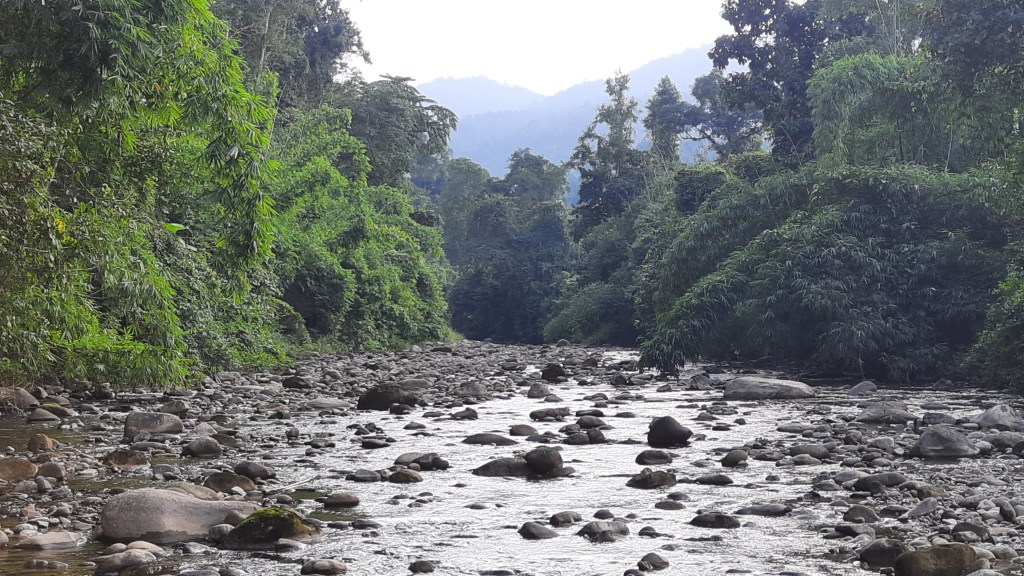
Since the landscape shares porous international borders in many parts with neighbouring Southeast Asian countries, it is comparatively easy for poachers to operate in this landscape. In the recent past, the skin and body parts of two tigers were seized from Dibang Valley in Arunachal Pradesh and Itakhola on the Assam-Arunachal Pradesh border. Direct exploitation of tigers from this already low abundant population, coupled with habitat fragmentation and biotic pressure, could eventually deplete the tiger population in this landscape. Other than rapid development causing habitat fragmentation and the poaching of wild tigers and prey, the invasion of weeds in the natural habitat is a severe threat to this landscape.
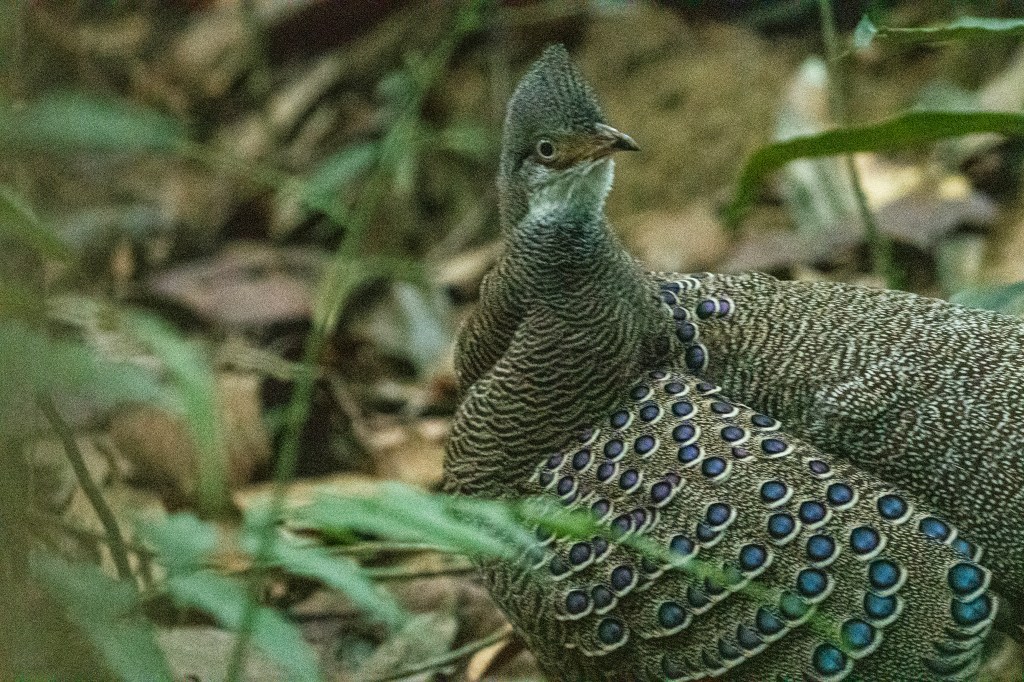
Grey peacock pheasant at Dehing Patkai
Between 12th and 18th November of 2023, I did intense biodiversity exploration in around 400 km stretch consisting of Diban camp of Namdapha and its surrounding areas including Haldibari, Highiand and Kamala Valley camp, Dheing Patkai National Park and Maguri beel as well as adjacent grasslands of Dibru Saikhowa National Park. Around 2:30 PM, we started our journey from Dibrugarh airport and reached at our homestay in Digboi at 6:00 PM. I was with a reputed bird watching guide of North-East, named Palash Phukan. I was also joined by another experienced bird photographer from Pune, named Suyog Ghodke.
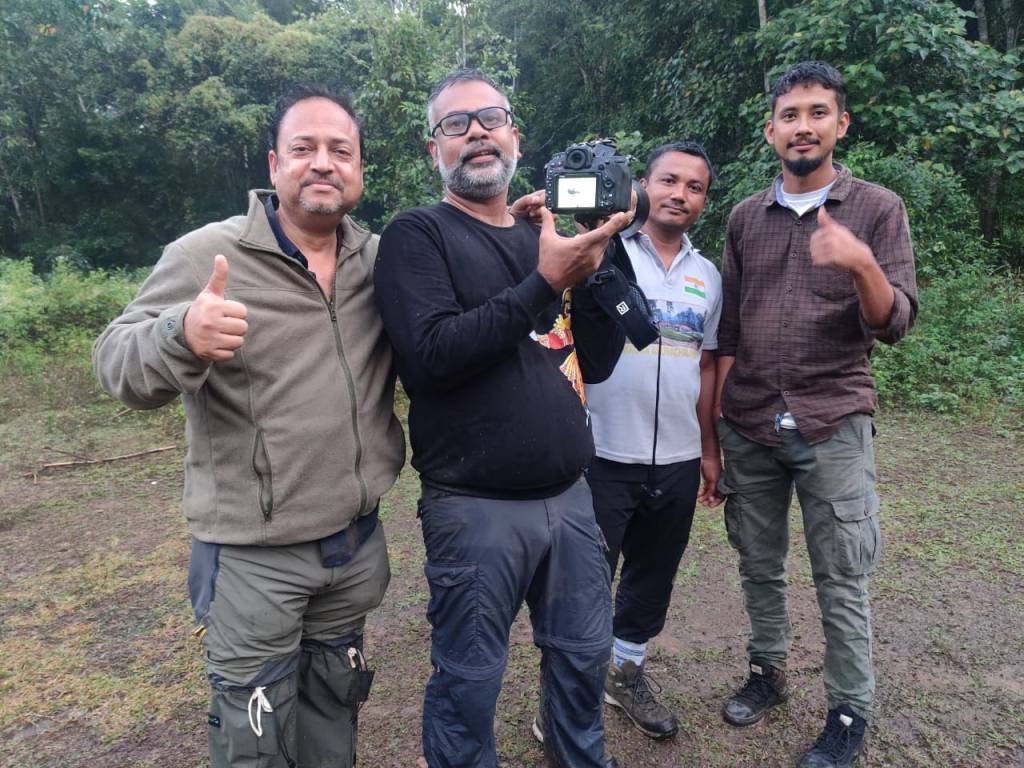
Dehing Patkai exploration team
As per schedule, after reaching close to our homestay in Digboi, we went to look for Oriental Bay owl in the forest of Dehing. Dehing Patkai National Park harbours the largest stretch of lowland rainforests in India. The rainforest stretches for more than 575 km2 in the districts of Dibrugarh, Tinsukia and Charaideo. The forest further spreads over in the Tirap and Changlang districts of Arunachal Pradesh. The Wildlife Sanctuary was also declared as Dehing Patkai Elephant Reserve under Project Elephant. After reaching at a particular patch of dense forest, which was apparently not allowed to be explored on foot, Palsh started playing call of bay owl. Within few seconds the bird started responding to that call from a nearby tree. However, before spotting the bird, Palsh’s torch light caressed through an elephant like object. In the darkness it was not possible to distinguish that object clearly from the large tree trunks in background. Nevertheless, an elephant head like curvature was vaguely noticed in torchlight.
That unclear vision mixed with fear and imagination was enough to make all of us run for our dear life and get inside the car parked around 100-200 meters away from the forest patch. Elephant is the main reason why exploring Dehing’s forest in foot in darkness is not allowed.

Ashy headed green pigeon at Dehing
Next day, we started at 6:00 AM and continued till lunch break at 1:30 PM. It was all bush walking, ascending, and descending through dense foliage of Dehing Patkai rainforest. Within an hour of our morning exploration, we got to see a male grey peacock pheasant. When we were busy in shooting that bird from quite proximity, our driver Guru sent an SOS of elephant alert through walkie-talkie to Palash. He saw a male elephant standing behind our car which was parked on the forest path and upon noticing Guru it entered deep forest, where we were busy with peacock-pheasant. Therefore, another run for the life for us and that was bit difficult and far scarier than the previous one. That time the sighting of elephant was real and forest path was more hostile because of thorny bush, thick foliage, and muddy path.
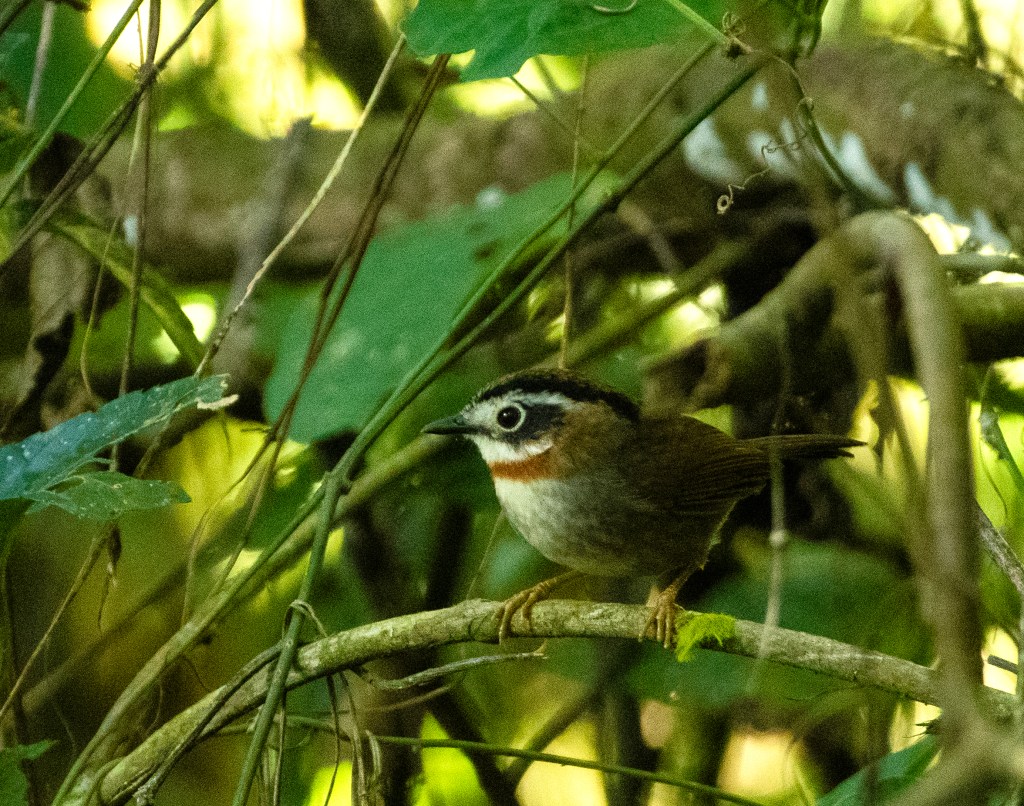
Rufus throated fulvetta at Dehing
Somehow, we came out of dense forest and reached where our car was parked. It was time for breakfast after few hours of intense bird-walk. Rest of the morning we did easy to moderate hike in the forest and spotted various birds which were first in life sighting for me, such as grey peacock-pheasant, pale capped pigeon, rufus throated fulvetta, chestnut backed laughing thrush, silver breasted broadbill, ashy headed green pigeon, blue-winged leaf bird, red headed trogon, and white spectacled warbler.
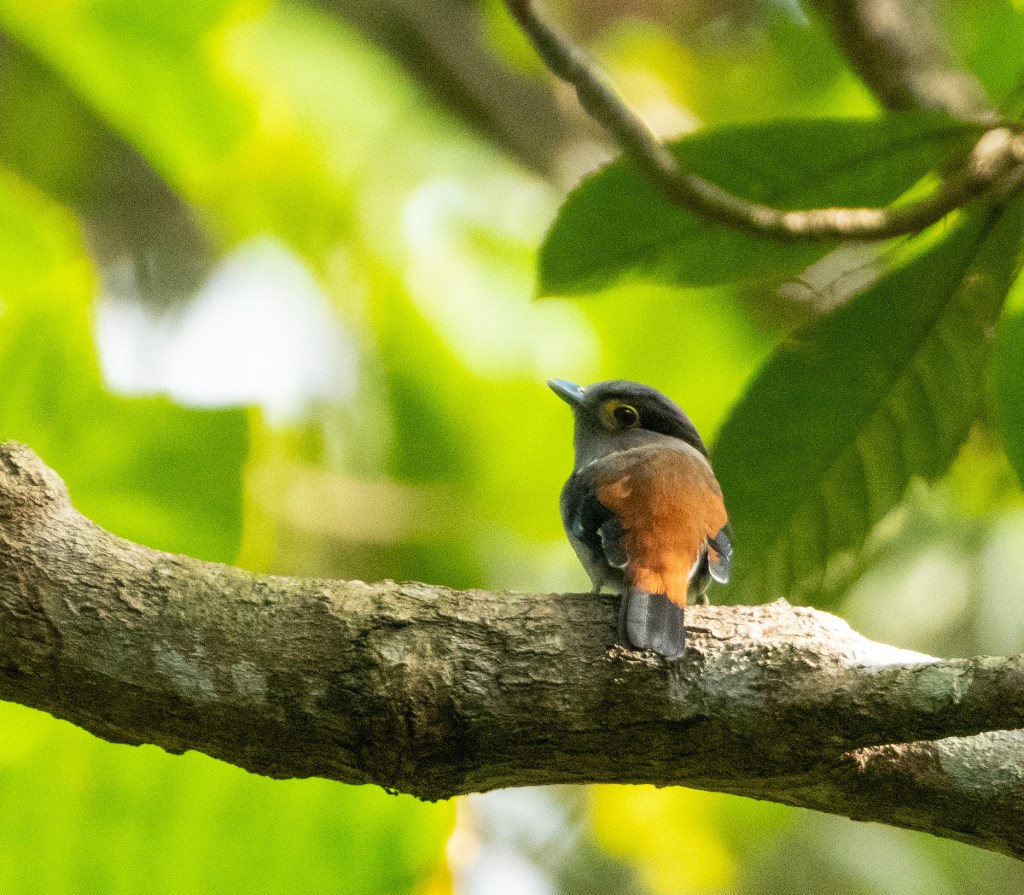
Grey-lored broadbill at Dehing
The most exciting exploration in Dehing happened on that afternoon. After a sudden heavy shower, the forest path was muddy and slippery. Therefore, ascending and descending on steep slope became quite difficult. After couple of hours’ physical effort, surviving fear of fall risks, and few actual falls on forest path we reached near a pond and were delighted by a sighting which we would like to cherish for ever. It was a male white-winged wood duck, the state bird of Assam. Decaled as Endangered by IUCN, historically, the white-winged duck was widely distributed from North-Eastern India and Bangladesh, throughout South-East Asia to Java and Sumatra. It is now extinct in Java. In India, the duck is found only in the North-Eastern part of the country, with the main concentration in Eastern Assam and adjacent areas of Arunachal Pradesh. However, in 2002 it had a population of only 800, with about 200 in Laos, Thailand, Vietnam, and Cambodia, 150 on Sumatra, notably in Way Kambas National Park and 450 in India, Bangladesh, and Myanmar. Due to ongoing habitat loss, a small population size, and because this duck is hunted for food, eggs and pets, the white-winged duck is evaluated as Endangered on the IUCN Red List of Threatened Species. In India, the key protected areas for the white-winged duck are Dibru-Saikhowa National Park, Dehing-Patkai Wildlife Sanctuary, Nameri National Park and Namdapha National Park. The white-winged duck occurs in dense tropical evergreen forests, near rivers and swamps.
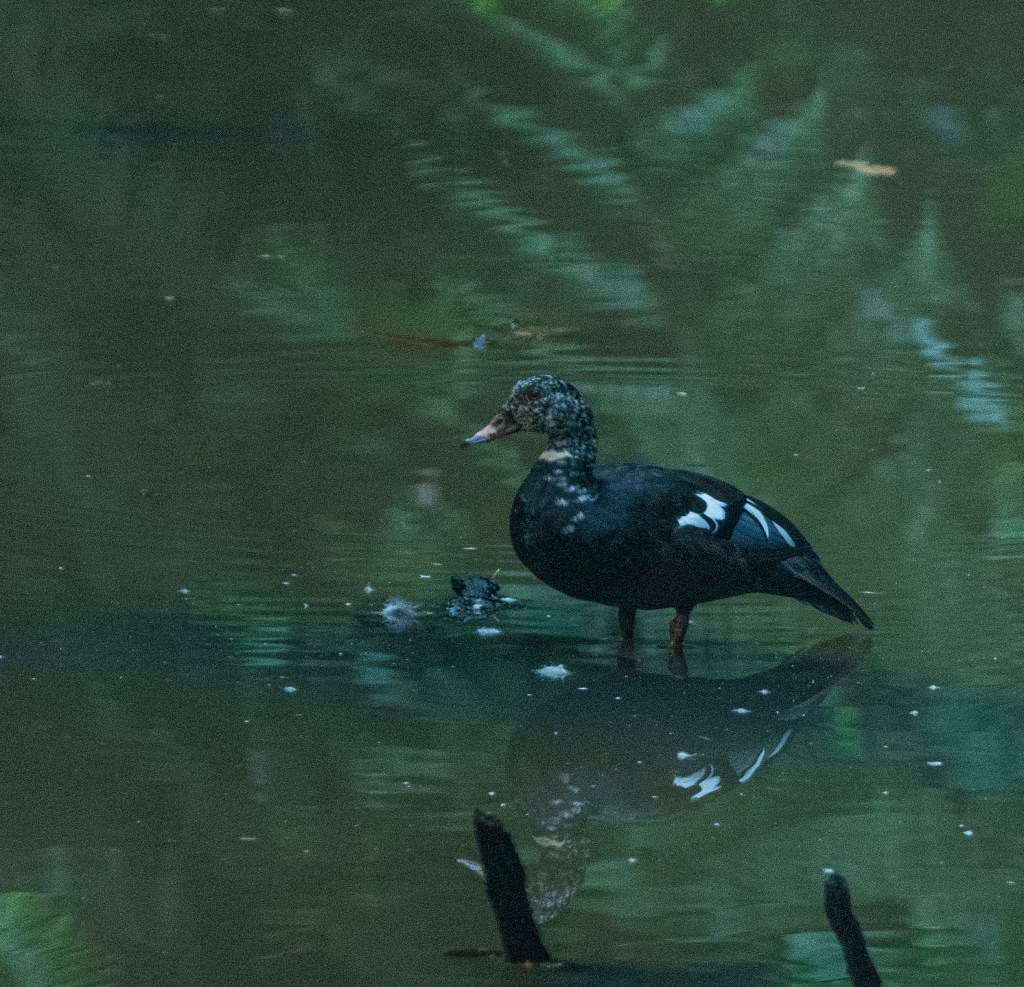
The elusive white winged wood duck at Dehing – state bird of Assam
Dehing-Patkai as a potential wildlife sanctuary was identified in late 1980s during a primate survey as “Upper Dehing Wildlife Sanctuary”. Subsequently during a study on white-winged wood duck in early 1990s, it was discovered as a globally important site for this duck and recommended to be upgraded to “Upper Dehing National Park”.
After white-winged wood duck sighting for nearly two hours we again went for bay owl when it was dark. But fear of elephant in mind did not let Palash and us to focus on that bird. Therefore, we called it a day and returned to our homestay.
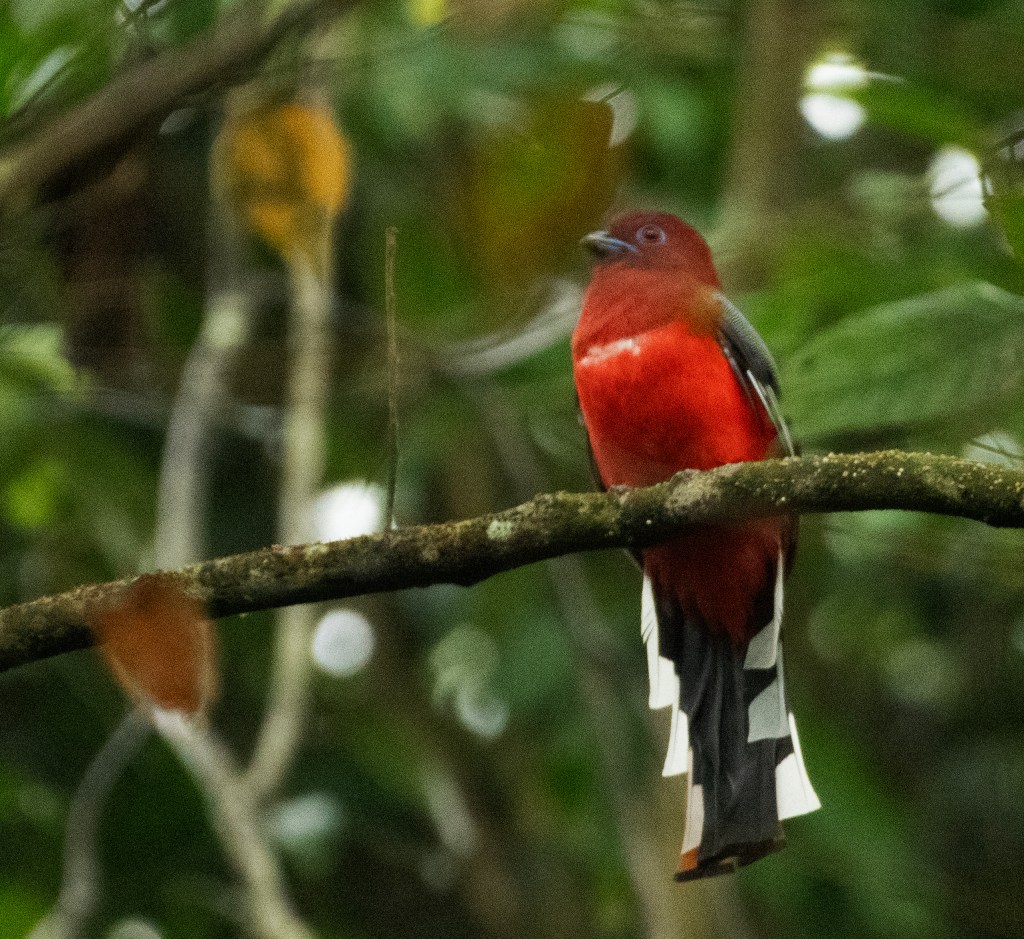
A male red headed trogon at the exit gate of Dehing Patkai National Park
Our next destination was Namdapha Tiger Reserve of Arunachal Pradesh!
 Pseudo Ecotourism