
In spite of traditionally embracing shifting or jhum cultivation by majority of Naga tribes, which promotes sustainable land use and biodiversity, the forest and biodiversity are under threat in this northeast hill land. Nagaland boasts of the tallest rhododendron and the tallest rice plant in the Guinness book of world records, Naga King chilly is a contender for being the hottest chilly in the world. There are numerous rare and endangered species of plants; Blythe’s Tragopan, the state bird and the Mithun, the state mascot are themselves rare species in the world.
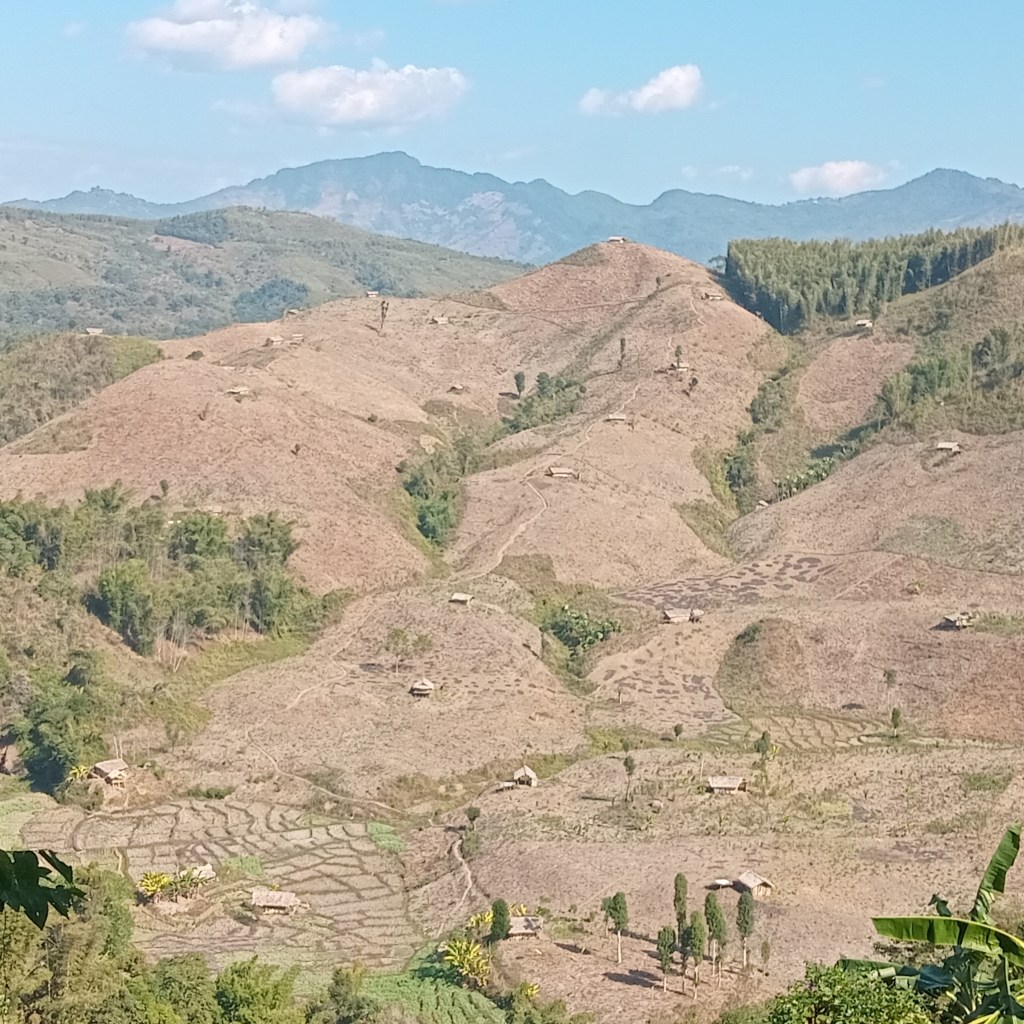
“Deforestation on a hilly state like Nagaland often irreparably damages the local ecosystem leading to the loss of native flora and fauna.”, mentioned in an article published in The Morung Express, written by Chizokho Vero. The age-old development versus environment debate has always put environment in losing side. That was not an exception in this land of indigenous people. Despite witnessing the terrible impacts in Malayasia and Indonesia, the notorious Palm Oil menace has been allowed to make an entry in this part of subcontinent as well. As per an article published on 31st August online edition of The Morung Express, by Moa Jamir, “Oil palm plantation area in Nagaland has increased from 140 hectares (ha) in 2015-16 to 4,623 ha as of March 31, 2021. As per the Department of Agriculture (DoA) document, the State Government has further set a target of 15,000 ha for its cultivation. With the Union Cabinet approval for the implementation of a new Centrally Sponsored Scheme (CSS) called the National Mission on Edible Oils – Oil Palm (NMEO-OP), with special focus on the Northeast and the Andaman region on August 18, the area may increase further.”
According to this article, Member of Parliament from Nagaland, Ms. Tura Agatha Sangma, wrote a letter to Prime Minister of India expressing her concerns over imposing this programme, by stating, “introduction of the “foreign species” in the region would create irreparable ecological imbalance, distort the ground water table and “wreak havoc on the social fabric” in the pre-dominantly tribal community-based society.”
“Large-scale mono-cropping cannot and will not be sustainable for Nagaland’s already vulnerable biodiversity. Clearing large areas of forests and growing the same type of crop/plant will annihilate the remaining diverse species of flora and fauna, that too as identified by the world are endemic and found nowhere in the planet,” asserted Abokali Jimomi, who promotes local products, organic and sustainable farming, as mentioned in Moa Jamir’s article.
India is the world’s largest importer of palm oil, hence one of the main contributors of forest and biodiversity loss in Malaysia and Indonesia. There is a very interesting research paper published by Ward Berenschot and others from Royal Netherlands Institute of Southeast Asian and Caribbean Studies (KITLV), in May 2022, Volume 31 of Geoforum. The title of paper is “Anti-Corporate Activism and Collusion: The Contentious Politics of Palm Oil Expansion in Indonesia”. The authors studied and documented 150 conflicts between rural Indonesians and palm oil companies in four Indonesian provinces (West Kalimantan, Central Kalimantan, Riau and West Sumatra). They found that palm oil conflicts generate a particular ‘rightless’ form of collective action. Instead of invoking legal provisions or rights, communities often avoid formal institutions while adopting largely accommodative forms of protest aimed at improving their bargaining position vis-à-vis companies. Despite regular and intense protests often directed at local governments, their study found that in 68% of the studied conflicts communities fail to address their grievances. Authors’ argument was that this limited success is not just due to the inadequacies of legal frameworks but also to the way in which Indonesia’s informalized state institutions foster collusion between powerholders and palm oil companies. Such collusion has facilitated the repression of protests and undermined the effectiveness of conflict resolution mechanisms.
Thus, the crony capitalism played a definitive role in such large-scale ecocide caused by the palm oil menace. The same argument could be applicable for Nagaland and other part of Indian northeast hill as well. In the 24th June 2024, online edition of Northeast Live, an alarming news was published stating that state of Meghalaya has lost 17,100 hectares of forest land in six years from 2014 to 2020, as announced by H.C. Choudhary, the Principal Chief Conservator of Forest of the state. In another report published in 22nd December 2024, online issue of Business Standard, Meghalaya saw an 84 square km decrease in forest cover between 2021 and 2023 as per latest India State of Forest Report (ISFR). The report also says, except for Sikkim, which reported an increase of 2 square km forest cover, all other states in the northeast region witnessed a reduction of the area under forests.
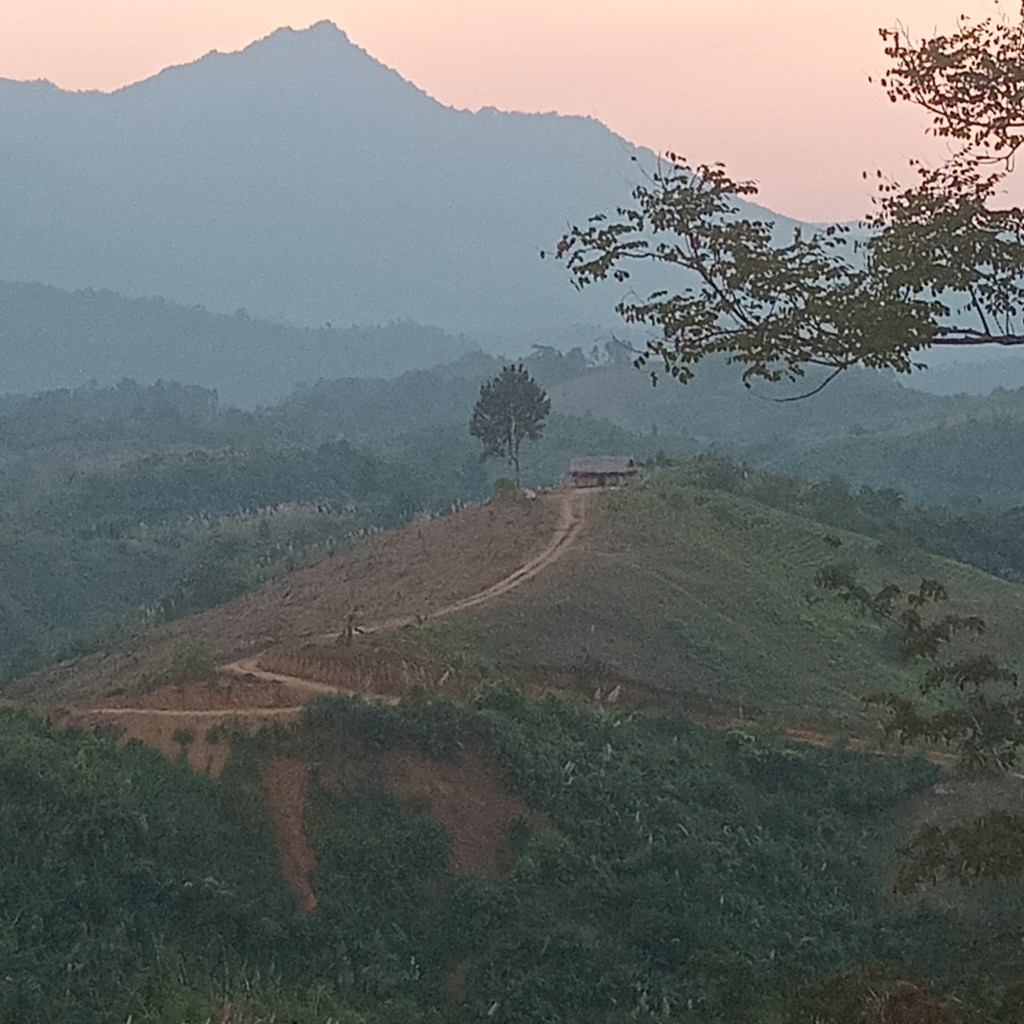
The Business Standard report mentioned that the ISFR study did not specify what caused the loss of forest cover in Meghalaya, forest officials in the state said human activities, including agricultural expansion, increased settlement and infrastructure development are suspected to be the reasons. However, in a subtle way the report indicated towards jhum cultivation, as one of the probable contributing factors – “Widescale jhum cultivation holds cultural and economic importance for local communities; its ecological costs are immense.” Exactly what British government did in colonial India to cover up their uncontrolled timber logging and ban jhum cultivation in order to increase yield of crops.
However, I saw through my own eyes what caused and still causing the loss of forest cover in Meghalaya, when I explored upper Shillong, Mawphlang, and Cherrapunji between 5th and 7th January 2025 with my local nature guide Pallav Pranjal. We started from Guwahati at as early as 4:30 am to ensure reaching at Upper Shillong area, just before dawn. The forest on the both side of Shillong peak hiking trail, in Ri Bhoi forest division of Meghalaya, was covered with early morning light mist. The presence of mist was a barrier for winter morning sunshine to caress the canopy of northeast rain forest. That made the weather chilly and us a bit reluctant in exposing our fingers to operate camera. However, a repeated and fanatic, shrill “queek, queek, queek” sound put us on alert. It was elusive Assam laughing thrush. Upon hearing the call, we aimed our cameras to the source of it. But the bird was too quick to get captured. We saw it flew across from one aide of our trail to another side. After few unsuccessful attempts of locating the bird one more time, we decided to ascend another trail through dense bush and thorny forest floor which was still wet due to last night’s dew, hence slippery as well. We had to stop again after a while upon hearing sound of flattering wings and noticing rapid movement through thorny and leafy lower branches of a shrub. That was a flock of rusty-capped fulvetta. And we were lucky that time to get about thirty minutes or more to take enough photos of the flock.
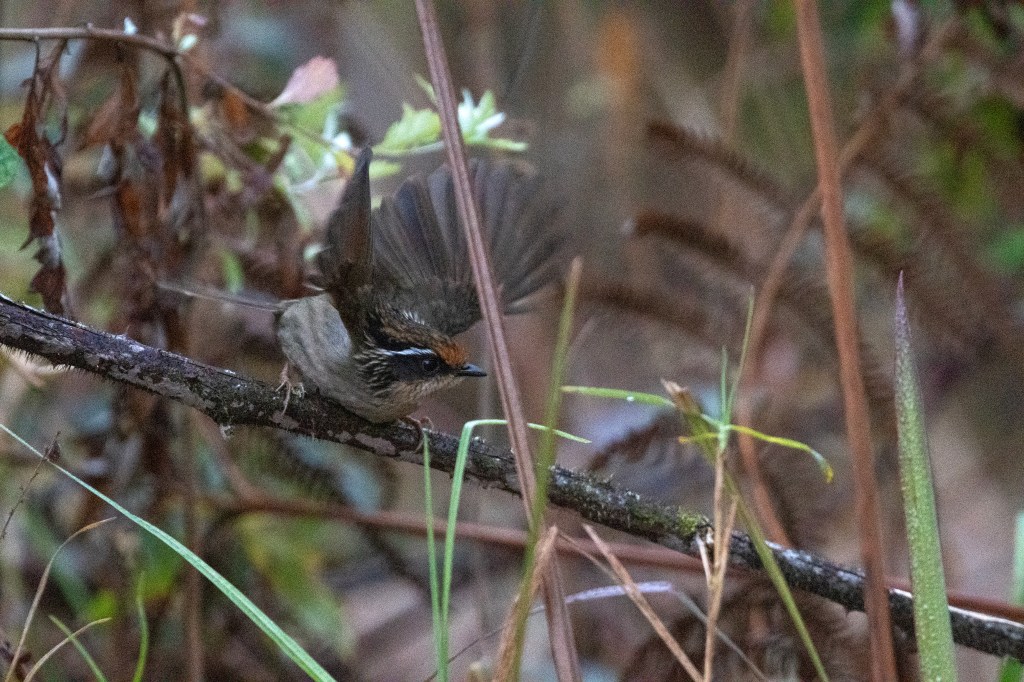
Couple of hours later we started driving again towards Mawphlang and there we explored the sacred forest and the surrounding forests of Lawkyntang, up to noon. The exploration was quite productive with some fabulous sighting and shooting of grey sibia, crested finch bill, spot breasted parrotbill, spot breasted scimitar babbler and few other birds. After that it was time to take break from field work and checking in hotel for shower and lunch. Around 2 pm again we started our journey towards Sohra side of Cherapunji.

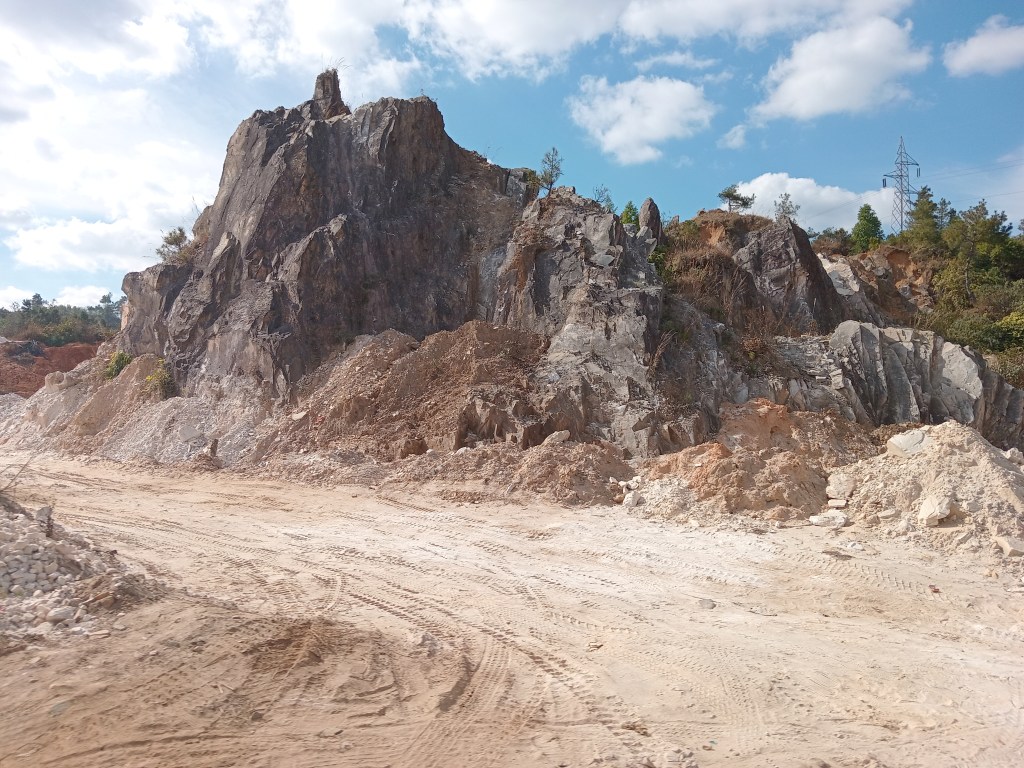
The road travel showed me the reality behind reported forest cover loss in that part of India. Actually, it was Pallav who drew my attention towards ongoing road construction and various quarrying activities. The mountains appeared as wounded after losing their skin and flesh. The green cover was completely gone from most of the hills on both side of the under-construction road. The red and white exposed rocks appeared as bloody remains of flesh attached with skeleton of once alive mother nature. Pallav told me, these activities have caused loss of many of his erstwhile birding spots, which were important for spotting parrot bill and scimitar babbler.
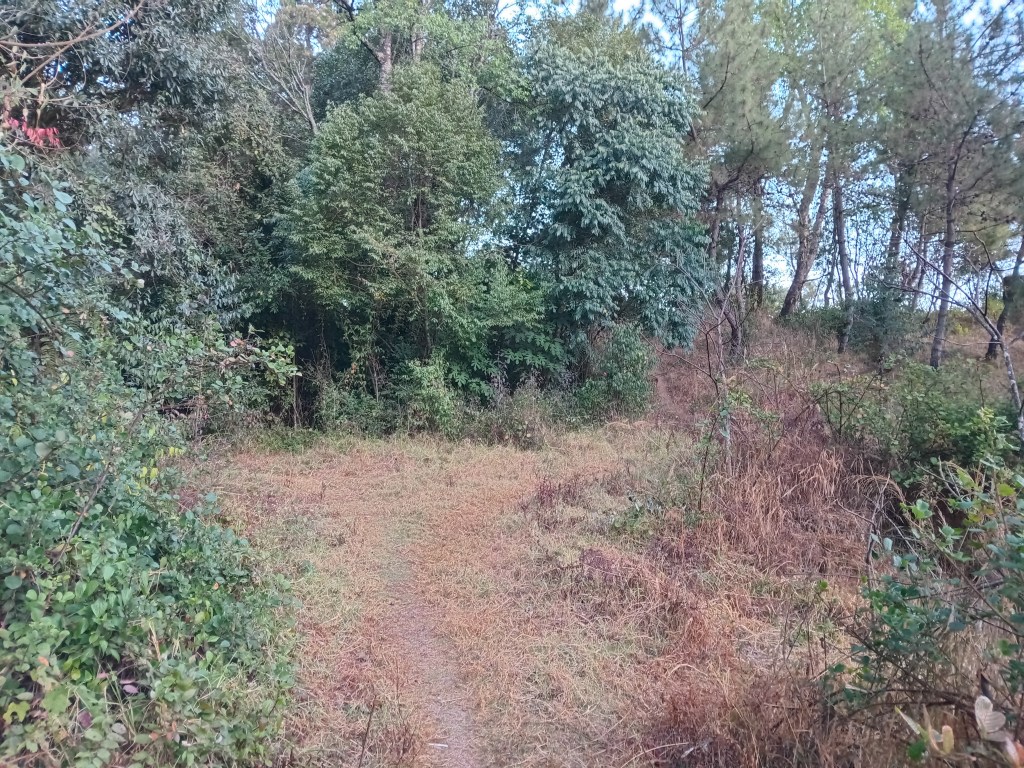
To find other birding sites, he had to explore around 150 km around Mawphlang. Although he was eventually able to spot a stunning tawny breasted wren babbler in Cherapunji, and we both could observe and take some very close shots of the bird for good 10-15 minutes. But he also mentioned that, earlier he used to know at least twelve different spots for this bird. Now, only one out of those twelve spots exist, where we could see the bird. In a research paper titled as, Relentless Mining in Meghalaya, India, published in Conservation Science, September 2013 issue, authored by Kiranmay Sharma and Pramod K Yadav, it was mentioned that, “Environmental sustainability of rural areas in Meghalaya has been marred by indiscriminate exploitations of natural resources, mainly mineral deposits”. According to the authors, Meghalaya is rich in large deposits of coal, limestone, gypsum and clay, including kaolin, glass, sand, quartz and feldspar. Local people of Meghalaya and migrants from neighboring states and even from Bangladesh have started mining to survive, putting increased pressure on land and water supplies of this state. The mining activities have brought in the desired effect of economic growth but on the other hand, affected the environment in a variety of ways, which contributed to its degradation. In this paper the authors have presented an interesting observation form their study on adverse impact of coal mining in plant species composition in Garo hills of Meghalaya. The study has shown, in three different sample study areas of Garo hills, in the unmined areas the tree species composition is 113, whereas in the mined areas the composition is an alarming 76. For shrubs the numbers are 39 and 36 respectively, and for herbs the numbers are 72 and 68 respectively. Minning activities also bring air and water pollution which results in the loss of top fertile soil. Hence the lush green mountains of Cherapunji now started appearing as rotten dead bodies with exposed flesh and bone. In the first climate change assessment report published by Ministry of Earth Sciences, in June 2020, pointed out decreasing trend in rain fall (the annual mean rainfall for the period 1973–2019 showed decreasing trends of about 0.42 mm per decade.) in this landscape, which is otherwise known as wettest place of the world.
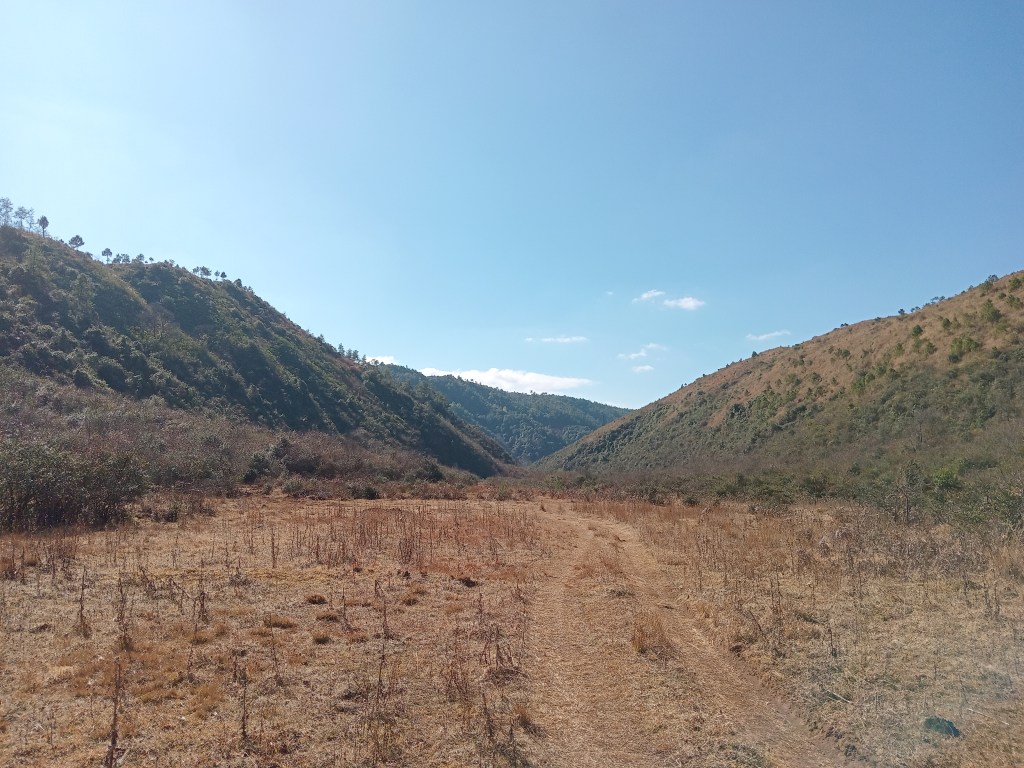
The northward moving moist winds from the Bay of Bengal passing over the plains of Bangladesh are forced to converge in the narrow valleys of the Khasi Hills with orography providing forced ascent that causes condensation, formation of clouds resulting in rain on the windward side of the slope. But now we are losing this orography due to destruction of mountains by mining activities. Hence, this reduction of rainfall. This trend of rainfall was also resonated in, a very disappointed Pallav’s voice. “There is rapidly decreasing mountain and forest and decreasing rainfall. I would take Meghalaya out very soon from the itinerary of my birding ecotourism.”

Despite such huge loss of forest cover and habitat, in those three days in Meghalaya covering ten different birding spots, we sighted around 35 avian species including tawny breasted wren babbler, rusty capped fulvetta, grey sibia, spot breasted parrotbill, spot breasted scimitar babbler, flavescent bulbul, crested finch bill and rufous crowned prinia. Therefore, there is no denial about the inclusive ecotourism potential of this state. Unfortunately, either due to rampant growth of palm oil cultivation or indiscriminate mining activities, the places with huge inclusive ecotourism potential are facing this challenge of mass destruction of ecological habitat – the ecocide. And the crony capitalism is funding this ecocide.
 Pseudo Ecotourism