
As mentioned in the portal of Convention on Biological Diversity, Madagascar is a megadiverse country with a high concentration of endemic species. Its ecosystems include many types of forests, savannah, steppes, rivers, lakes, wetlands, mangroves, drylands and reefs. Currently, these unique ecosystems are home to approximately 12,000 species of vascular plants (96% endemic), 586 species of ferns (45% endemic), 194 species of palms (97% endemic), 1000 species of orchids (85% endemic), 389 species of reptiles (90% endemic), 278 species of amphibians (100% endemic), 282 species of birds (37% endemic), 159 species of fish (66% endemic), 104 species and subspecies of lemurs (100% endemic), 60 species of non-flying small mammals (92% endemic), 43 species of bats (73% endemic) and 13 species of carnivore (77% endemic).
Between 7th and 17th April of 2025, I explored some part of Madagascar including 16 various ecotourism destinations in wet and dry zone of the country. As per One Earth portal, the Madagascar bioregion, part of the Madagascar and Eastern Afrotropics subrealm located in the Afrotropics realm, is separated from the African continent by the Mozambique Channel dominated by humid tropical forests in the east, drylands in the south, and dry forests in the north. The bioregion contains eight ecoregions—Madagascar Humid Forests, Madagascar Subhumid Forests, Madagascar Dry Deciduous Forests, Madagascar Ericoid Thickets, Ile Europa and Bassas Da India Xeric Scrub, Madagascar Spiny Thickets, Madagascar Succulent Woodlands, and Madagascar Mangroves — with a total land area of more than 59 million hectares, making it the fourth largest island in the world.
Out of these eight ecoregions, my exploration covered four ecoregions such as Madagascar subhumid forests, Madagascar humid forests – together in general term called as wet zone and Madagascar succulent woodlands and Madagascar spiny thickets – together in general term called as dry zone.

Exploration Map between 7th and 17th April 2025
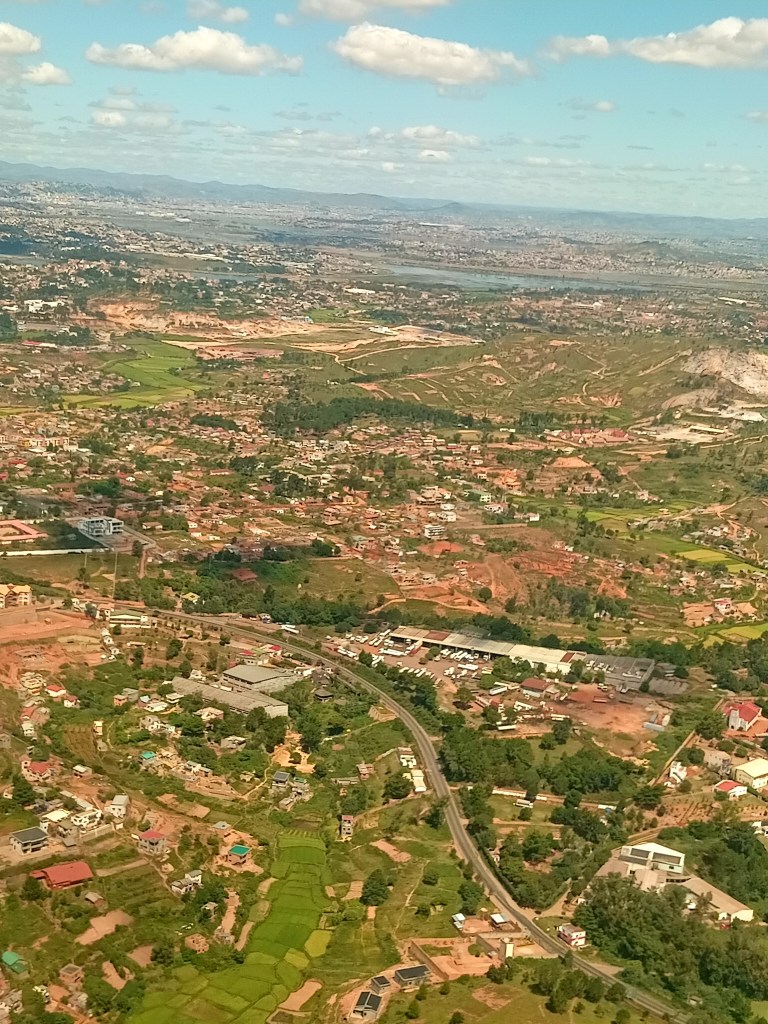
I reached Madagascar on 6th April afternoon after change of three flights, from Delhi to Mumbai and then to Adis Ababa and finally to Antananarivo, the capital of Madagascar, or commonly known as Tana. In the morning of 7th April with my local guide John Razafindrakoto from Get Your Guide, after a 65 km of road drive through country side which often turned-out as bumpy ride with multiple off roading, I reached at Mantasoa Lake. As per original schedule we were supposed to start at 7 am, but due to miscommunication between Get Your Guide and John we could eventually start at 9:30 am. In order to explain reason behind dusty and broken condition of road, on the way to Mantasoa, John was telling me, how the current Government is indifferent about infrastructure development in Madagascar. Madagascar’s overall poor infrastructure is negatively affecting its economic growth and development opportunities. While 70 % of primary roads are in good condition, about two-thirds of secondary and tertiary roads are estimated to be in poor condition (as per World Bank report, 2018). In 2018, the World Food Programme and the Global Logistics Cluster classified 64 % of roads in Madagascar as in poor driving condition, 28 % in average condition, and 10 % in good condition; seven-in-ten of the primary roads fall into the latter-most category, which is defined as being navigable throughout all seasons of the year. As natural gravel is not regularly available on the island of Madagascar, many roads are composed of sand lined with crushed stone, (de O.S. Horta, Jose Carlos; Traverso, Carlo R. (1991). “Deterioration and rehabilitation of earth roads in Madagascar”).
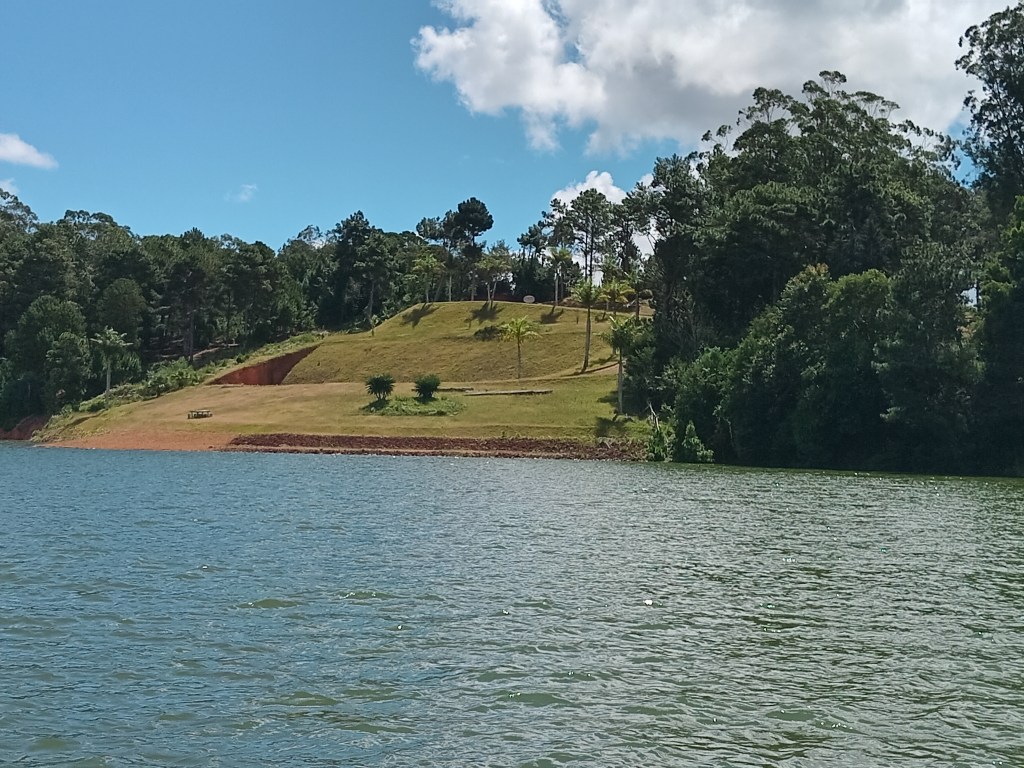
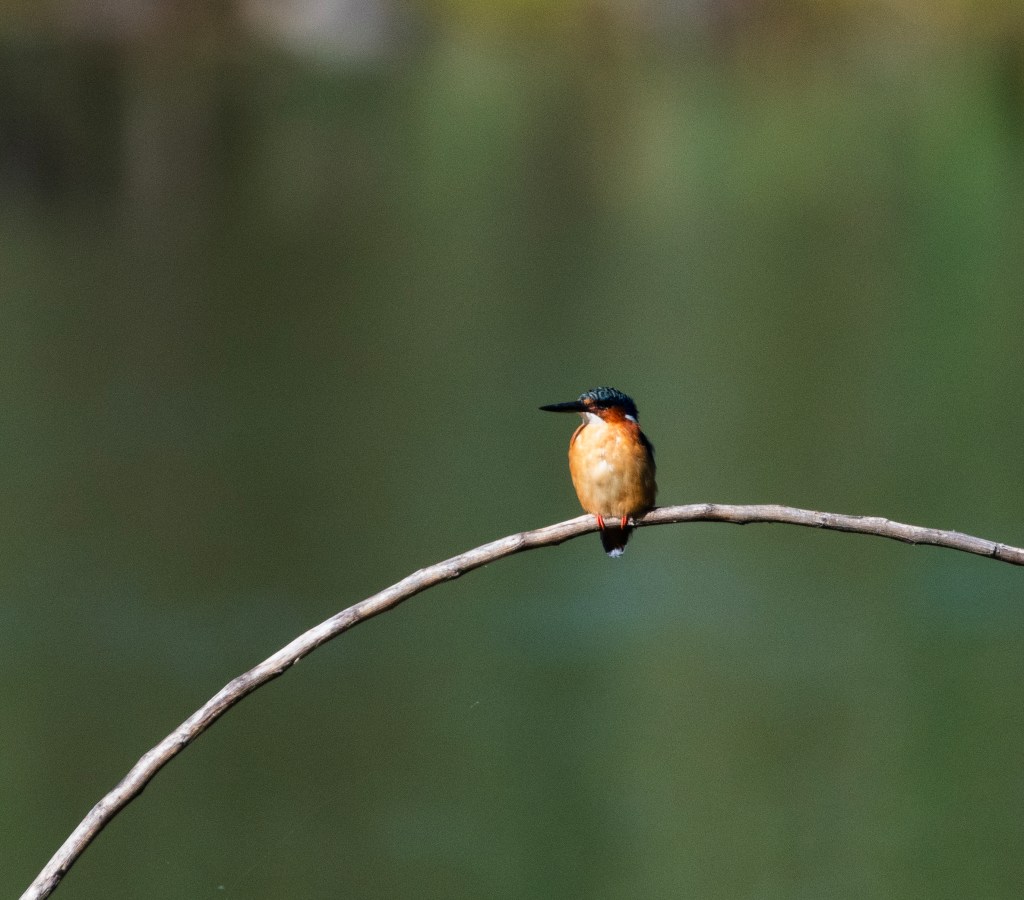
Lake Mantasoa is a large artificial lake with a surface area of 20.05 km2, created by the Mantasoa Dam on the Varahina river (an affluent of the Ikopa) in the municipality of Mantasoa, Analamanga region of Madagascar. It provides immediate irrigation for Betsimitatatra paddies in Analamanga and tabbed water for the capital Antananarivo. The water temperature reaches up to between 13–22 degrees in winter. The lake’s lack of basal microfauna and ferruginous soil provides clear water. While entering the lake area I had my first sighting of Malagasy kingfisher and African stonechat. Although my first sighting of endemic birds of Madagascar had happened in the backyard of San Cristobol Hotel near Tana airport, where I stayed for couple of days. Those were red fody or Madagascar fody and Madagascar wagtail. While crossing the lake on a boat to reach the Nosy Soa park we saw a flock of White-faced whistling duck. Approximately ten-fifteen minutes of boat ride took us to Nosy Soa Park which is a naturalized zoological garden on an island half way along the Great Lake of Mantasoa. Built on an island of one kilometer in circumference in the heart of the lake, the private reserve of Nosy Soa has for main objective the reconstitution of a natural space too often ravaged by human. The fauna and flora have been successfully reintroduced since 2002, transforming the place into a very pleasant zoological garden with an educational vocation. Five species of lemur such as ring-tailed, Coquerel’s sifaka, black and white ruffed, Eastern bamboo and common brown lemur – which were rescued from forest and some of them were bred in captivity could be easily spotted around the park. I also got so see fascinating O’Shaughnessy’s chameleon and giant hog-nosed snake, poisonous Mantella and tomato frogs. Of course, everything was in semi-wild condition kept within a naturally created and anthropogenically transformed habitat.
After all these experiences, again after a long drive through bad road, I reached at my hotel at around 7:30 pm. By that time some of our exploration team members had already arrived who were also staying in same hotel. Our main exploration was supposed to start from 9th April. I reached couple of days earlier to see few more ecotourism destinations as it was my first trip to Madagascar and only second to Africa. The exploration was organized by Bangalore based ecotourism and wildlife photography company Darter Photography in collaboration with local Madagascar based ecotour company Cactus Tour. Therefore, my good friend and CEO of Darter Photography, M.V. Shreeram was leading the exploration assisted by a PhD scholar in evolutionary biology and herpetologist Achyuthan Srikanthan. The retired Chief Naturalist of Karnataka’s Jungle Lodge Resort group (JLR), Karthikeyan Srinivasan was also part of that group.
On 8th April morning at 7:30 am, Shreeram, Achyuthan, Karthikeyan and I went for another exploration before our main exploration had started. Located in the heart of Antananarivo, the Tsarasaotra park is known for its 14 species and subspecies of endemic and threatened waterbirds. As the first private Ramsar site in Madagascar, it offers a glimpse into the richness of Malagasy avifauna. The Site consists of a lake of around ten hectares, with an islet, flood zones and wooded edge. The lake is surrounded by eucalyptus and camphor trees, as well as Juncus and Cyperus reeds. It plays an extremely important role in providing a refuge and nesting site amid the urban environment to waterbirds such as herons and ducks. Particularly during the hunting season, the Site is key to the survival of 14 threatened waterbird species and subspecies endemic to Madagascar. It is the only known site on the Malagasy highlands to host the endangered Madagascar pond heron (Ardeola idae), and it is also home to the endangered Meller’s duck (Anas melleri) and the vulnerable Madagascar grebe (Tachybaptus pelzelnii). The lake is privately owned, and a management plan is not yet available to address the eutrophication and erosion problems that are reducing the lake’s surface area and degrading its water quality.
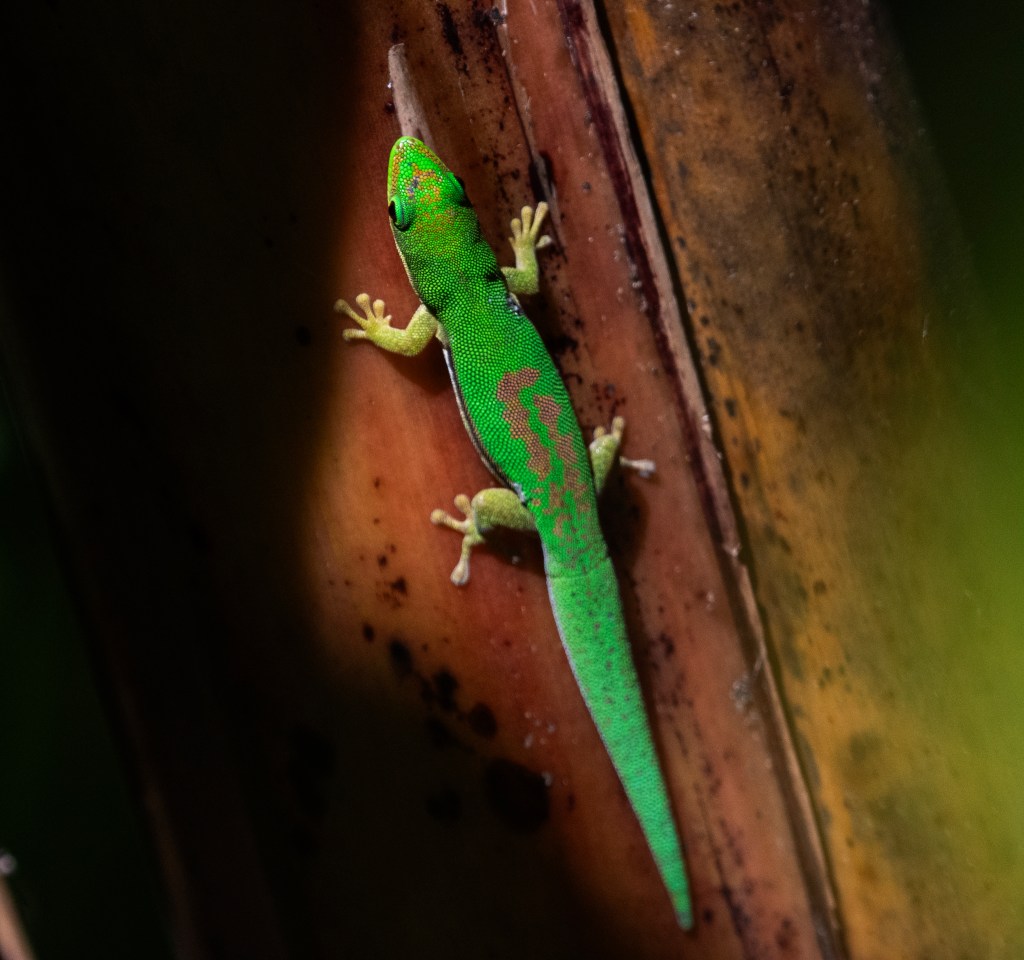
During our three hours of exploration, there we spotted various bird species including black heron, red and blue billed teal, Malagasy white eye, Madagascar hoopoe etc. Some phenomenal reptile sightings were Madagascar day gecko and Lined day gecko.
Our actual exploration started from 9th April, when we started for Andasibe at around 8:30 am. We were 8 people from India, and joined by our local Malagasy nature guide from Cactus Tour – Nandih. We reached at Andasibe at around 1:30 pm. Then after lunch we explored VOIMMA National Park until 5 pm. Then after a quick break and checking in hotel we did a couple of hours of night walk in the park between 6 pm and 8 pm.
VOI M.M.A (Vondron’Olona Miaro Mitia Ala, meaning “the villagers who love and protect the forest” is a community-managed reserve located in Andasibe, about 1.5 km from the Analamazaotra National Park, in the Andasibe region of Madagascar. Created in 2012 by local villagers, this initiative aims to offer a community-based alternative to the nearby national park, while promoting ecotourism and the conservation of primary forest. In short, VOI M.M.A is another forested area in the Andasibe region, managed entirely by the local community and adjacent to the national park. The reserve covers about 0.4 km² of protected primary forest. It is managed by the villagers, and the income generated helps fund community projects such as access to clean water and support for the local health center. The park is well known for sightings of the indri-indri, the largest of all lemurs, but visitors can also encounter the diademed sifaka, the woolly lemur, various frog species (such as Boophis pyrrhus and Boophis viridis), chameleons (Furcifer willsii, Calumma parsonii), geckos (including the famous Uroplatus phantasticus), and unique insects like the giraffe weevil. The flora is just as impressive — a dense, untouched primary forest perfect for nature lovers and botany enthusiasts.
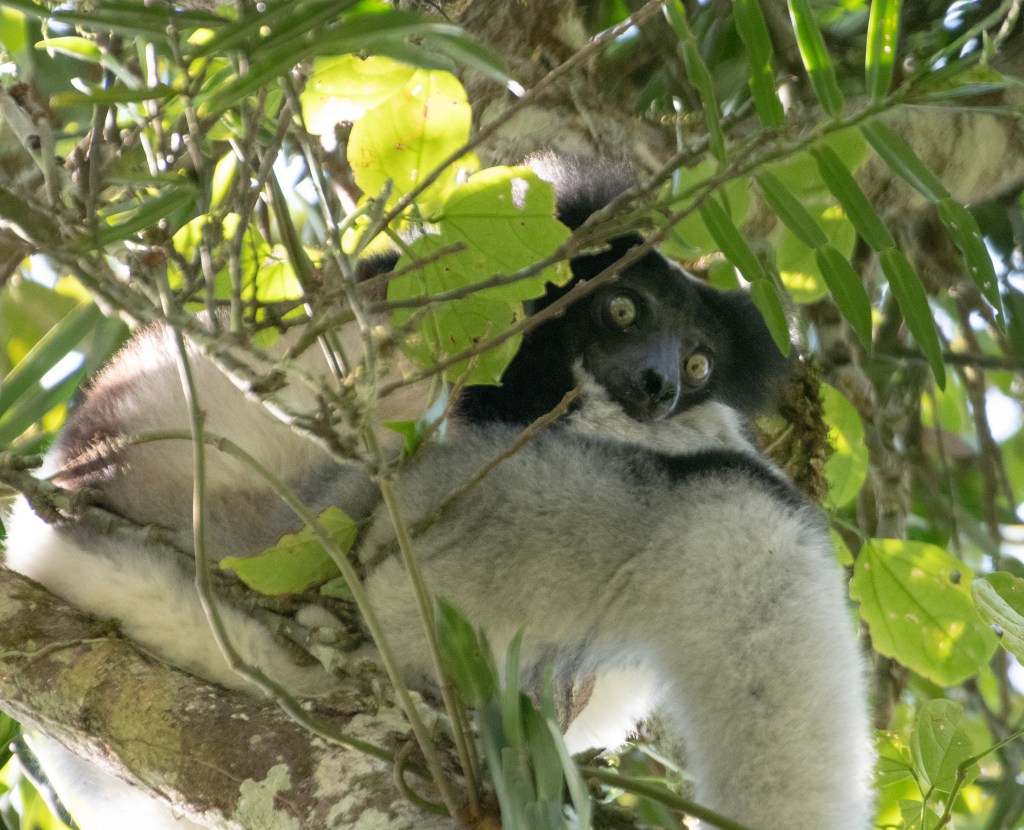
Moment, we entered into the forest during afternoon exploration, we spotted Madagascar paradise flycatcher. Other bird species spotted were Speactacled tetraka, Souimanga sunbird, Nelicourvi weaver etc. But of course, the highlight of the day was sighting of largest species of lemur survived in wild – Indri lemur. Besides that, we also saw common brown lemur. Other highlights were spotting of Parson’s chameleon, mossy leaf-tailed gecko and satanic Leaf-tailed Gecko (Uroplatus phantasticus). Among many insects we spotted there during afternoon and night exploration, the mention worthy was colorful giraffe necked weevil. During night exploration, one more lemur species were added in our lemur sighting list – the mouse lemur.
Next day, on 10th April, our exploration area was Analamazaotra National Park, from 8 am to 12:30 pm. The park is in the eastern portion of Madagascar’s Central Highlands. The neighbouring Analamazaotra Forest Station is a local reforestation effort. It adjoins Andasibe-Mantadia National Park to the north. The reserve is situated in the region Alaotra-Mangoro, close to Moramanga and Andasibe. There we had our first encounter with snakes of Madagascar – Pseudoxyrhophus snake, Fandrefiala (Ithycyphus miniatus), and Malagasy rat snake. The new lemur species added in list was Diademed sifaka.
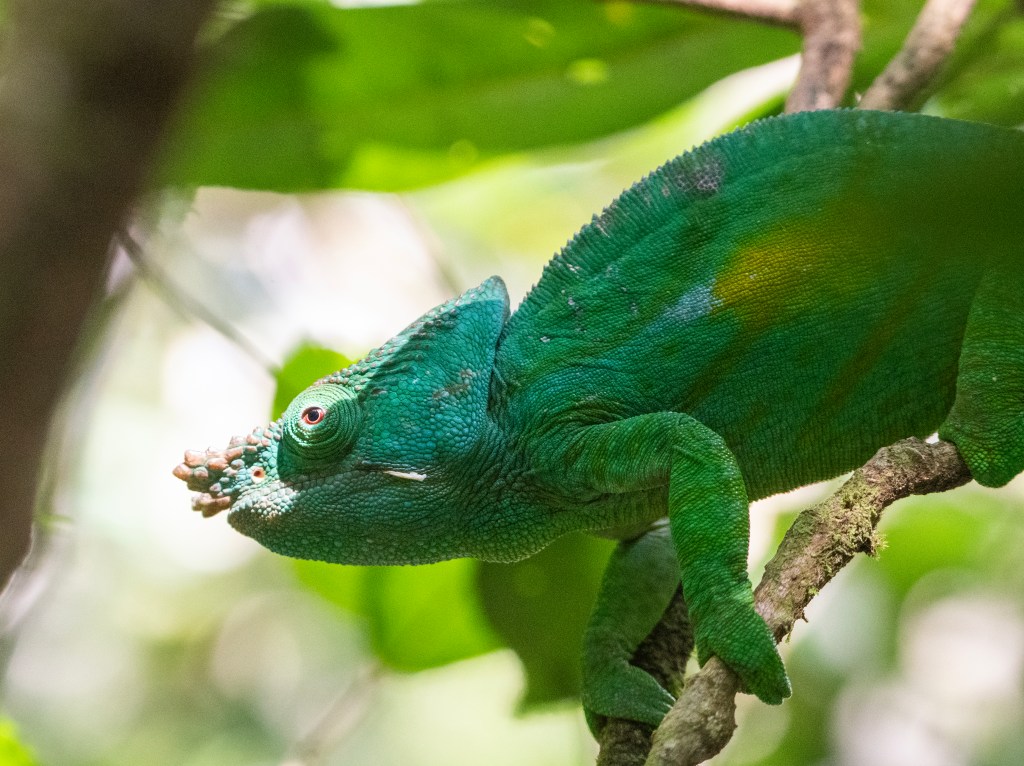
Person’s chameleon
After lunch break the next destination of the day was lemur’s island, which was similar to Nosy Soa but wilder and bigger. I said wilder because of its high canopy tree and less human intervention. Lemur island is a sanctuary for injured or unwanted pet lemurs. A wide water channel surrounds the island for their own safety. We crossed the channel in a plastic kayak, quickest kayak trip I ever did. One mention worthy bird species immediately after entering into the park we spotted was cuckoo roller. The lemur species we got to see there were black and white ruffed, red ruffed, red-bellied lemur and Eastern grey bamboo lemur.
That day we did night walk at Mitsinjo reserve near Analamazaotra, from 6 pm to 8 pm. Heterixalus madagascariensis or the blue back reed frog, Boophis Pyrrhus, golden mantella (Mantella aurantiaca), and Aglyptodactylus madagascariensis or the Madagascar jumping frog were some of the amphibians we saw there. First time we saw woolly lemur during our night walk. the Mitsinjo Reserve is a community-managed protected area, situated right next to the entrance of the Analamazaotra-Andasibe National Park. It is managed by the Mitsinjo Association, a community-based organization founded in 1999 by local residents with the goal of protecting the surrounding rainforest and wetlands. According to available information, the association also manages the Analamazaotra Forest Station independently of the national park, in collaboration with local communities. The Malagasy word Mitsinjo means looking ahead or planning the future.
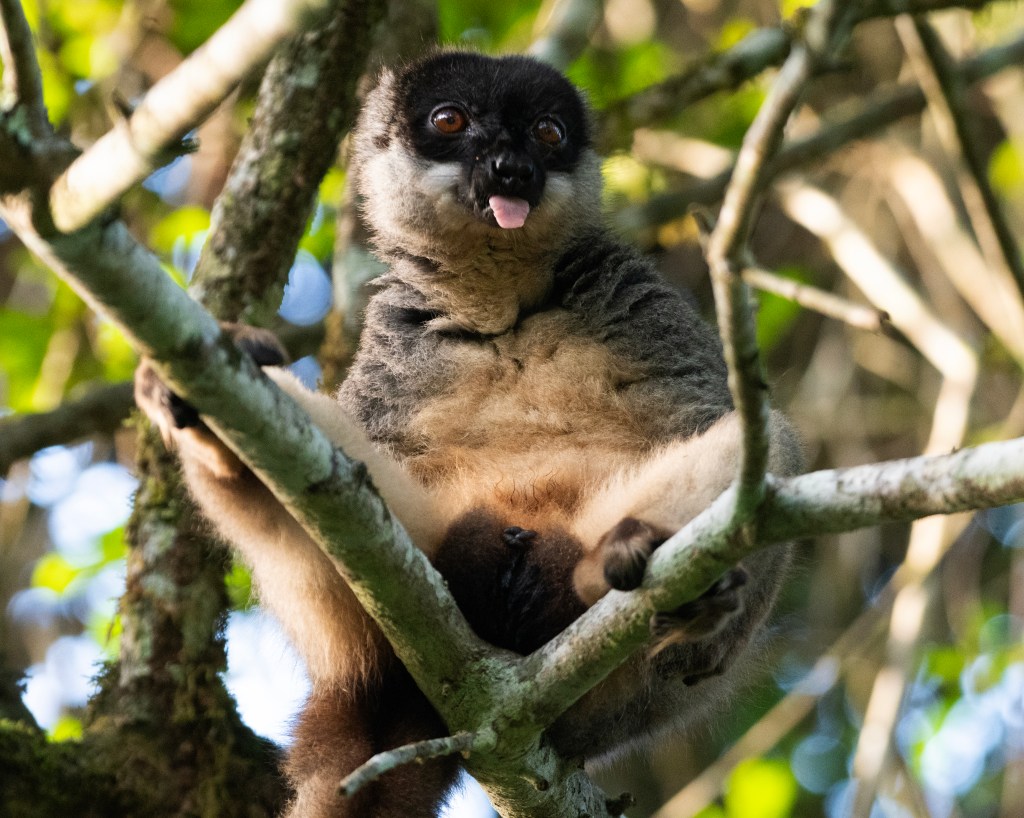
Diademed sifaka.
Next day, 11th April was all about long road trip from Andasibe to Antsirabe, via Tana. We started at 7:30 am and reached in hour hotel at 8:30 pm. In Madagascar, Antsirabe is known for its relatively cool climate (like the rest of the central region), its industry and the high concentration of pulled rickshaws or Pousse-Pousse. That reminded us about Eastern Indian city Calcutta and neighboring country Bangladesh. Antsirabe attracts around 30,000 tourists a year. After a night halt in Antsirabe next day morning we headed for Ranomafana National Park. We started at 7:30 am and on the way we stopped by at Manandona community forest by the river Manandona, at around late afternoon. It is located at about 23 km south of Antsirabe on the RN 7, a primary highway in Madagascar running 980 km from the capital Antananarivo to Tulear at the South-West coast of the country. The Manandona river flows by this town. Highest Point of the commune is the Mont Ibity with 2250m, which is a tourism attraction point for local people and a customary stoppage cum bio break point for foreigner tourists.
The majority – 90% of the population of the commune are farmers, while an additional 10% receives their livelihood from raising livestock. As they know, international tourists would stop at this point therefore, they were prepared to welcome them in an unusual way. Tourists correlate Madagascar with its diversified, colorful and unusual looking chameleons. When we arrived at that point and got down from our twelve-seater traveler, we were astonished to see around 10-15 kinds with few adult male and female locals were waiting for us, holding twigs in their hands. All the twigs had at least one chameleon each, of different color. They were providing photo opportunities to foreigners in exchange of some money. Based on the conversation Nandih had with those kids and their adult companions, all those chameleons were captured from their farming lands and kept as pet. They keep them as long as these reptiles are healthy enough to remain as photography subjects and then leave them in farm or at roadside to die. And this cycle continues for ever to support their desperate effort to survive hunger and poverty. This is how human hunger, and poverty can accelerate extinction of other non-human species. Achyuthan identified most of those colorful chameleons were Calumma glawi, already declared as Endangered species by IUCN.

 Pseudo Ecotourism