Ecotourism and Climate Change

My ecotourism and photography adventures in the terai region of India were affected by unpredictable weather conditions. I witnessed that supporting the local community in various tiger reserves in terai of Nepal, is a way to become resilient to climate crisis. The nation state of Bhutan by integrating Buddhist philosophy of mindfulness and sustainability with core principles of deep ecology, has conquered climate crisis in ecotourism. And they did so, I noticed, without depending upon a single species, like the tiger.

In December 2020 I travelled to Dudhwa tiger reserve of Indian Terai and then in April 2023 I was in Terai of Nepal. Year later I explored across length and breadth of Bhutan. All these enlightened me role of ecotourism as a climate change resilient activity.

Dudhwa National Park is a national park in the Terai belt of marshy grasslands in northern Uttar Pradesh, India. It stretches over an area of 490.3 km2 (189.3 sq mi), with a buffer zone of 190 km2 (73 sq mi). It is part of the Dudhwa Tiger Reserve in the Kheri and Lakhimpur districts.

The area of today’s Dudhwa National Park was established in 1958 as a wildlife sanctuary for swamp deer. It was notified as a national park in January 1977 thanks to the efforts of Billy Arjan Singh.[3][failed verification] In 1987, Dudhwa National Park together with Kishanpur Wildlife Sanctuary and Katarniaghat Wildlife Sanctuary was declared a tiger reserve named Dudhwa Tiger Reserve.

Forest of Dudhwa in early morning mist

Parsa National Park is a national park in the Terai of south-central Nepal covering an area of 627.39 km2 (242.24 sq mi) in the ParsaMakwanpur and Bara Districts and ranging in elevation from 435 to 950 m (1,427 to 3,117 ft) in the Sivalik Hills. It was established as a wildlife reserve in 1984 and received national park status in 2017. It is surrounded by a buffer zone since 2005 with an area of 285.3 km2 (110.2 sq mi). In 2015, the protected area was further extended by 49 sq mi (128 km2).
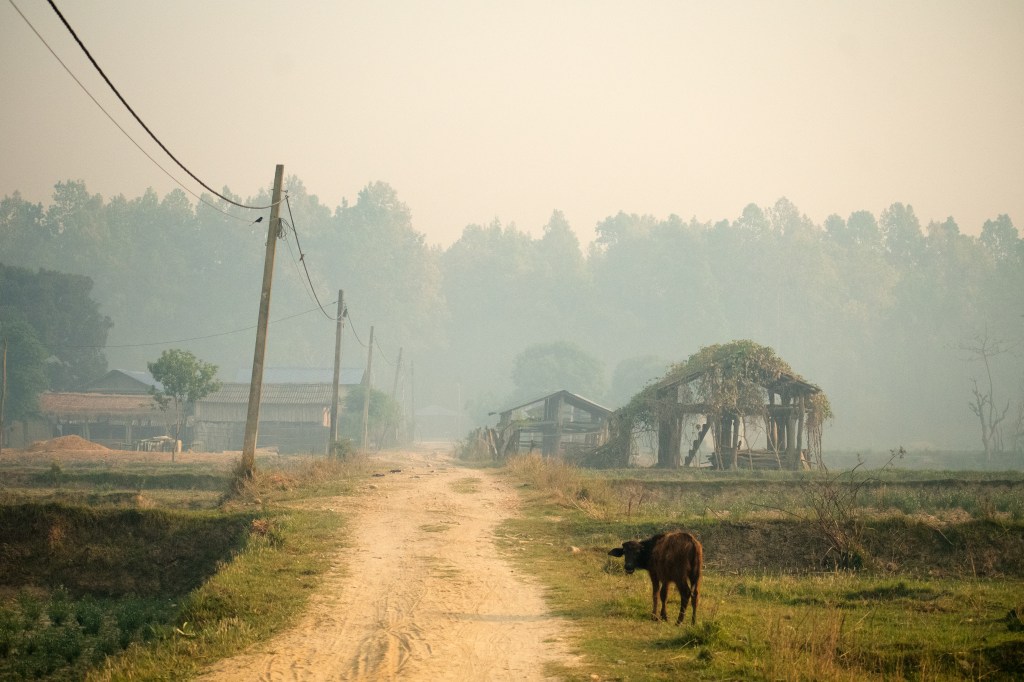
A community which protects part of Parsa tiger reserve

Chitwan National Park is the first national park of Nepal. It was established in 1973 as the Royal Chitwan National Park and was granted the status of a World Heritage Site in 1984. It covers an area of 952.63 km2 (367.81 sq mi) in the Terai of south-central Nepal. It ranges in elevation from about 100 m (330 ft) in the river valleys to 815 m (2,674 ft) in the Sivalik Hills.

Tiger sighting at Chitwan

Bardiya National Park is a protected area in Nepal that was established in 1988 as Royal Bardia National Park. Covering an area of 968 km2 (374 sq mi) it is the largest and most undisturbed national park in Nepal’s Terai, adjoining the eastern bank of the Karnali River and bisected by the Babai River in the Bardiya District. Its northern limits are demarcated by the crest of the Siwalik Hills. The NepalgunjSurkhet highway partly forms the southern boundary, but seriously disrupts the protected area. Natural boundaries for human settlements are formed in the west by the Geruwa, a branch of the Karnali River, and in the southeast by the Babai River. Together with the neighboring Banke National Park, the coherent protected area of 1,437 km2 (555 sq mi) represents the Tiger Conservation Unit (TCU) Bardia-Banke that extends over 2,231 km2 (861 sq mi) of alluvial grasslands and subtropical moist deciduous forests.

Barasingha at Bardia

The Kingdom of Bhutan is a small, landlocked nation nestled in the southern slopes of the Eastern Himalaya. To its north lies the Tibet Autonomous Region of China and to the west, south and east lies the Indian states of Sikkim, Bengal, Assam and Arunachal Pradesh.

The terrain is some of the most rugged in the world, characterised by huge variations in altitude. Within the 150 miles between the southern and northern borders, Bhutan’s elevation rises from 150 to more than 7,500 metres. This great geographical diversity combined with equally diverse climate conditions contributes to Bhutan’s outstanding range of biodiversity and ecosystems.

The tiger, one-horned rhinogolden langurclouded leopardhispid hare and the sloth bear live in the lush tropical lowland and hardwood forests in the south. In the temperate zone, grey langurtigerleopardgoral and serow are found in mixed conifer, broadleaf and pine forests. Fruit bearing trees and bamboo provide habitat for the Himalayan black bearred panda, squirrel, sambar, wild pig and barking deer. The alpine habitats of the great Himalayan range in the north are home to the snow leopardblue sheepmarmot, antelope and Himalayan musk deer.

As of 2017 there are 4567 known species of flower plants and another 709 species of ferns and mosses. Regarding vertebrates, there are 736 species of birds, 129 species of mammals and 158 species of amphibians and reptiles.

In Bhutan forest cover is around 71% of the total land area, equivalent to 2,725,080 hectares (ha) of forest in 2020, up from 2,506,720 hectares (ha) in 1990. In 2020, naturally regenerating forest covered 2,704,260 hectares (ha) and planted forest covered 20,820 hectares (ha). Of the naturally regenerating forest 15% was reported to be primary forest (consisting of native tree species with no clearly visible indications of human activity) and around 41% of the forest area was found within protected areas. For the year 2015, 100% of the forest area was reported to be under public ownership.
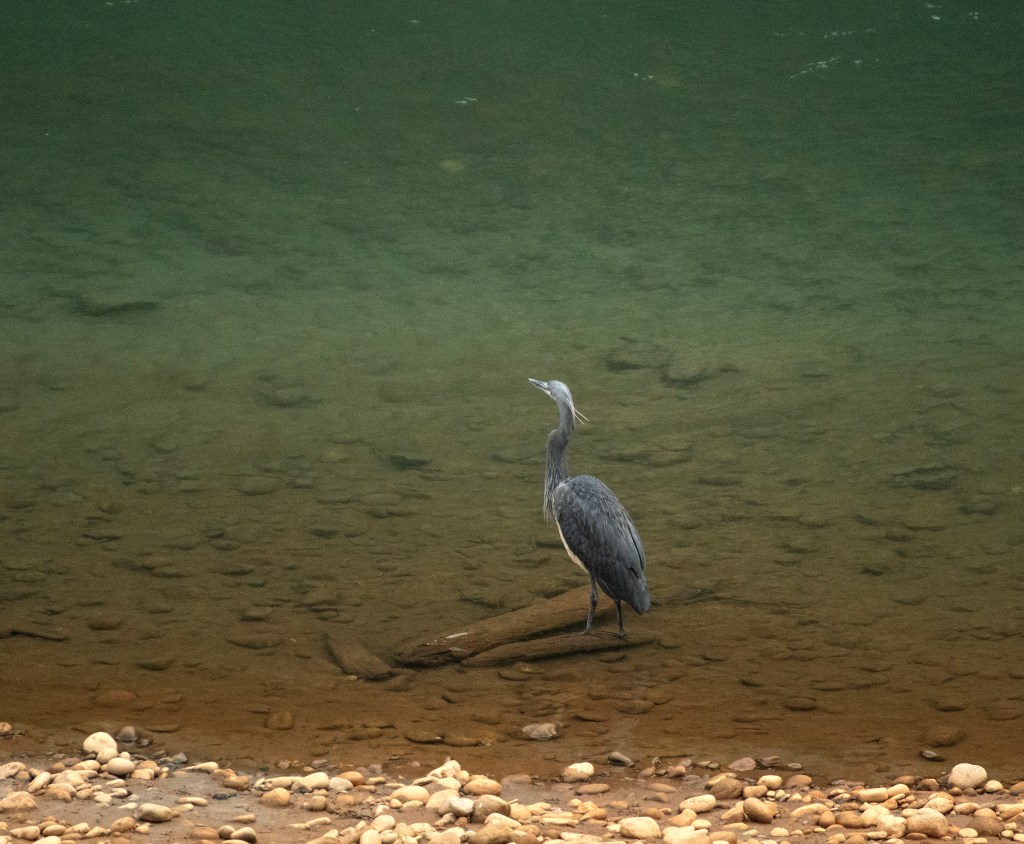
White bellied heron in Bhutan
Philosophy of Buddhism influences ecotourism in Bhutan

How ecotourism can be used as effective tool to combat climate change read my book

The Urban Affluent folks find the easiest side of their hobby to achieve fame and glory!

We discover a way to evade such hardships and decide to roam the forests from the safety and comfort of a safari gypsy. After six successive failed explorations across the forests of Nagarhole, Bandipur, Periyar, Satpura, Pench and Kanha, finally, we succeed in taking the coveted pictures of Bengal Tigers in the deciduous forest of Tadoba and were convinced that that was the easiest way to achieve fame and glory. On the journey, though, I realize how commoditization has created the concept of tiger tourism and photography, that threatens ecotourism potential involving other wildlife species.

Exploration in “Tiger Terrain”

We started our exploration in most popular tiger tourism destination of subcontinent, the so-called “tiger terrain” – The Central Indian landscape. In the May of 2016, we explored Satpura, Pench and Kanha tiger reserves of Madhya Pradesh state of India and in January of 2017 we visited Tadoba Andhari tiger reserve of Maharashtra state of India.

Entry of Satpura through Madhai gate
A leopard cub at Satpura

Satpura Tiger Reserve (STR) also known as Satpura National Park is located in the Narmadapuram district of Madhya Pradesh in India. Its name is derived from the Satpura range. It covers an area of 524 km2 (202 sq mi). Satpura National Park, along with the adjoining Bori and Pachmarhi wildlife sanctuaries, provides 2,200 km2 (850 sq mi) of unique central Indian highland ecosystem. It was set up in 1981.

Herd of sambar at Pench
A golden jackal at Pench

Pench Tiger Reserve or Pench National Park is one of the premier tiger reserves of India and the first one to straddle across two states – Madhya Pradesh and Maharashtra. The reference to Pench is mostly to the tiger reserve in Madhya Pradesh. The portion of the reserve that is in Madhya Pradesh is nestled in the southern slopes of the Satpura range of Central India. Pench Tiger Reserve comprises the Indira Priyadarshini Pench National Park, the Pench Mowgli Sanctuary and a buffer. It is the same forest area portrayed in the famous “The Jungle Book” by Rudyard Kipling.

Spotting tiger pugmark at Kanha
Barasingha at Kanha

Kanha Tiger Reserve, also known as Kanha–Kisli National Park, is one of the tiger reserves of India and the largest national park of the state of Madhya Pradesh. The present-day Kanha area is divided into two protected areas, Hallon and Banjar, of 250 and 300 km2 (97 and 116 sq mi), respectively. Kanha National Park was created on 1 June 1955 and was designated tiger reserve in 1973. Today, it encompasses an area of 940 km2 (360 sq mi) in the two districts Mandla and Balaghat. Together with a surrounding buffer zone of 1,067 km2 (412 sq mi) and the neighbouring 110 km2 (42 sq mi) Phen Sanctuary, it forms the Kanha Tiger Reserve, which is one of the biggest in the country. This makes it the largest national park in central India.

First tiger sighting at Tadoba
Tiger tourism at Tadoba

The Tadoba Andhari Tiger Reserve is a wildlife sanctuary in Chandrapur district of Maharashtra state in India. It is Maharashtra’s oldest and largest national park. Created in 1955, the reserve includes the Tadoba National Park and the Andhari Wildlife Sanctuary. The reserve consists of 577.96 square kilometres (223.15 sq mi) of reserved forest and 32.51 square kilometres (12.55 sq mi) of protected forest. Legend holds that Taru was a village chief who was killed in a mythological encounter with a tiger. Taru was deified and a shrine dedicated to Taru now exists beneath a large tree on the banks of Tadoba Lake. The temple is frequented by adivasis, especially during a fair held annually in the Hindu month of Pausha (December–January).

After our first tiger sighting at Tadoba, we were confident about our path chosen to achieve fame and glory through ecotourism/wildlife photography.

But something was not quite right! What was that? To know read my newly published book Pseudo Ecotourism in the Shadow of the Bengal Tiger.

You can read the review of the book at Good Reads:

https://www.goodreads.com/book/show/212106582-pseudo-ecotourism

The book is available with 20 global distributors. The free sample chapters can be read at:

“The wise use of wetlands”

Mangalajodi Bird Sanctuary , part of Chilika Lake, A Ramsar site at India’s East Coast

To respond to various social, economic and environmental crises, today’s humankind seek compassion and loving-kindness through ecotourism. The most successful form of ecosystem services ecotourism, is wetland tourism. 2nd February each year is World Wetlands Day. It marks the date of the adoption of the Convention on Wetlands on 2nd February 1971, in the Iranian city of Ramsar on the shores of the Caspian Sea. World Wetlands Day was first celebrated in 1997. Since then, government agencies, non-governmental organizations and groups of citizens at all levels of the community have taken advantage of the opportunity to undertake actions aimed at raising public awareness of wetland values and benefits in general and the Ramsar Convention in particular. More than a decade ago in 2012, the World Wetlands Day theme was Wetlands and Tourism and was linked to the theme for the next meeting of the Conference of the Parties, COP11: Wetlands, Tourism and Recreation, which took place in June 2012, in Bucharest, Romania. In COP11, the benefits of wetland tourism both locally and nationally for people and wildlife were recognized – such as stronger economies, sustainable livelihoods, healthy people and thriving ecosystems. As per the World Wetland Day Reports 2012 from the contracting parties, “at least 35% of Ramsar Sites around the world record some level of tourism activity and this percentage is consistent throughout all regions. Of course, it is important to consider tourism in all wetlands – not just those designated as Ramsar Sites – since the Contracting Parties to the Convention are committed to managing all wetlands. Tourism is only one of the services that wetlands deliver. Ensuring well-managed tourism practices in and around wetlands and educating tourists on the value of wetlands contributes to the health of the world’s wetlands and the long-term benefits that wetlands provide to people, wildlife, economics, and biodiversity.”

Ecotourists row through this creeks in Mangalajodi for bird watching

The largest wintering ground for migratory birds on the Indian sub-continent, home to several threatened species of plants and animals is one such great example of wetland tourism. Chilika Lake is the largest brackish water lagoon in Asia and second largest coastal lagoon in the world, spread over the Puri, Khordha and Ganjam districts of Odisha state on the east coast of India, at the mouth of the Daya River, flowing into the Bay of Bengal, covering an area of over 1,100 square kilometres. The lake is an ecosystem with large fishery resources. It sustains more than 150,000 fisher–folk living in 132 villages on the shore and islands. The lagoon hosts over 160 species of birds in the peak migratory season. Birds from as far as the Caspian Sea, Lake Baikal, Aral Sea and other remote parts of Russia, Kirghiz steppes of Kazakhstan, Central and southeast Asia, Ladakh and Himalayas come here. These birds travel great distances; some of them possibly travel as much as 12,000 kilometers to reach Chilika Lake. In 1981, Chilika Lake was designated the first Indian wetland of international importance under the Ramsar Convention.

Mangalajodi is one of the many villages located in and around the Chilika Lake. The village is located about 5 km from Tangi in the district Khordha, 60 km from Bhubaneshwar and situated at Northern side of Chilika. It is a freshwater zone with marshes, reed beds and rich birdlife. What sets Mangalajodi apart is that every winter thousands of migratory waterfowl descends upon its marshes, transforming the area into a carnival as they jostle about with resident birds.

As per an article written by Aditya Panda, in Conservation India, titled as, Mangalajodi — A Village of Bird Protectors in Orissa, “up until the mid-90s, this winter carnival was often rudely interrupted by humans. As night fell on the noisy bird colonies, the sleepy villages surrounding the marsh would wake up. Dark shapes would lurk, gliding in canoes, crushing water-lily pods and lacing them with the deadly poison, Furatin. When dawn broke, hundreds of the birds would feast unknowingly on the deadly pods… canoe-loads of dead birds would thus be ready for meat markets far and near.”

Based on a booklet on Mangalojodi, written by Chinmaya Bhujabal, “poaching was causing irreparable damage to the avifauna of Managalajodi. There were about 80 poachers in the village, proficient in various techniques in killing birds. These birds are regularly sold in the open market, at rates varying from Rs. 20/- to Rs. 60/- per bird, depending on the species and method of killing. A proficient poacher can earn anything between Rs. 10,000/- to Rs. 40,000/- in a year. There was a huge damage to the wetland habitat due to rampant poaching of waterbirds.”

Another related article written by Himanshu Nitnaware in Thebetterindia.com, “the grim picture has transformed over the years, as poachers themselves have become conservators. Hard to believe? The figures prove that from a population of 5,000 birds in the early 1990s, the number has steadily increased to over 5,00,000 in 2021. This change has come around owing to the efforts of Nanda Kishore Bhujabal, who strived for years to work closely with villagers and help change their mindset. Earlier a poacher himself, Nanda realised his wrong ways during the early years of his life, and this made him bring about a change in others. At present, 25 such ex-poachers work towards bird conservation and as tourist guides for visitors.”

The ecotourism association in Mangalajodi, once they were poachers now they are protectors.

Chinmaya Bhujabal, who is none other than the son of Nanda Kishore, mentioned in the booklet on Mangalajodi, that in the winters of January 1996, Nanda Kishore along with some more persons, who later all came together to constitute an organization called “Wild Odisha”, had visited Managajodi village. That casual visit, to view migratory waterfowl, revealed a whole new world. Chinmaya mentioned, “It was late afternoon, and the whole place was resounding with gunfire. They saw many people moving around with guns and shooting, it was truly nightmarish!”

In 1999-2000, Nanda Kishore led the Wild Odisha team in Mangalajodi, could gain confidence of poachers/hunters for controlling poaching. During December of 2000. Sri Sri Mahavir Pakshi Surakhsya Samiti of Mangalajodi was born, consisting of poachers and hunters. Poaching was brought under control since then.

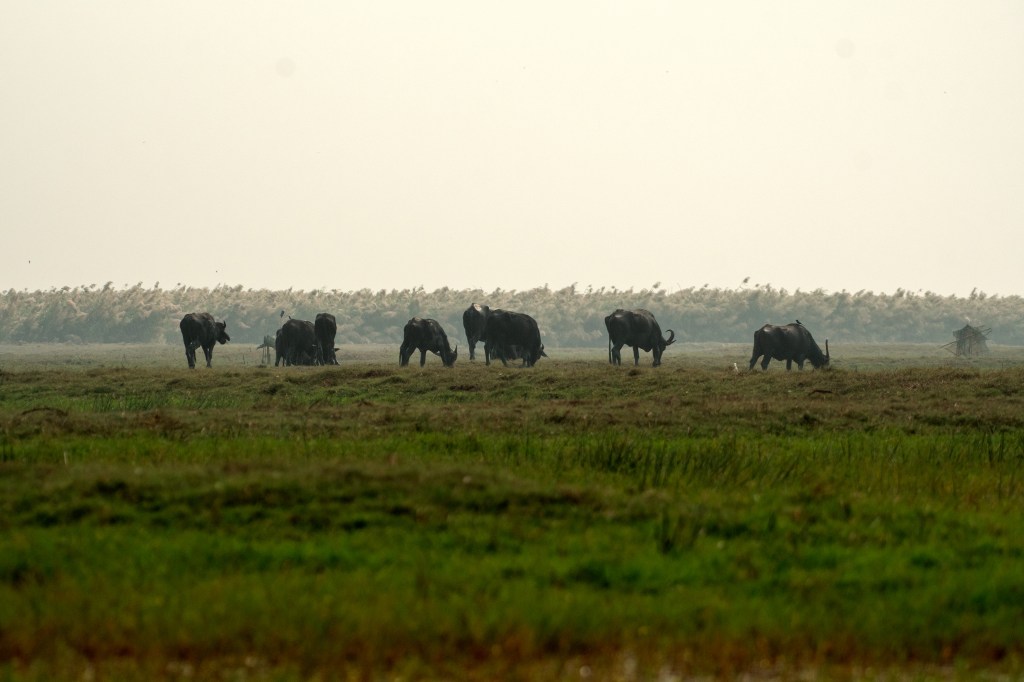
Between 3rd and 5th December of 2023, I visited this marshy wetland and stayed at Godwit Eco-Cottage which conducts ecotourism activities in Mangalajodi through Sri Sri Mahavir Pakshi Surakhsya Samiti. My first boat-ride in Mangajodi started at 10:30 AM with guide Ganesh. Each ride is typically for two and a half hours duration. Ganesh was particularly paranoid on that day by the local peasants. The 44 km2 marshy wetland of Mangalajodi is also a grazing ground of buffalos. That was the reason of annoyance as the gazing of cattle was shooing the birds away and causing harm to his ecotourism activity. As Mangalajodi has evolved from a poaching hell to birds’ heaven, the influx of world’s ecotourists and wildlife photographers, like any other ecotourism destinations, has set a different expectation from local nature guides. That was opportunities for getting “eye-level” shots of birds in action. These actions could be fighting of two birds, mating, hunting, feeding on prey or flying. The small country boat on shallow water of wetland, can take tourists and photographers very close to these birds without making much noise. Therefore, such expectation appears “reasonable” to this wetland’s human visitors.

This marshy land is also grazing ground for livestock

During my visit, in altogether four boat rides I saw 52 different species of migratory and resident birds including gadwall, spot billed duck, garganey, Northern pintail, Northern shoveler, ruddy shelduck, black-tailed godwit, black headed ibis, glossy ibis, Asian openbill stork, painted stork, Oriental pratincole, whiskered tern, marsh sandpiper, wood sandpiper, spotted redshank, little stilt, and few raptors such as peregrine falcon, Eastern marsh harrier etc. All two days were cloudy and gloomy with light shower, thanks to the suddenly developed cyclonic storm, in Bay of Bengal, called Michaung. Because of that the days were not so warm, which kept the birds less active. Despite such weather I could capture plenty of “action shots” by birds such as catching of snake by grey and purple heron, catching of fish by pond heron, catching of frog by ibis and plenty of flying shots by various waterfowl and raptors. Such is the enormity of Mangalajodi’ s photography and ecotourism potential.

Grey heron catching snake

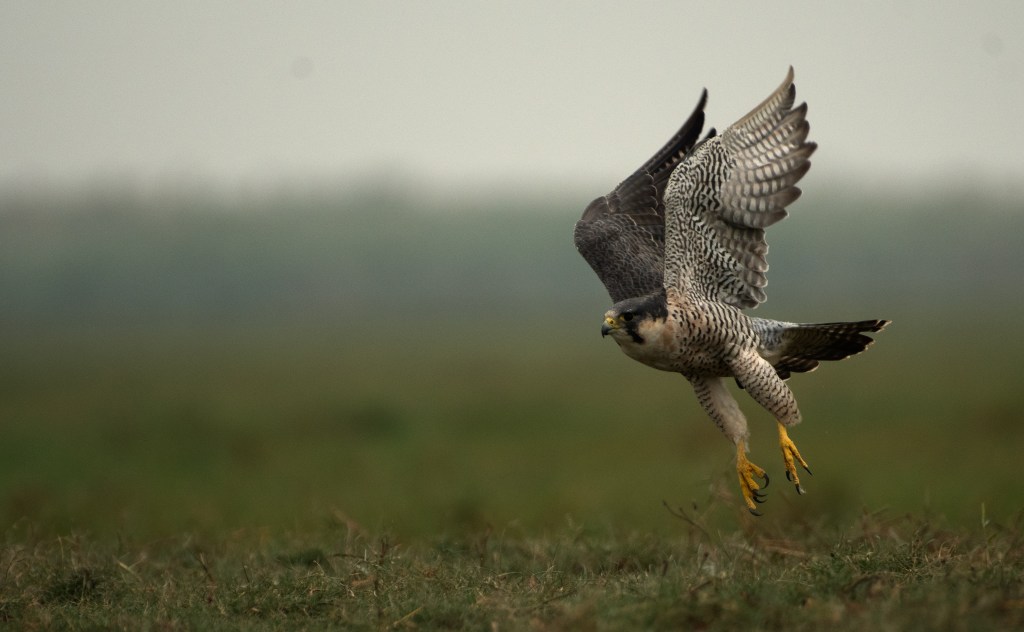
A peregrine falcon taking off

Poacher turned conservationist Nanda Kishore’s wildlife photographer son Chinmaya rightly mentioned in his booklet on Mangalajodi, “This place is today one of India’s top wildlife tourism destinations having been placed firmly in the tourist circuit. The critical and catalytic role played by Wild Odisha, an organization for conservation of wildlife and nature, in a novel initiative of wearing away poaching and ensuring an alternative livelihood for them, has been documented as case studies. This initiative stands out today as one of India’s best practices in wildlife conservation.”

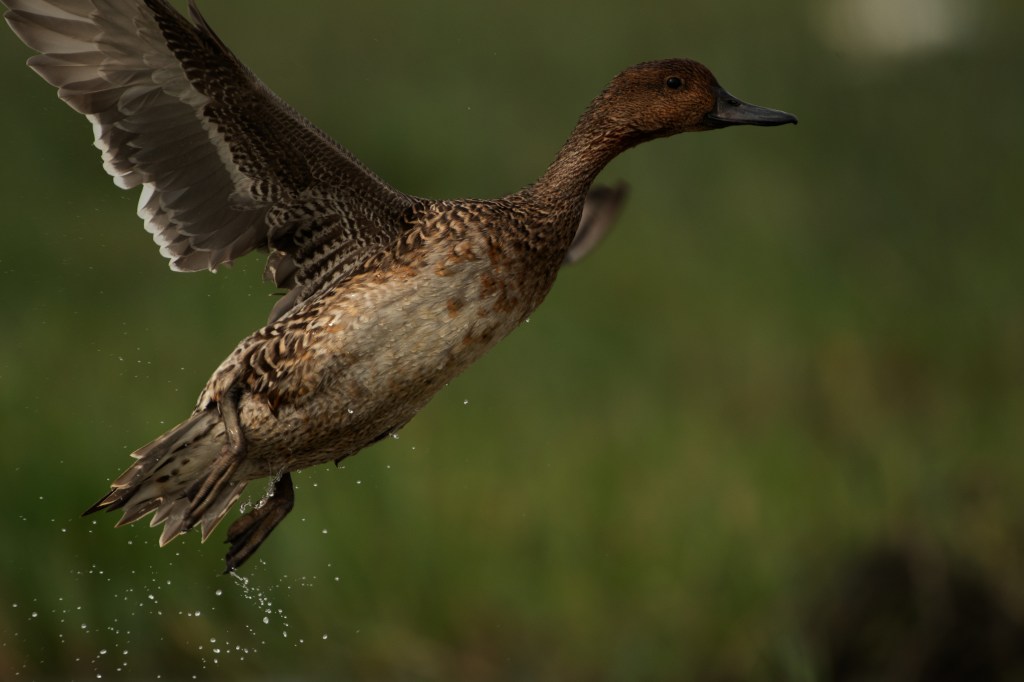
A Garganey taking off

Tourism which got initiated during 2002 by Wild Odisha with the support of the Chilika Development Authority, is today one of the chief bread earners for the families of the onetime poachers. From the Mangalajodi conservation and ecotourism model the world has understood that regulated, low-impact tourism has the potential to be a vital conservation tool as it helps win public support for wildlife conservation. During one of my four boat rides, another guide Anand told me that he was also a poacher. But now as nature guide, he may earn less than selling bird meat, but feels happier than before for not killing any innocent life.

A pair of migratory Northern pintail