I interacted with indigenous folks of Bishnoi, Dongria Kondh and Apatani and observed their sustainability consciousness and harmonious lifestyle with non-human life forms. I eventually realized that the core value of inclusive ecotourism is not just about non-human life forms, but both human and non-human.
I travelled through and stayed at Bishnoi village near Jodhpur of Rajasthan, Dongria Kondh community of Niyamgiri hills in Koraput, Odisha and Apatani villages in Ziro valley of Arunachal Pradesh.
The Bishnoi, also spelled as Vishnoi, is a Hindu Vaishnava community or panth found in the Western Thar Desert and northern states of India. Bishnoi community is turned into a Hindu caste with time. It has a set of 29 Niyamas (principles/commandments) given by Guru Jambheshwar (also known as Guru Jambhoji, Guru Jambha) (1451–1536). As of 2010, there are an estimated 600,000 followers of Bishnoi Panth residing in northern and central India. Shree Guru Jambheshwar founded the sect at Samrathal Dhora in 1485 and his teachings, comprising 120 shabads, are known as Shabadwani. He preached for the next 51 years, travelling across India. The preaching of Guru Jambhoji inspires his followers as well as environmental protectors.
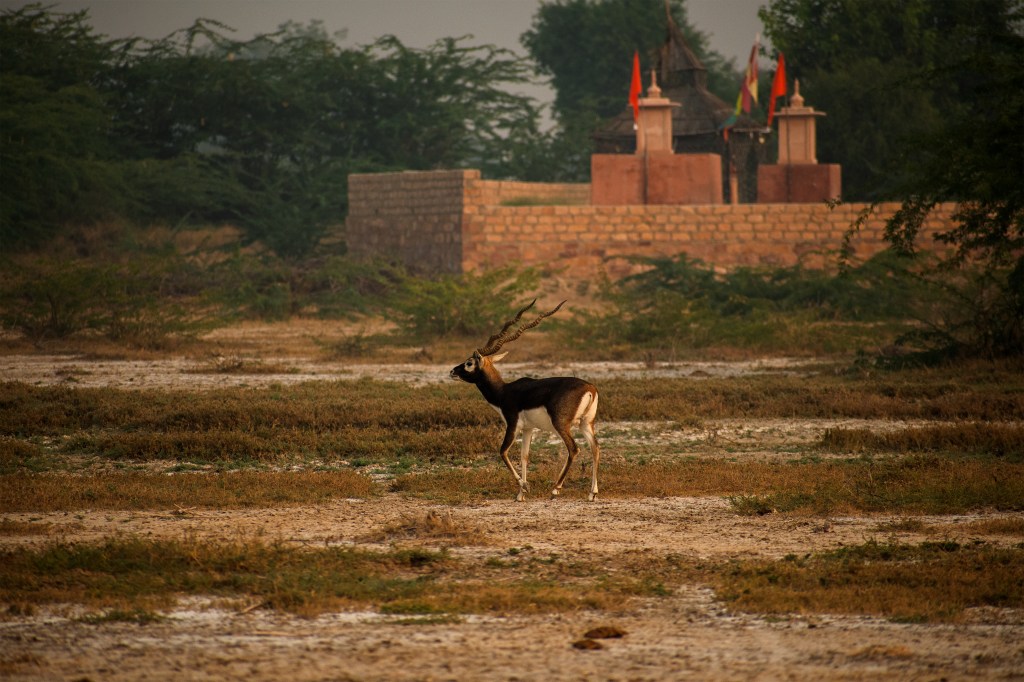
Black buck at Bishnoi village
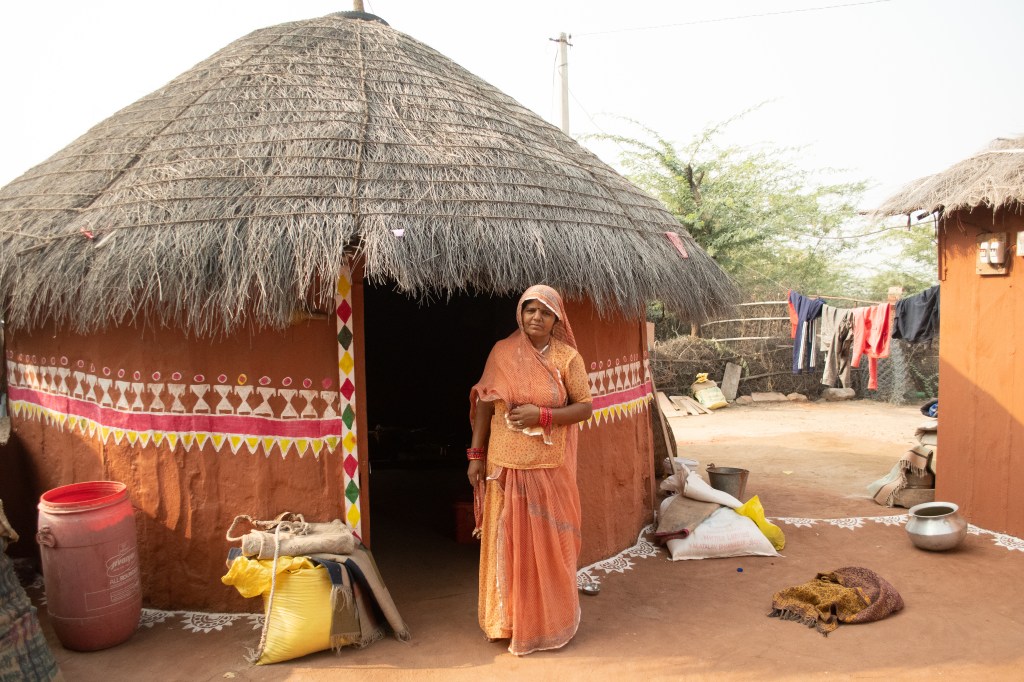
A Bishnoi woman near her hut
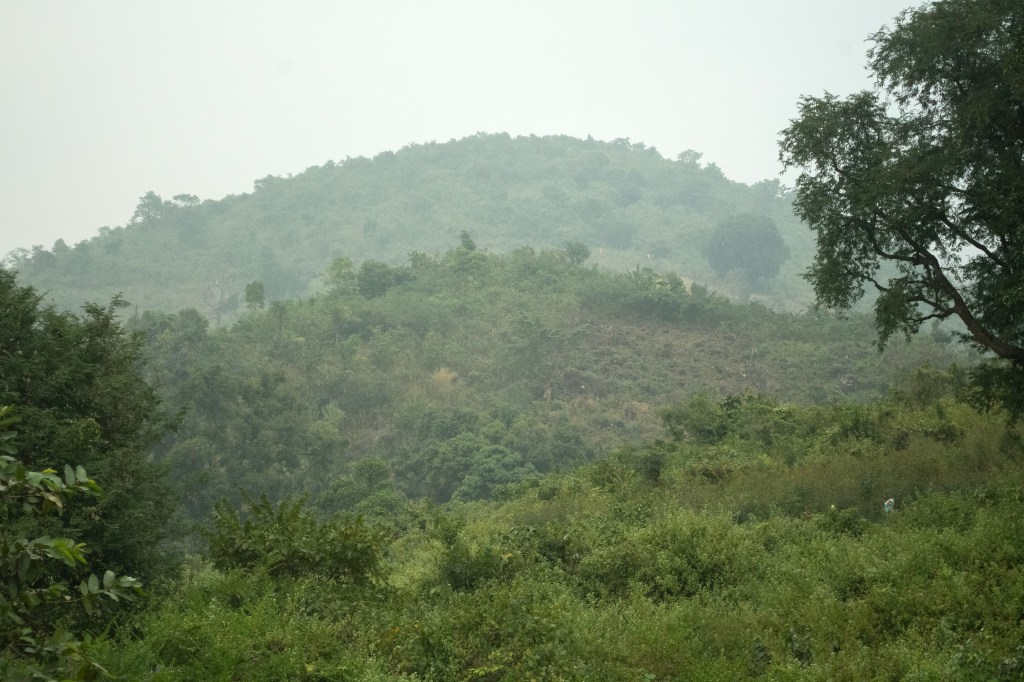
The Dangaria Kandha people are members of the Kondhs. They are located in the Niyamgiri hills in the state of Odisha (formerly Orissa) in India. They sustain themselves from the resources of the Niyamgiri forests, practising horticulture and shifting cultivation. They have been at the centre of a dispute over mining rights in the area. The Dongria Kondh community numbers approximately 8,000 people, inhabiting about 100 villages. The social structure among the community is adapted to the surroundings of Niyamgiri forested hill country, where they have lived for many generations.
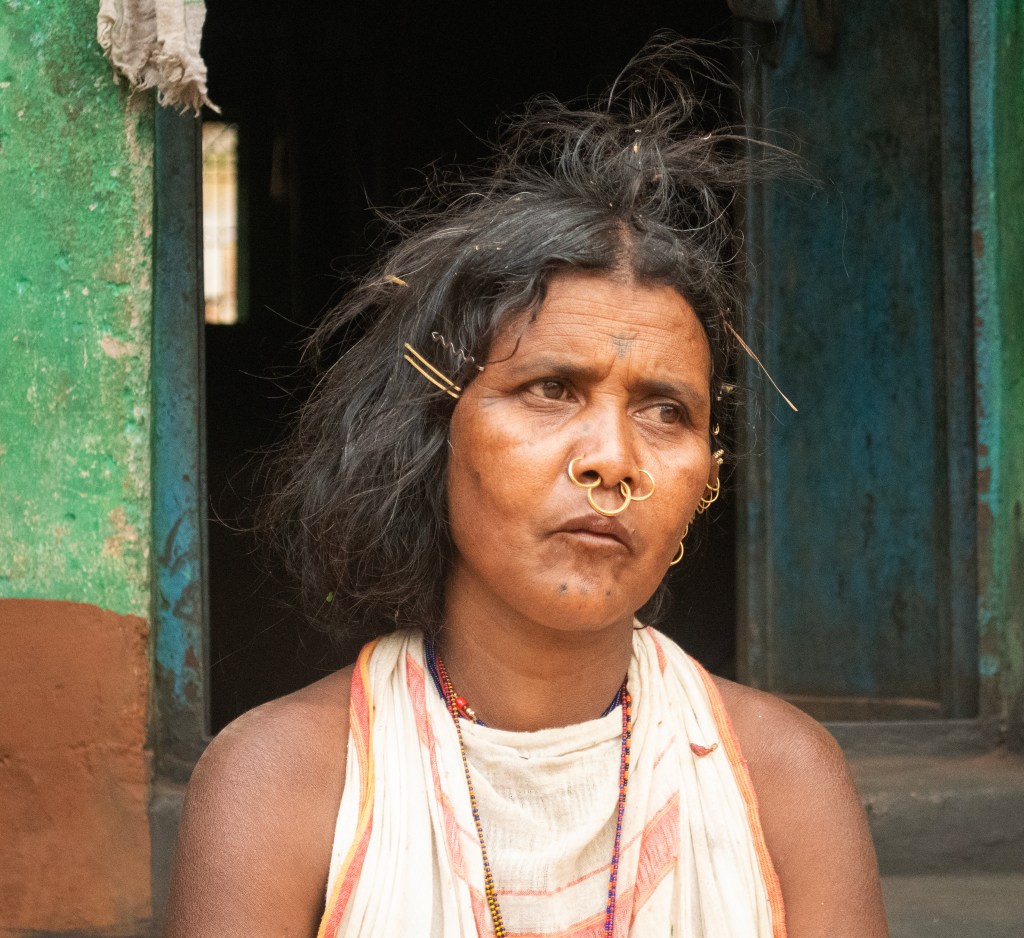
A Dongria Kondh lady at NyiamgiriNiyamgiri hill
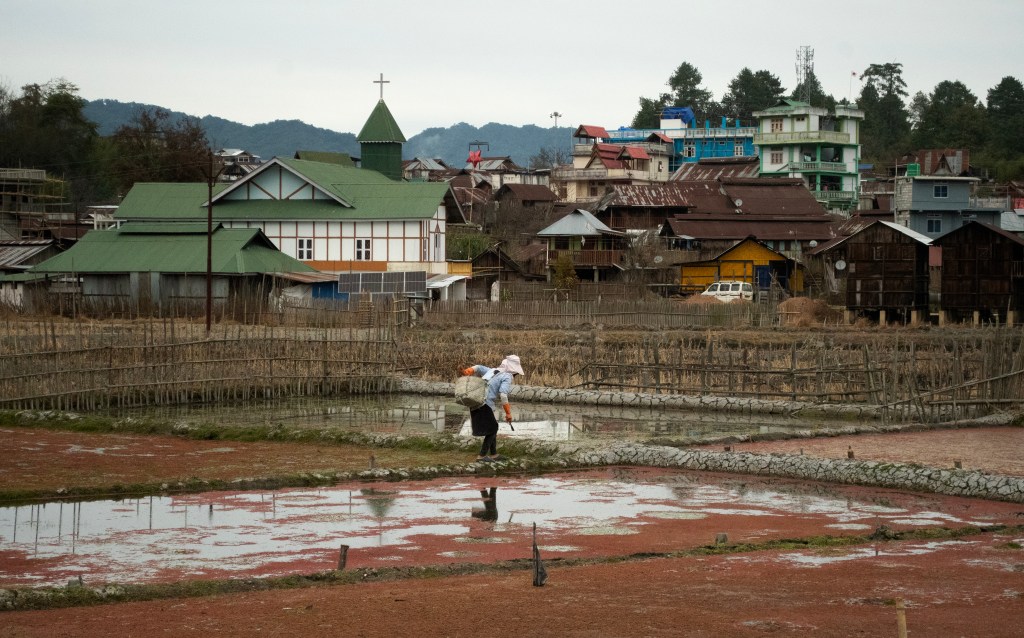
Their wet rice cultivation system and their agriculture system are extensive even without the use of any farm animals or machines. So is their sustainable social forestry system. UNESCO has proposed the Apatani valley for inclusion as a World Heritage Site for its “extremely high productivity” and “unique” way of preserving the ecology.
The Apatanis, one of the major ethnic groups of eastern Himalayas, have a distinct civilization with systematic land-use practices and rich traditional ecological knowledge of natural resources management and conservation, acquired over the centuries through informal experimentation. The tribe is known for their colorful culture with various festivals, intricate handloom designs, skills in cane and bamboo crafts, and vibrant traditional village councils called bulyañ. This has made the Ziro Valley a good example of a living cultural landscape where humans and the environment have harmoniously existed together in a state of interdependence even through changing times, such co-existence being nurtured by the traditional customs and spiritual belief systems.
Apatani lady in ZiroPaddy-Fish culture at Ziro
To know how ecotourism embraces deep ecology and how non-human nature merges with human culture, read Pseudo Ecotoursim in the Shadow of the Bengal Tiger.
When a buyer invests in any commodity, they expect a return as promised by the seller. After parting with Vedavyasa, I had emerged as a solo explorer venturing into BRT and Kabini of Western Ghats and Sariska of central India. There I experienced the tiger economy in very different ways and understood the resulting stress on the tiger and its habitat.
After witnessing the commodity fetishism in so-called glamorous tiger reserves of India, I encountered with a Conservation Crusader Couple at Amrabad Tiger Reserve, India’s second largest tiger reserve. They were promoting the concept of “inclusive ecotourism” to counter tiger centric ecotourism.
Listen my conversation with them
Me with Swetha, Akhil and a local Chenchu tribal boy at Amrabad
The Kabini Forest Reserve is one of the most popular wildlife destinations of Karnataka, due to its accessibility, green landscape surrounding a large lake, and sightings of herds of elephants and tigers. It is 61 km (38 mi) away from Mysuru and 205 km (127 mi) from Bengaluru, and comprises the south-eastern part of Nagarahole National Park. The reserve is spread over 55 acres (22 ha) of forestland, steep valleys, and water bodies. Once a private hunting lodge of the Maharaja of Mysore, Kabini was a popular shikar hotspot for British Viceroys and Indian royalty. There are around 120 tigers, more than 100 leopards, four types of deer, Sloth bear, Indian Gaurs and elephants in the Nagarahole National Park.
A male tiger at Kabini
Sariska Tiger Reserve is a tiger reserve in Alwar district, Rajasthan, India. It stretches over an area of 881 km2 (340 sq mi) comprising scrub-thorn arid forests, dry deciduous forests, grasslands, and rocky hills. This area was preserved for hunting, for the Alwar state and was declared a wildlife sanctuary in 1958. It was given the status of a tiger reserve making it a part of India’s Project Tiger in 1978. The wildlife sanctuary was declared a national park in 1982, with a total area of about 273.8 km2 (105.7 sq mi). It is the first reserve in the world with successfully relocated tigers. It is an important biodiversity area in the Northern Aravalli leopard and wildlife corridor.
Amrabad is a Mandal in Nagarkurnool district, Telangana It is the largest mandal in the district area-wise, but population density is less. Large portions of the mandal is occupied by Nallamala forests. Amrabad also served as the headquarters of the taluka before separate mandals were formed. It is inhabited by tribal population, mostly Chenchus.
Nilgai at Amrabad
To know what I discovered as “tiger economy” read my book
Based on 2022 NTCA tiger status report of India, tigers were photo-captured for the first time in Buxa Tiger Reserve, Neora Valley National Park, and Mahananda Wildlife Sanctuary in West Bengal. Also, after quite a few years, a tiger was photo-captured in the Namdapha Tiger Reserve of Arunachal Pradesh. The report also mentions that Tiger reserves and protected areas in Arunachal Pradesh are connected through large, forested tracts and a number of reserve forests situated along the interstate border between Arunachal Pradesh and Assam.
This landscape is further connected to Intanki National Park in Nagaland and Dampa Tiger Reserves in Mizoram through some weak linkages of degraded forest. Several indigenous forest communities dependent on bush meat and forest resources for subsistence inhabit this landscape; hence, the prey base is almost depleted in many of the forests. In addition, due to its strategic location, several highways are planned in Arunachal Pradesh to provide faster access to international border areas.
Entry of Namdapha
Arunachal Pradesh gets three national highways: the Frontier Highway, the Trans-Arunachal Highway, and the East-West Industrial Corridor Highway, and six vertical and diagonal interstate highways of about 2178 km will be built. Fragmentation of habitat by this rapid infrastructure development will eventually destroy the weak linkages between the tiger habitats and might lead to the local extinction of tigers in this landscape. Substantial poaching for the illegal trade of tiger body parts and ungulates constantly threatens the tiger population in this landscape. Since the landscape shares porous international borders in many parts with neighbouring Southeast Asian countries, it is comparatively easy for poachers to operate in this landscape. In the recent past, the skin and body parts of two tigers were seized from Dibang Valley in Arunachal Pradesh and Itakhola on the Assam-Arunachal Pradesh border. Direct exploitation of tigers from this already low abundant population, coupled with habitat fragmentation and biotic pressure, could eventually deplete the tiger population in this landscape. Other than rapid development causing habitat fragmentation and the poaching of wild tigers and prey, the invasion of weeds in the natural habitat is a severe threat to this landscape.
Forest of Namdapha
The institute responsible for tiger conservation in India itself recognizes these facts behind depleting tiger population in the Dibang-Kamlang-Namdapha block of tiger landscape in Arunachal Pradesh. The state has three tiger reserves namely Pakke, Kamlang, Namdapha tiger reserve and Dibang Wildlife Sanctuary. As per 2022 tiger status survey, only nine tigers were photo-captured in this state.
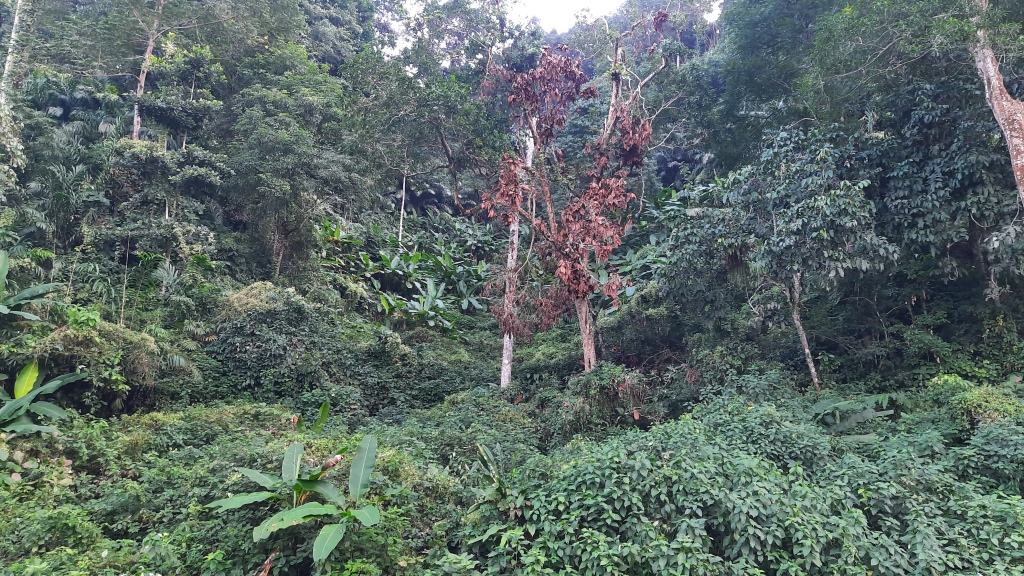
However, the status of Arunachal’s tiger population does not tell the real story of its phenomenal biodiversity resources. This state is an ecological wonder that remains largely unexplored. The tropical rain forest of the Namdapha National Park, one of India’s largest protected area, throbs with a dizzying array of flora and fauna, many of which are lesser known, hidden gems of the wild.
Devan camp of Namdapha
After completing our exploration in Dehing, on following day, on 14th December, at around 6:00 AM we started for Namdapha National Park and Tiger reserve, the main destination of our exploration. On the way we stopped at various village forests, ponds and water streams for bird watching. Some noteworthy sightings were – greater necklace laughingthrush and red headed trogon near exit gate of Dehing; Oriental pied hornbill feeding on banana and coconut tree in a village; pied falconet perching on a tree top and occasionally snooping for butterflies, just before the entry gate of Namdapha; and few black capped and white crowned forktails near a water stream within Namdapha. We reached at Devan Forest camp of Namdapha at around 4:00 PM. In this part of India, sun goes down by 4:00 PM and by 4:30 PM light was quite low. In the evening between 6:00 PM and 8:30 PM we did a nigh-walk within the tiger reserve to search for slow loris. We stayed in Devan camp for three nights and every night we searched for that nocturnal animal. But never succeed. Instead, every night we saw red giant flying squirrel feeding on tree bark within our campus.
Pied falconet
On 15th December at morning 6 o’clock we did a moderate hiking in the Haldi Bari area of the tiger reserve. From our forest camp it was three hours hike, which included crossing Nua Dehing river through a precariously constructed bamboo hanging bridge, climbing steep hillock, and walking through dense foliage. From the hoolock gibbon, the only ape species found in India, to the elusive snow Leopard and the majestic red panda, Namdapha is a living testament to the intricacies and wonders of evolution. The day was sunny, and the forest was resounded with iconic call of hoolock gibbons. This reserve is unique, not just for its lofty stature as the third largest of its kind in India but also due to the strikingly varied altitudinal range of its landscape. Ranging from 200 metres to an astounding 4,500 metres, it provides the tiger and numerous other species with an environment of unparalleled diversity.
Eye-browed wren babbler
Before we returned to our camp at 12:00 noon, quite a few rare birds we spotted and shot. Some of them were slaty bellied tesia, white tailed flycatcher, streaked wren-babbler, white throated bulbul, rufus backed sibia, long-tailed broadbill, Durian redstart, and eye-browed wren-babbler. Afternoon again we explored the road goes through buffer zone of Namdapha towards Vijaya Nagar, where India ends, and Myanmar starts. Oriental hobby, rufous-gorgeted flycatcher, dark breasted rose finch, little forktail were some notable sightings. Our day ended with much delight by sighting of Oriental Bay owl, which we were trying to spot from day one.
Oriental bay owl
Next day was all about full day walk on the road passing through tiger reserve towards India-Myanmar international border. We left our camp at 6:00 AM and returned at 5:00 PM. Between Deban camp and Kamala Valley camp we spotted and identified birds like white-bellied erpornis, snowy throated wren babbler, brown crowned scimitar babbler, greater rufous headed parrot bill, white hooded babbler, hill prinia, black throated sunbird, white-rumped munia, Nepal fulvetta, pale-billed parrot bill, white browed piculet, whistling warbler, grey headed canary flycatcher, black chinned yuhina, long-tailed sibia, and mountain imperial pigeon.
pale-billed parrot bill
As per Forest Department’s norm, one local forest guide named Assam Mussang was also with us for two days in Namdapha. He told us that tourists are allowed only in selected routes in buffer zone of this tiger reserve. Rest of the forest is not even suitable for walking. Leave aside the possibility of driving car or jeep. Therefore, ecotourism activity does not happen in most of the buffer and entire core zone of Namdapha. Only forest department staffs and researchers go there for study and installing camera traps. Even forest patrolling is limited in majority part of this forest due to difficult accessibility. That is why probably NTCA was also sounded helpless in their 2022 tiger status report while explaining depleting tiger and its prey base population in Arunachal Pradesh. Assam Mussang told us that Kodwai zone is part of buffer and core, where maximum number of tiger pugmarks and camera trap images were recorded. His comment was well resonated with NTCA’s 2022 status report of recording one tiger in Namdapha.
Red giant squirrel
The day was sunny and the snow-capped Dapha bum, the highest point of Namdapha was visible from our exploration track. Despite of depleting tiger population, Namdapha stood tall with array of its magnificent biodiversity. As one steps into an era marked by climate change and biodiversity loss, Namdapha shines as a beacon of hope, a sanctuary where life thrives in its countless forms. It stands as a testament to the resilience of nature when given the chance to flourish and the power of people when they become stewards of the land. At the end of the day when we came back to our camp, the resident red giant flying squirrel was found to be feeding on tree bark. That was how my last night in India’s last tiger reserve ended with a message, “to become a splendid ecotourism destination, raining of tiger sighting is not essential. The forest has much more to offer than the tigers.”
Snow-capped Dapha boom
We left Namdapha on 17th December, towards Miao, the border town between Arunachal and Assam. Our next destination on Maguri bill which was in news because of one of the recent environmental disasters of India.






 Pseudo Ecotourism