Shreeram introduces me to herpetofauna photography. Trained in science of environment I quickly understood the vital role played by herpetofauna in forest regeneration, without whom even tigers wouldn’t survive. As I meander through the tea and coffee estates of Western Ghats, I discovered an alternative ecotourism to counter the tiger centric ecotourism.
I continued my exploration of herpetofauna in other areas of Western Ghats such as Munnar, Valparai and Parambikulam.
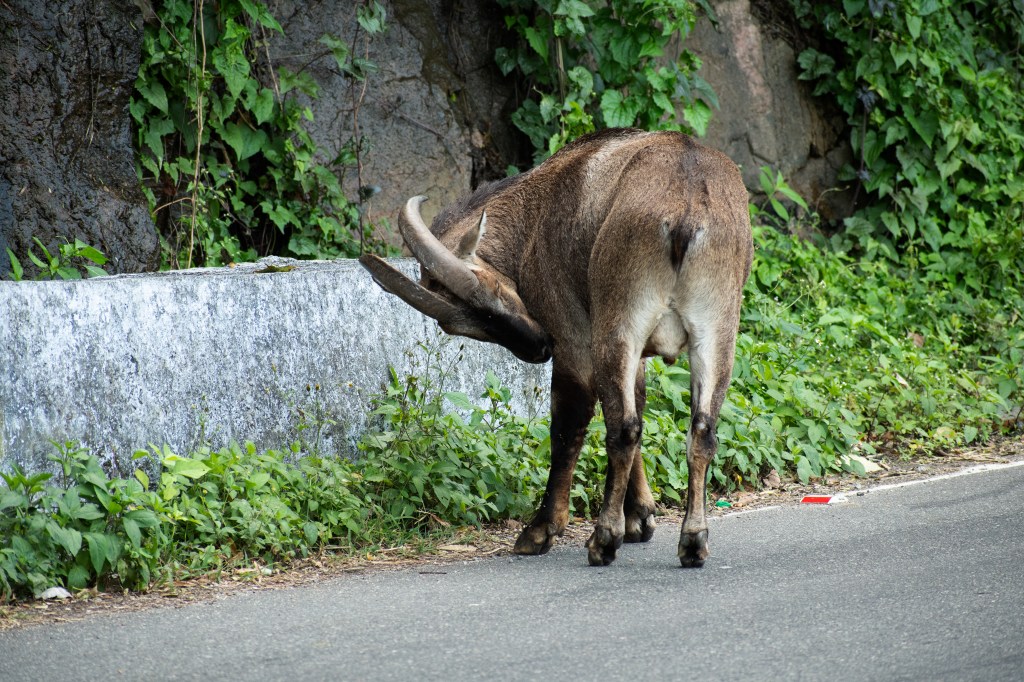
Munnar is a town in the Western Ghats Mountain range in India’s Kerala state. A hill station and former resort for the British Raj elite, it’s surrounded by rolling hills dotted with tea plantations established in the late 19th century. Eravikulam National Park, a habitat for the endangered mountain goat Nilgiri tahr, is home to the Lakkam Waterfalls, hiking trails and 2,695m-tall Anamudi Peak.
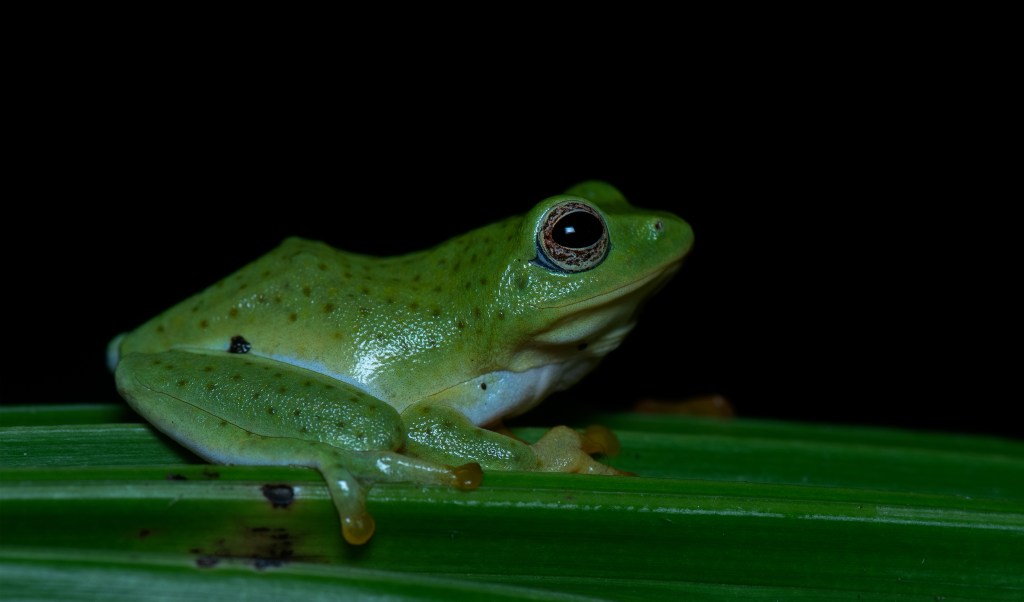
Resplendes bush frog found in MunnarLarge scaled pit viper found in Munnar
Valparai is a hill station in the south Indian state of Tamil Nadu. Nallamudi Viewpoint has vistas of the Anamalai Hills in the Western Ghats, and surrounding tea estates. To the northwest, in Kerala, Parambikulam Tiger Reserve is a forested area, with teak plantations and trails, sheltering tigers and Indian elephants. Northeast of town, the Anamalai Tiger Reserve is home to tigers, panthers, elephants and macaques.
Jayram’s bush frog found in ValparaiLion tailed macaque of Valparai
Agroforestry can be an object of ecotourism itself. This means that agroforestry farms (or complexes) can be converted into ecotourism destinations themselves. Yes, agroforestry can itself be a strong tourist attraction depending on what nature-based recreation features it can offer to tourists.
To know this new aspect of inclusive ecotourism read Pseudo Ecotourism.
Stricken by the desire for being the most interesting person in the room, after a successful first trip in Gir, we decide to further strengthen this new hobby of wildlife photography, by creating opportunities to live in proximity to nature. Hardships in the tropical rainforest of Periyar tiger reserve made us realize our limitations in living close to nature. However, driven by a hunger for fame and glory, all we desire is to take pictures of the Bengal Tiger in the wild to distinguish ourselves as unique.
Rafting through Periyar River
We named this exploration as “Hiking in Highlands” as Western Ghats can very well be considered as highlands of Indian subcontinent, because of floral and faunal diversity, rain clad mountains, and evergreen forests. The exploration had five segments – Rangnathettu bird sanctuary, Nagarhole National Parks, Bandipur National Park, Eravikulam National Park and Periyar National Park.
Rout map of “Hiking in Highland”
Ranganathittu Bird Sanctuary (also known as Pakshi Kashi of Karnataka), is a bird sanctuary in the Mandya District of Karnataka in India. It is the largest bird sanctuary in the state, 40 acres (16 ha) in area, and comprises six islets on the banks of the Kaveri river. The sanctuary has been designated on 15 February 2022 as a protected Ramsar site since 2022. Ranganathittu is located 3 km (1.9 mi) from the historic town of Srirangapattana and 16 km (9.9 mi) north of Mysore. The sanctuary attracted about 3 lakh visitors during 2016–17.
Periyar National Park and Wildlife Sanctuary (PNP) is a protected area located in the districts of Idukki and Pathanamthitta in Kerala, India. It is an elephant and a tiger reserve. The protected area encompasses 925 km2 (357 sq mi), of which 305 km2 (118 sq mi) of the main zone was declared as the Periyar National Park in 1982. The park is a repository of rare, endemic, and endangered flora and fauna and forms the major watershed of two important rivers of Kerala: the Periyar and the Pamba. The park is located high in the Cardamom Hills and Pandalam Hills of the south Western Ghats along the border with Tamil Nadu. It is 4 km (2.5 mi) from Kumily, approximately 100 km (62 mi) east of Kottayam, 110 km (68 mi) west of Madurai and 120 km (75 mi) southeast of Kochi.
Source of Information: Wikipedia
Hiking in Highlands – through dense forest of Periyar
In real sense the quest for Bengal Tiger was started by my friend and me, at 6:30 in the morning of 2nd December 2015 from the Bandipur National Park. Although Bandipur National Park was our first dedicated venture in the shadow of Bengal Tiger, but technically the exploration in tiger habitat started from another national park of Western Ghats – the Nagarhole National Park. The Kabini side of the park is famous for sighting of melanistic leopard – commonly known as Black Panther. However, we did not go to Kabini. In the morning of 30th November 2015, both of us with our driver cum “Man Friday” Purushottam, reached at the Veeranahosahalli range of Nagrahole National Park from our base camp at Jungle Inn resort. Before coming to Nagarhole, en route, we visited Ranganathettu, the largest bird sanctuary of Karnataka, situated on the bank of Cauvery River.
After finishing our exploration in Bandipur, on same day afternoon, we came back to Bangalore and took an overnight bus to reach Munnar on next day morning. After spending next whole day, exploring Eravikulam National Park, we reached forest rest house at Thekkady in the evening of 4th December. On 5th December at 9:00 am we reached at the check post of Periyar Tiger Reserve to start one of the most adventurous and challenging forest hiking of this country, the Periyar Tiger Trail, with a hope that our bad luck for sighting tiger would end there.
To know what happened in that exploration, in the Highlands of Indian subcontinent, and how my life started changing after that trip, read my recently published book.
The book is now available through seventeen global distributors:







 Pseudo Ecotourism