Madagascar: A Case of Vicious cycle between conservation and hunger

In 2009, several scientists from Stolk home Resilience Centre, under the leadership of Dr. Johan Rockstrom introduced the concept of Planetary Boundary, which defines unbreachable nine, quantified limit for the planet, for safe and sustainable living. (Ref: https://en.wikipedia.org/wiki/Planetary_boundaries)
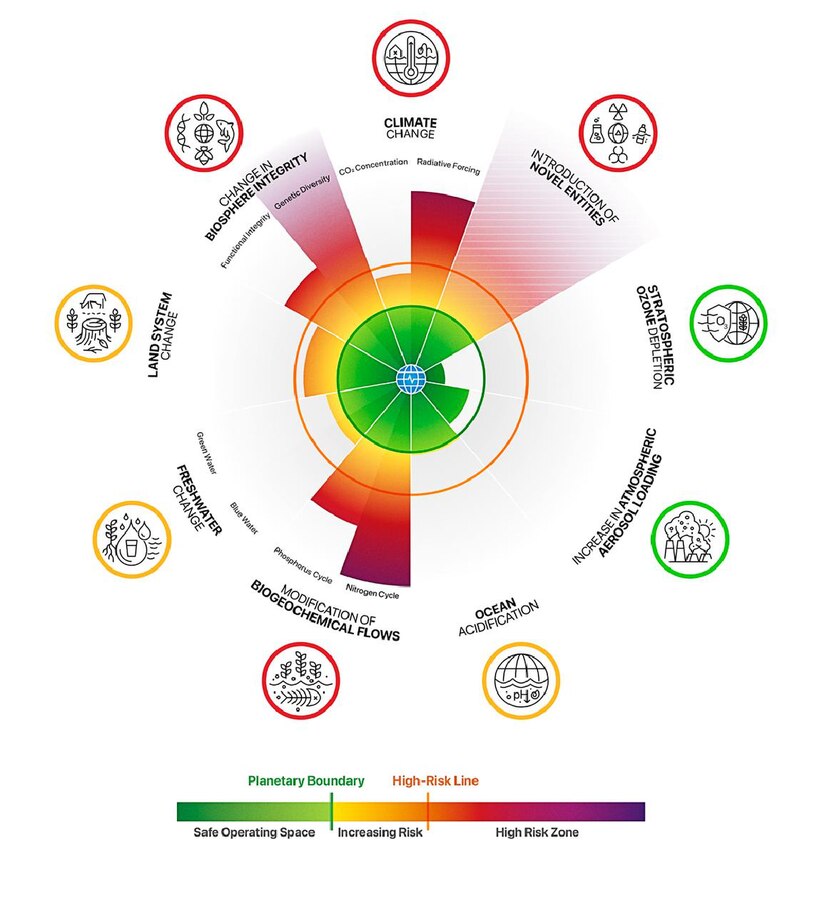
Planetary boundary model

In 2012, the Oxford University economist Kate Raworth, built upon the concept of planetary boundary and introduced the concept of Doughnut Economics, by incorporating twelve social blocks (Ref: https://en.wikipedia.org/wiki/Doughnut_(economic_model)).

Doughnut Economics

Both the model not just challenged the concept of traditional development and economics but also challenged the concept of exponential growth. And, in another way they challenged the traditional definition of sustainable development, which more often than not sounds like an oxymoron. The concept of United Nation’s Sustainable Development Goals (SDG) allowed trading off between various goals.

(Refer: https://en.wikipedia.org/wiki/Sustainable_Development_Goals)

To ensure zero hunger (Goal 2), we may need to prioritize decent work and economic growth (Goal 8), and to ensure that we may need to focus on industry, innovation, technology and infrastructure (Goal 9), and that may climate action (Goal 13), life below water (Goal 14) and life on land (Goal 15) to back-burner.

This is how the vicious cycle between conservation and hunger starts.

Based on a research paper, Socioeconomic impacts of small conserved sites on rural communities in Madagascar, by D. Rodríguez-Rodríguez et al, published in Environmental Development, “Madagascar is one of the most important global biodiversity hotspots, where high endemicity rates spatially coincide with rapid loss of natural habitats (Mittermeier et al., 2011; Ralimanana et al., 2022). Madagascar is also one of the least developed countries of the world, ranking 173 of 191 in the Human Development Index (UNDP, 2022). Poverty and lack of access to basic services is widespread in rural areas, where populations heavily depend on the collection of natural resources for their subsistence (World Bank,

2021). Whereas Madagascar’s biodiversity is mostly hosted by the variety of forest ecosystems present on the island (Goodman and Benstead, 2005), these ecosystems have been rapidly declining due to human activities in recent decades to cover just 15 % of the country’s terrestrial area in 2014 (Vieilledent et al., 2018). The major pressures that forests face are the expansion of cattle grazing (Waeber et al., 2015), pioneering slash-and-burn agriculture on the western dry deciduous forests (Vieilledent et al., 2020), shifting cultivation on the eastern moist evergreen forests (Zaehringer et al., 2015), charcoal production, timber collection and mining (Raik, 2007). In addition to habitat loss, biodiversity in Madagascar also faces other important pressures such as poaching and illegal trade of wildlife (Borgerson et al., 2016; Mandimbihasina et al., 2020). Current farming and wildlife exploitation practices help, however, to provide food security (Llopis et al., 2021; Borgerson et al., 2022) in one of the most food insecure countries in the world (EIU, 2022).”

This is the vicious cycle between conservation and basic survival of poor people, which is prominent in most of the developing countries. Now, on which side of it, the ecotourism plays its influencing role, is a good question to ask.
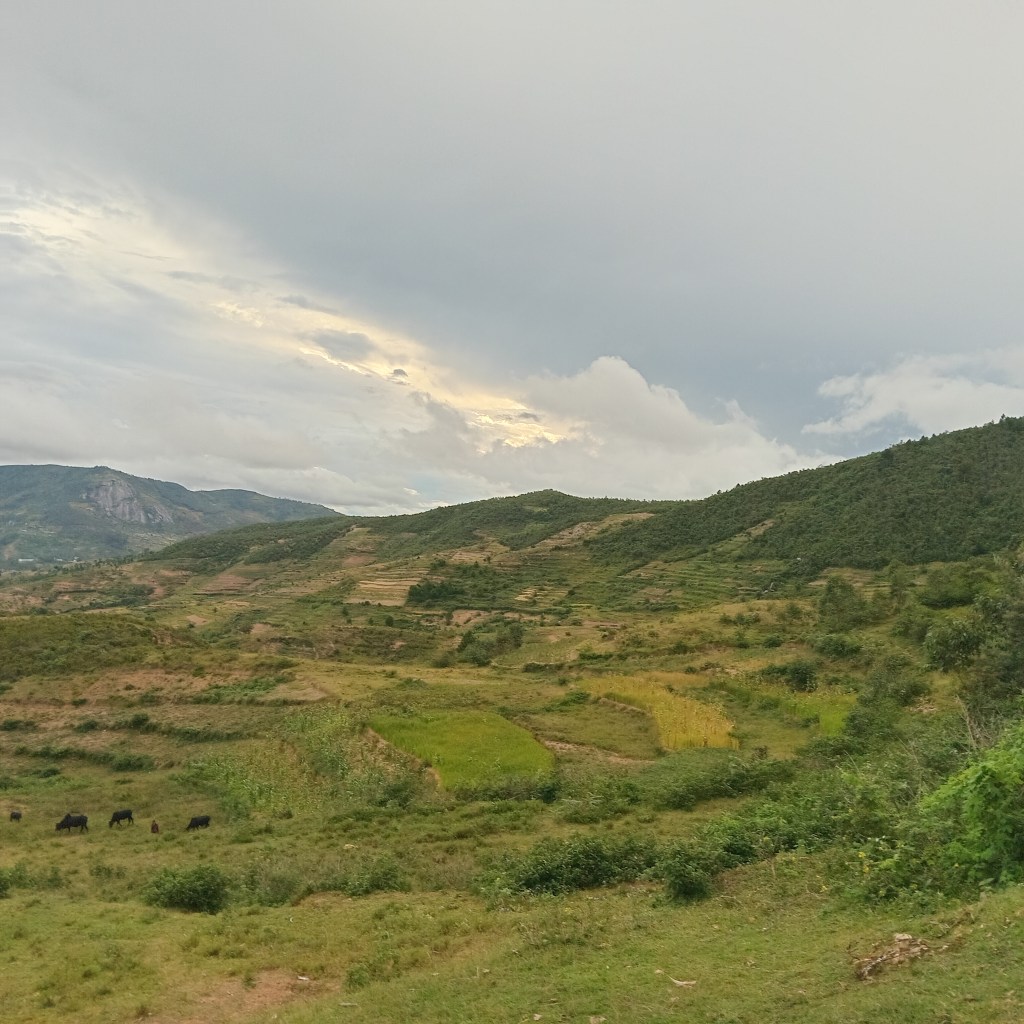
On the way to Ranomafana

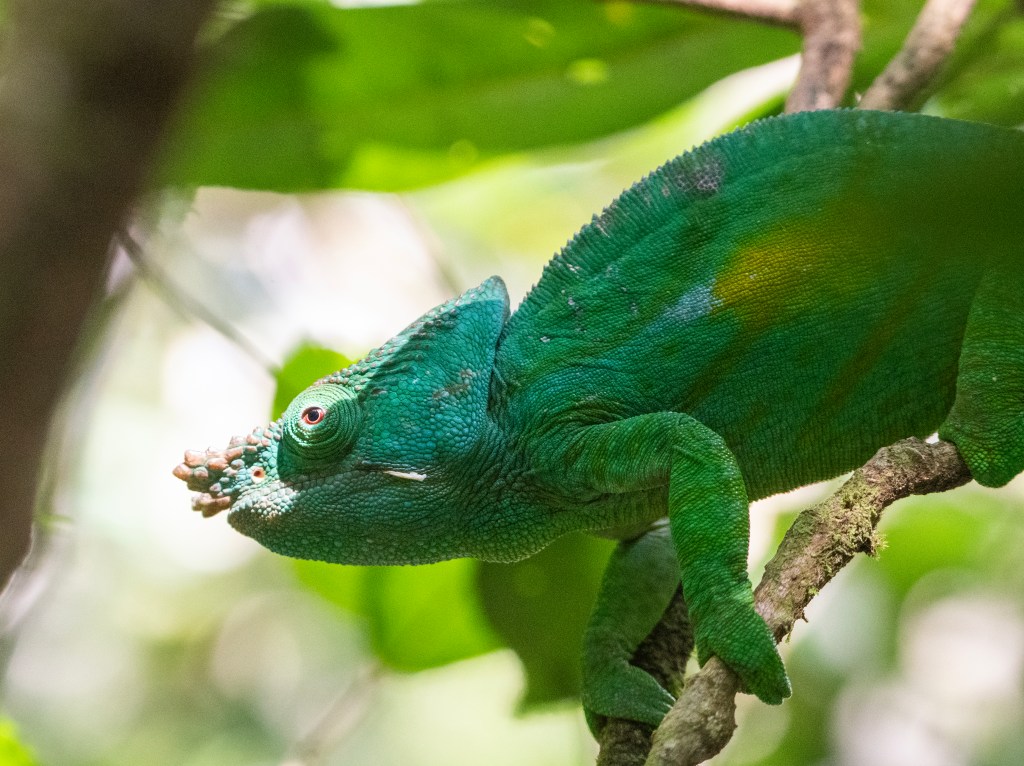
We reached at our destination – Ranomafana national park at around 6:00 pm. And then did a night-walk on the road along the edge of the forest adjacent to the Andriamamovoka waterfalls, until 8:00 pm and then retired for the day when sudden gush of rain had halted us. However, we had already spotted Cryptic chameleon or blue-legged chameleon, Madagascar pimple-nose chameleon and elusive comet moth during our night-walk.
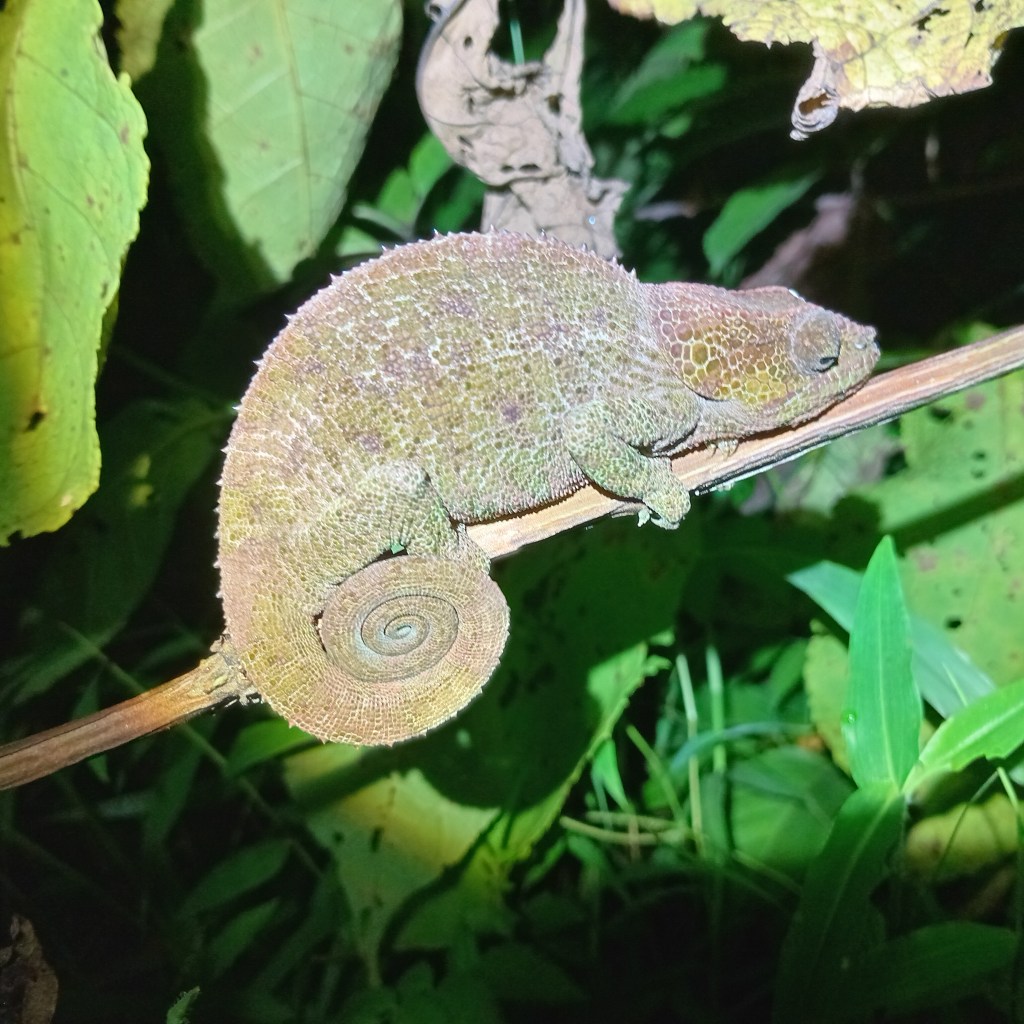
Madagascar pimple-nose chameleon

On 13th April, as usual at 7:30 am we headed towards Ranomafana national park and stayed inside the park up to 12:30 pm. The highlights of our sighting were Madagascar scops owl which was roosting on a dim light branch, golden bamboo lemur, ring-tailed vontsira or mongoose, and the most remarkable one from conservation point of view – the greater bamboo lemur (Hapalemur simus), also known as the broad-nosed bamboo lemur and the broad-nosed gentle lemur.
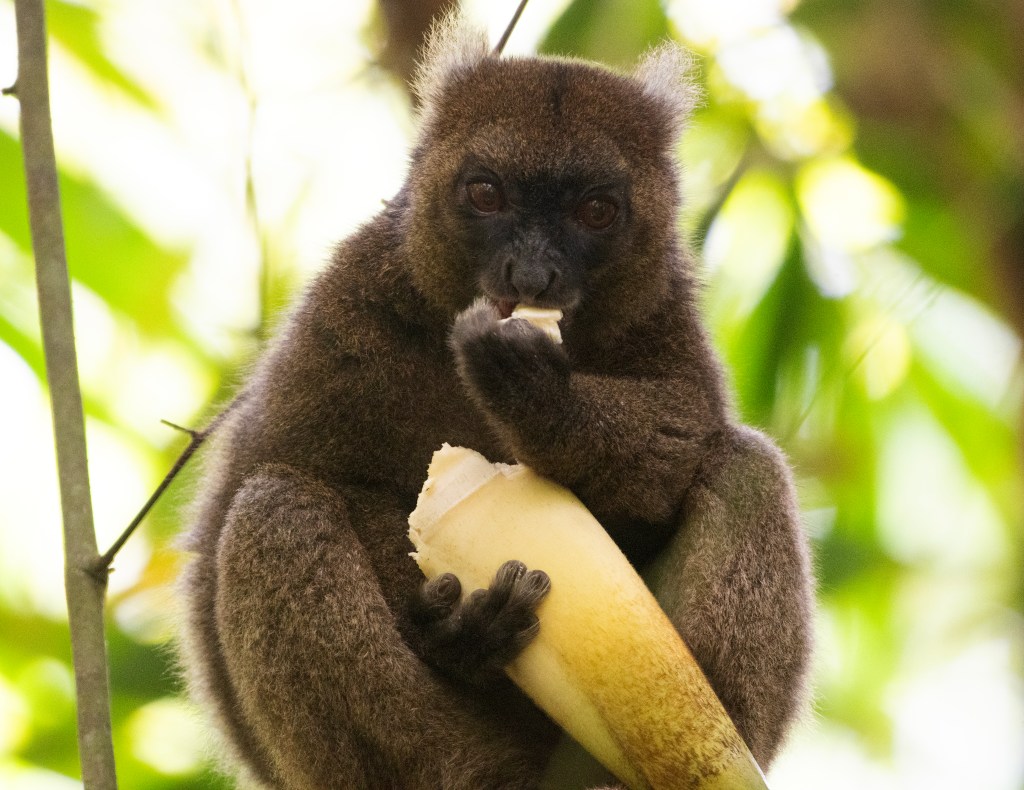
Greater bamboo lemur

The greater bamboo lemur, is one of the world’s most critically endangered primates, according to the IUCN Red List. Scientists believed that it was extinct, but a remnant population was discovered in 1986 (Wright, Pat (July 2008). “A Proposal from Greater Bamboo Lemur Conservation Project”. SavingSpecies. Retrieved 1 June 2012.). Since then, surveys of south- and central-eastern Madagascar have found about 500 individuals in 11 subpopulations. The home range of the species is likewise drastically reduced. The current range is less than 4 % of its historic distribution. The reason for the endangerment is climate change and human activities which depleted the primary food source (bamboo). This species of lemur is not capable of adapting to the rapidly changing habitat. Human activities and climate change have resulted in the depletion of populations and resulted in a few remaining patches of forest capable of supporting this species. The species is endangered by various anthropogenic activities such as slash and burn farming, mining, bamboo, and other logging, and slingshot hunting (Conniff, Richard (April 2006). “For the Love of Lemurs”. Smithsonian. 37 (1). Smithsonian Institution: 102–109.). As of October 2024, only 36 individuals are in captivity, world-wide (“Cotswold wildlife park successfully breeds endangered Madagascan lemur”. The Guardian. 20 October 2024. Retrieved 22 October 2024.).

The one we saw in Ranomafana during our exploration was an adult female and the only individual survived in that forest. According to Nandih, the local scientists were working on to find few other male individuals as her mating partners in order to conserve the species in that forest.

After lunch break on that day, we explored another side of the forest, the Voiparara Reserve from 3:45 pm to 4:45 pm. The addition to our list of lemurs was Milne-Edwards’s sifaka.

On 14th April, at around 7:00 am we started to proceed from wet zone to dry zone – towards Isalo national park. On the way we stopped by at Anja Forest at around 12:45 pm. The Anja Community Reserve is a woodland area and freshwater lake, situated at the base of a large cliff. Much of the reserve is dominated by fallen rocks and boulders and there are two small caves providing habitat for bats and owls. This reserve has much sheltered habitat in the pocket of forest that has established between the vast boulders. The reserve was created in 2001 with the support on the UNDP to help preserve the local environment and wildlife, and to provide additional employment and income to the local community. The reserve is home to the highest concentration of maki, or ring-tailed lemurs, in all of Madagascar. The people, who have a belief in not eating the maki, used to sell the maki to outsiders. However, after finding that 95% of makis in Madagascar are now gone, the people initiated the formation of a nature reserve, effectively establishing the world’s largest congregation site for makis. Due to its high biological, cultural, and natural importance, scholars have suggested the possibility of its inclusion in the UNESCO World Heritage List. (“Granite cliffs in the Anja Community Reserve near Ambalavao”. GettyImages.com. 6 October 2016. Retrieved 23 December 2017.).
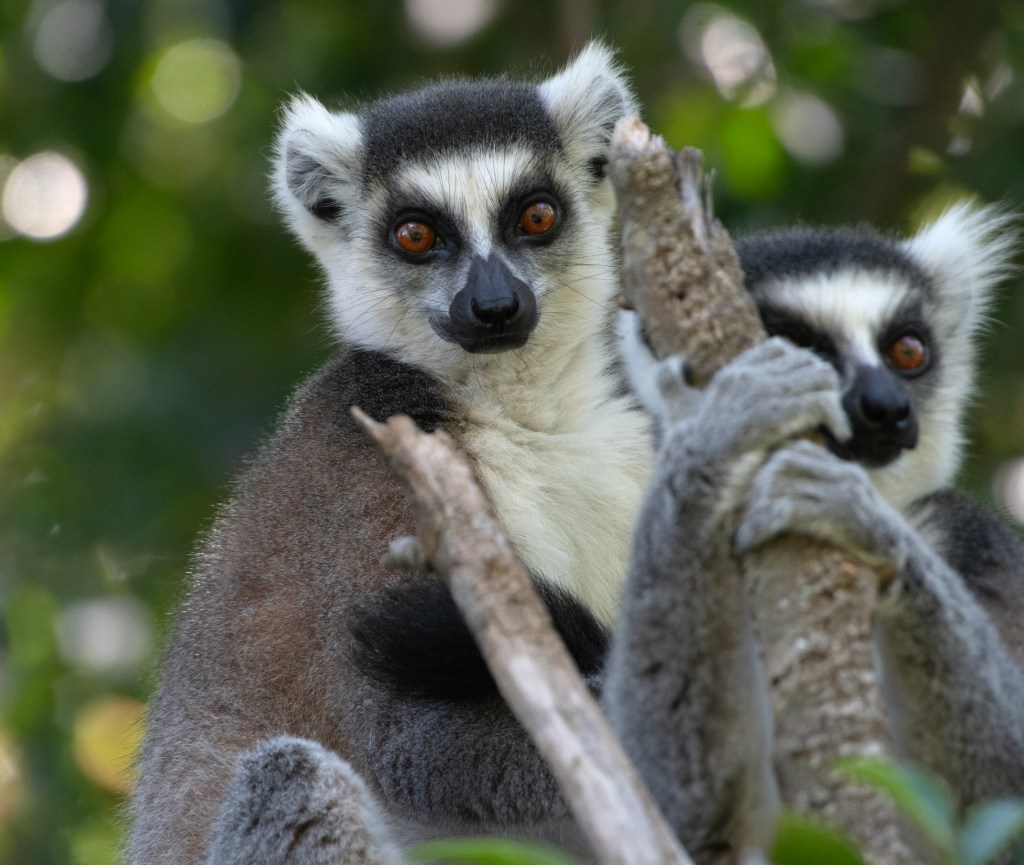
Ring-tailed lemur

We saw plenty of ring-tailed lemur in Anja. And few more new birds such as olive bee-eater and Madagascar blue pigeon, and few more chameleons – Malagasy giant chameleon or Oustalet’s chameleon and Brookesia or Nosy Hara leaf chameleon. We had left that forest at around 1:30 pm and by that time we reached at our resort in Isalo, it was 8:30 pm. After dinner we did our customary night-walk within the resort campus located within Ranohira village. And we spotted Madagascar nightjar, fruit bat, Madagascar cat snake, and Malagasy hissing cockroach, various other amphibians, lizards and insects. The resort was also home of few radiated tortoise (Astrochelys radiata). Although this species is native to and most abundant in southern Madagascar, it can also be found in the rest of this island. It is a very long-lived species, with recorded lifespans of up to 188 years. These tortoises are classified as Critically Endangered by the IUCN, mainly because of the destruction of their habitat and poaching.

We were about to start the second phase of exploration – the dry zone exploration. According to many of our team members, in the previous zone, i.e., in wet zone, we did not see enough frog species we should have had. In one such conversation during our trip, Achyuthan tried to explain few possible reasons what might have caused that. According to him less monsoon due to climate change, and chytrid fungus were primarily responsible behind disappearance of frog. The chytrid fungus attacks the parts of a frog’s skin that have keratin in them. Since frogs use their skin in respiration, this makes it difficult for the frog to breathe. The fungus also damages the nervous system, affecting the frog’s behavior. Wet or muddy boots and tires, fishing, camping, gardening or frog-survey equipment are suspected to be contributing to the spread of the disease. Achyuthan also said, bushes are thick in rainforest of Madagascar due to absence of any large herbivores. Therefore, there was not much gap between big trees and that could be a reason for not having suitable habitat for frogs.
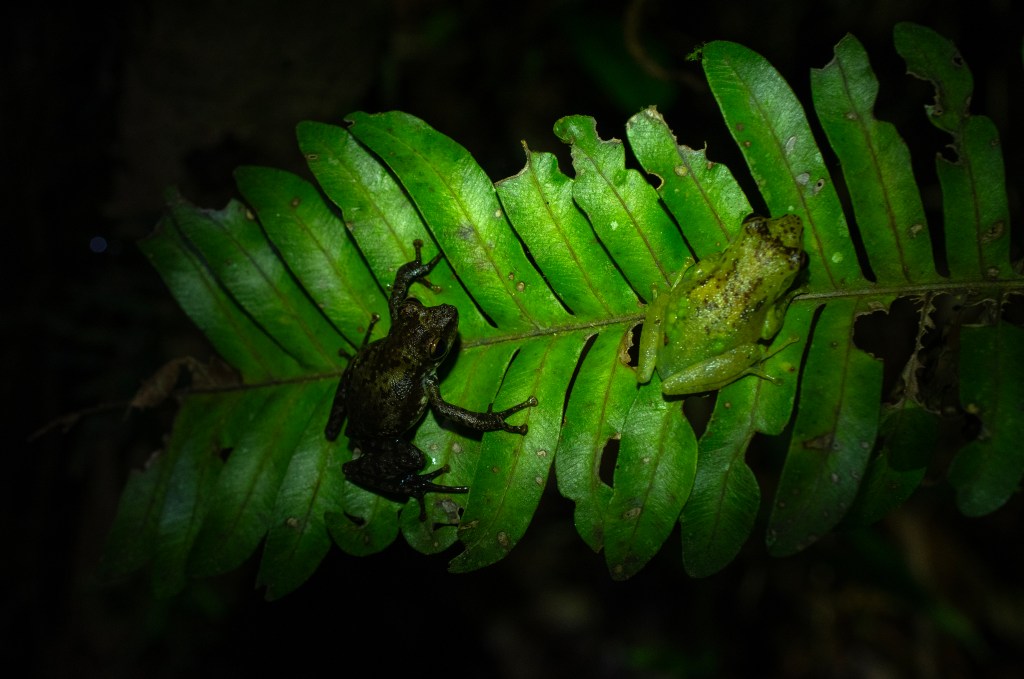
Jumping frogs

Researchers Franco Andreone, Mike Bungard and Karen Freeman in their book Threatened frogs of Madagascar, have mentioned, “the frogs of Madagascar suffer from a series of threats, including habitat alteration, deforestation, pollution and collection for the pet-trade.” According to them the biggest threat to Malagasy frogs is loss of habitat, either by deforestation or through the conversion of pristine rain forest into agricultural land. They have also mentioned, amphibians are experiencing a dramatic decline worldwide. Apart from habitat alteration, one of the major threats to frog populations is the spread of Batrachochytrium dendrobatidis, a fungus that attacks only amphibians, commonly called “Bd” and can result in a disease called chytridiomycosis. The origin of this fungus is not well known, but it has been found in many parts of the world, in both altered and pristine environments. Amphibians as bush-meat cited as another probable reason. Some species of Malagasy frogs are collected by local people for food, particularly large species of the genus Mantidactylus, such as M. guttulatus in central-eastern Madagascar, and Boehmantis microtympanum from the south-east. Another reason mentioned by them was the pet trade. Between 1996 and 2002 over 140 million amphibians were traded worldwide. In 1998 alone over 31000 golden mantellas (Mantella aurantiaca) were exported from Madagascar for the global pet trade. Species most commonly traded are green mantellas (Mantella viridis), harlequin mantella (Mantella cowani), the Baron’s mantella (Mantella baroni) and the expected mantella (Mantella expectata). Golden mantellas (Mantella aurantiaca) and tomato frogs (Dyscophus spp.) are particularly prized by collectors. Because they are active in the daytime and are brightly coloured, they are not only easy to catch but are also popular pets.

Although, there was no specific mention of reduced monsoon due to climate change as reason of disappearance of Malagasy frogs in the research done by Franco Andreone, Mike Bungard and Karen Freeman. However, climate change is projected to lead to an increase in temperatures for the entire island of Madagascar in the 21st century (Tadross, Mark; Randriamarolaza, Luc; Zo Rabefitia, Zo; Ki Yip, Zheng (February 2008). “Climate change in Madagascar; recent past and future”). Climate change is a significant threat to Madagascar’s environment and people. Climate change has raised temperatures, made the dry season longer and has resulted in more intense tropical storms. The country’s unique ecosystems, animal and plant life are being impacted.
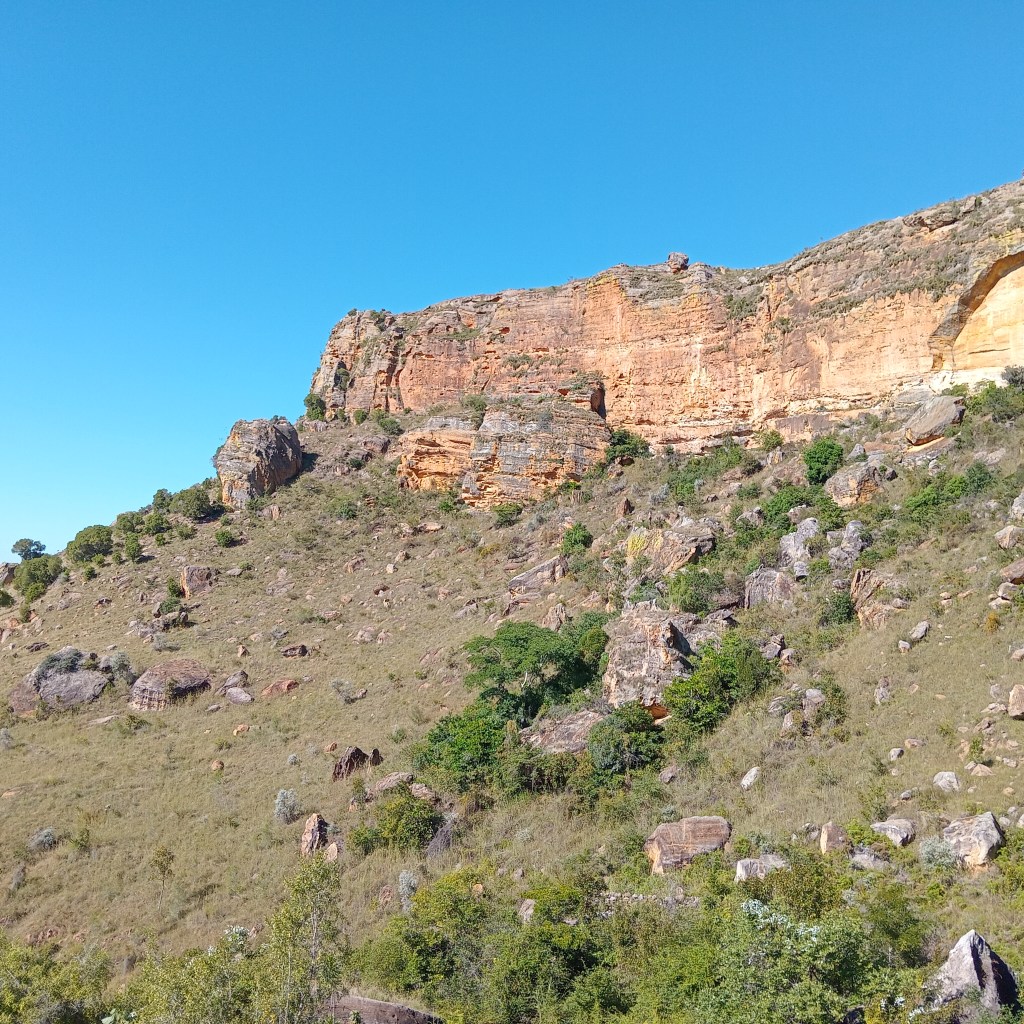
Isalo national park

With this realization we started our dry zone exploration on 15th April at Isalo National Park. It continued 8:30 am to 12:30 pm. In scorching heat, walking through rocky terrain with no canopy cover not only made our exploration harder but also reminded the real time effect of climate change. Isalo is a sandstone landscape that has been dissected by wind and water erosion into rocky outcrops, plateaus, extensive plains and up to 200 m (660 ft) deep canyons. There are permanent rivers and streams as well as many seasonal watercourses. Elevation varies between 510 and 1,268 m (1,673 and 4,160 ft). Isalo is primarily within the dry deciduous forest ecoregion, an ecoregion in which natural vegetation has been reduced by almost 40% of its original extent.

Grey headed love birds

During our exploration in Isalo, we saw three more new bird species – Madagascar munia, grey headed love birds and Madagascar lark. Among reptiles the interesting observations were Malagasy iguanian lizards, and Jeweled chameleon or Campan’s chameleon or the Madagascar forest chameleon. However, as always, we were fascinated by adding one more lemur species in our list – Verreaux’s sifaka or the white sifaka.

Verreaux’s sifaka

On 16th April, we started our journey to move further towards west-coast of the country. Started at 7:30 am we reached the coastal town Tulear or Toliara at around 8:30 pm. On the way we visited Zombitse National Park between 9:00 am and 12:00 pm. The main landscapes found in the park are forests, woodlands, open grasslands and there are also some limited wetland areas. The opening sightings in the park were a huge hog-nosed snake and then a Standing’s Day gecko. Some mention worthy bird species were lesser varsa parrot, Madagascar blue Vanga, and Madagascar black kite. And of course, Hubbard’s sportive lemur (Zombitse sportive).
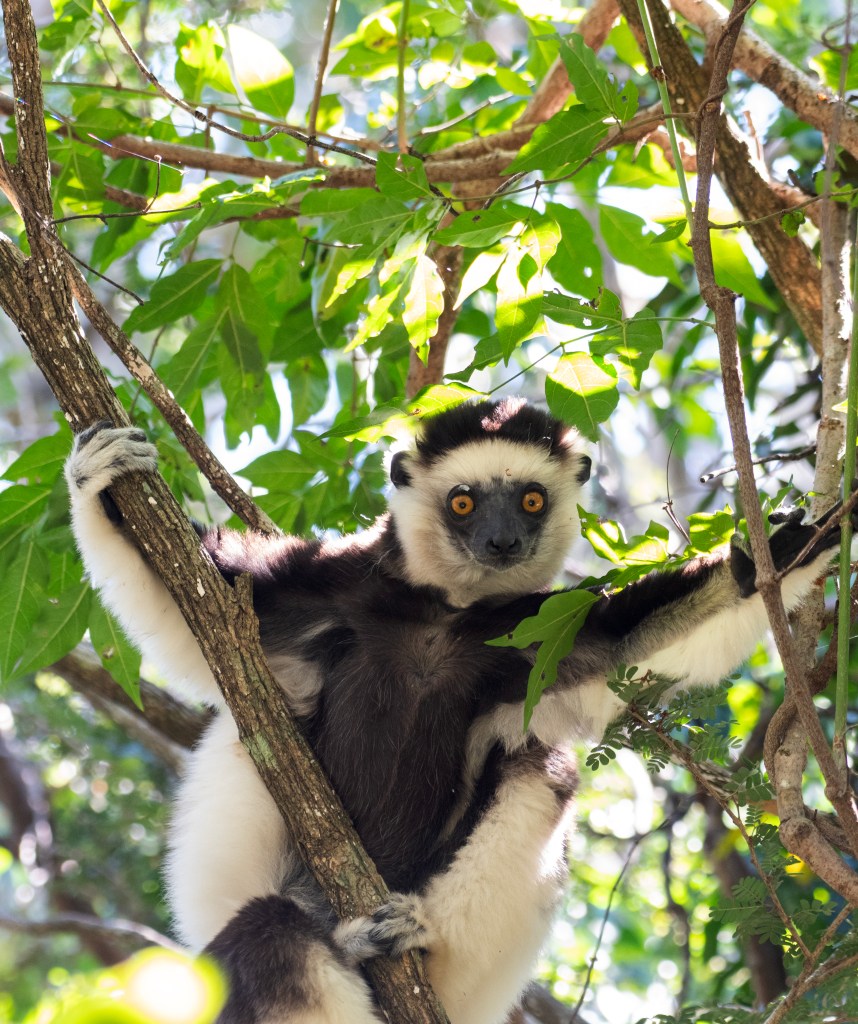
Zombitse sportive lemur

The last exploration was in the forest of iconic baobab trees on 17th April in Reniala Reserve of spiny forest between 6:00 am and 9:00 am. Reniala (meaning baobab in Malagasy) Private Reserve is a small 45-ha protected area less than 1km from the Mozambique Channel near the village of Ifaty-Mangily. The bizarre spiny forest (or spiny thicket) is one of the oddest and most unique habitats on the planet. Reniala is a small community-managed reserve of only 45 ha, but is a properly protected portion of spiny forest crowded with species found nowhere else on earth. It hosts more than 2,000 plant species, 95% of which are endemic to this rare habitat, including a whole plant family, the alien-like octopus trees (Didieraceae).
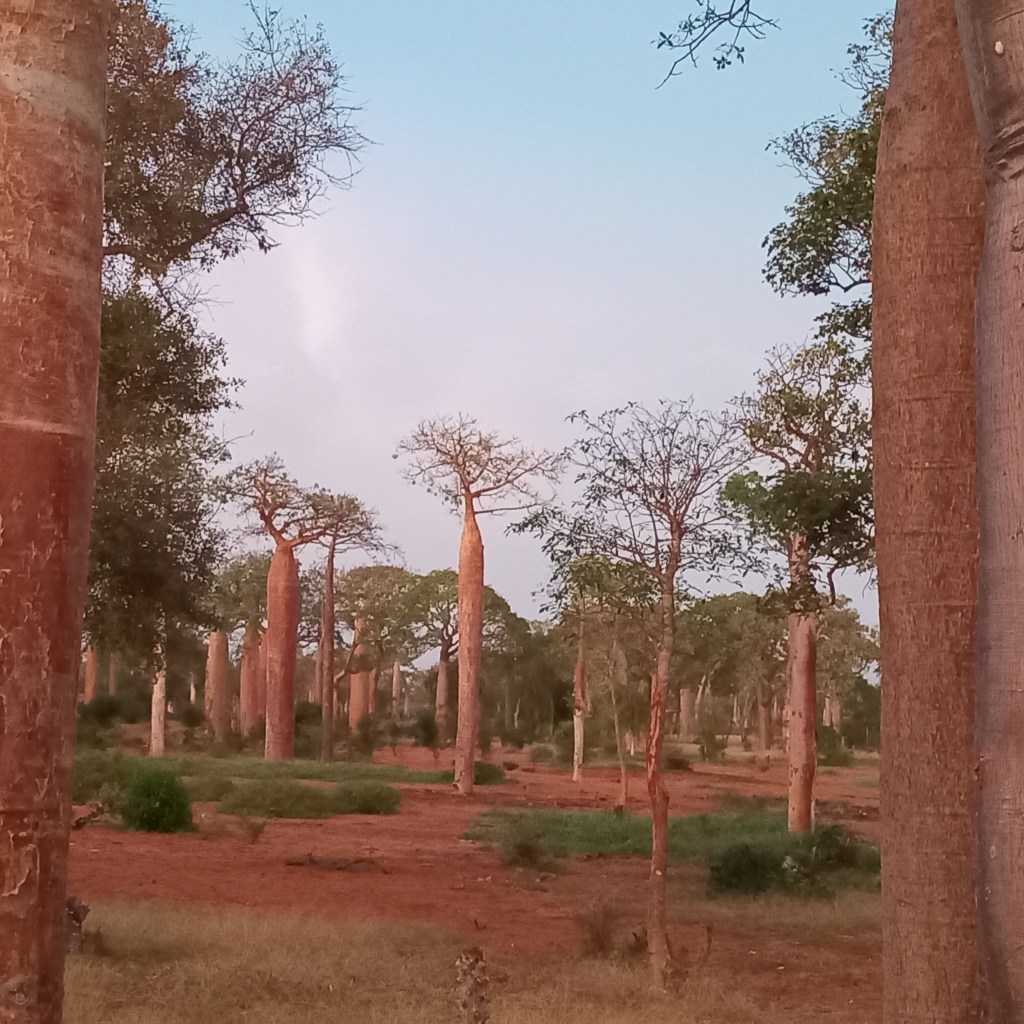
Iconic baobab in Reniala Reserve of spiny forest

Along the reserve’s botanical trail, we came across some of the most spectacular and oldest baobabs in Madagascar (there was a giant baobab of 12.5 m diameter). It is also a bird sanctuary and early morning exploration generally creates opportunity to sight some of Madagascar’s most sought-after endemic avian species. We could also see Madagascar cuckoo, Namaqua dove, Malagasy Harrier, green capped coua, and the elusive long tailed ground roller.
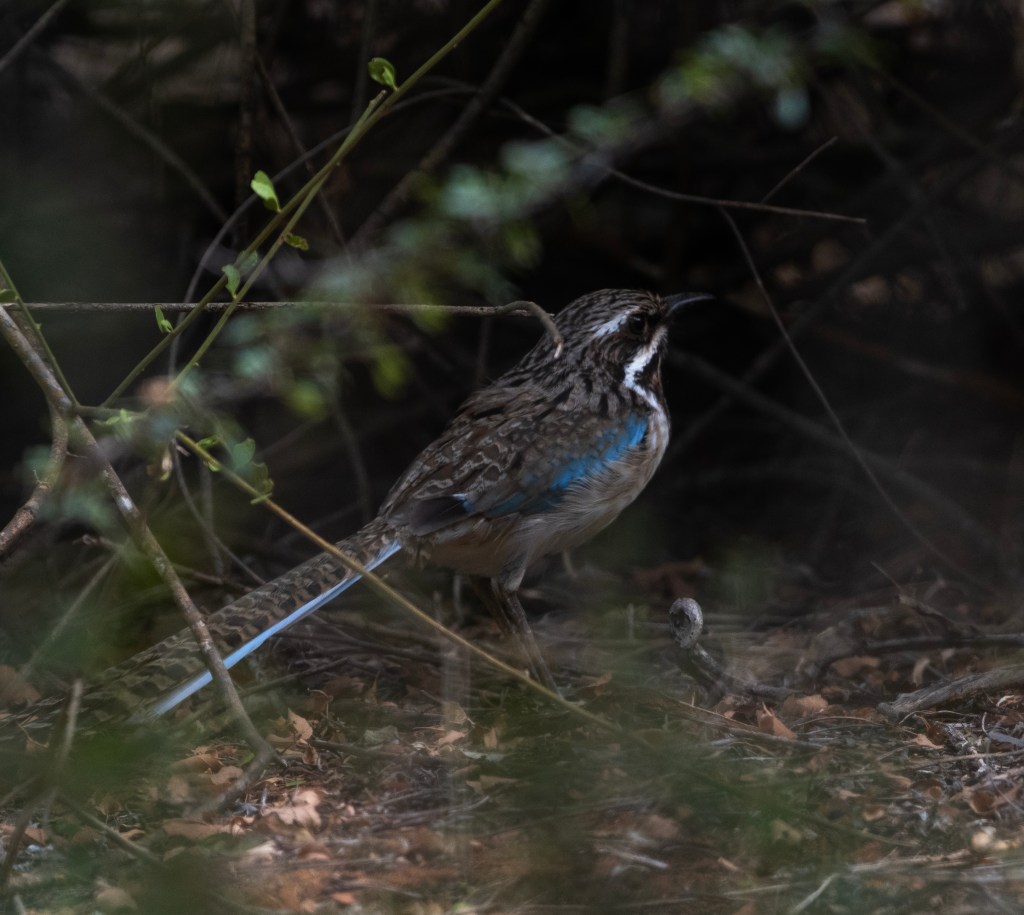
long-tailed ground roller

During our 11 days exploration starting from North-East part to South-West part of the country, in 16 different ecotourism destinations, we spotted and identified around 39 species of birds, 18 species of mammals (including 16 species of lemur), 25 species of reptiles, 12 species of amphibians, and 14 species of insects. But it was just scratching the surface.
“I Like to Move It”

As mentioned in the portal of Convention on Biological Diversity, Madagascar is a megadiverse country with a high concentration of endemic species. Its ecosystems include many types of forests, savannah, steppes, rivers, lakes, wetlands, mangroves, drylands and reefs. Currently, these unique ecosystems are home to approximately 12,000 species of vascular plants (96% endemic), 586 species of ferns (45% endemic), 194 species of palms (97% endemic), 1000 species of orchids (85% endemic), 389 species of reptiles (90% endemic), 278 species of amphibians (100% endemic), 282 species of birds (37% endemic), 159 species of fish (66% endemic), 104 species and subspecies of lemurs (100% endemic), 60 species of non-flying small mammals (92% endemic), 43 species of bats (73% endemic) and 13 species of carnivore (77% endemic).

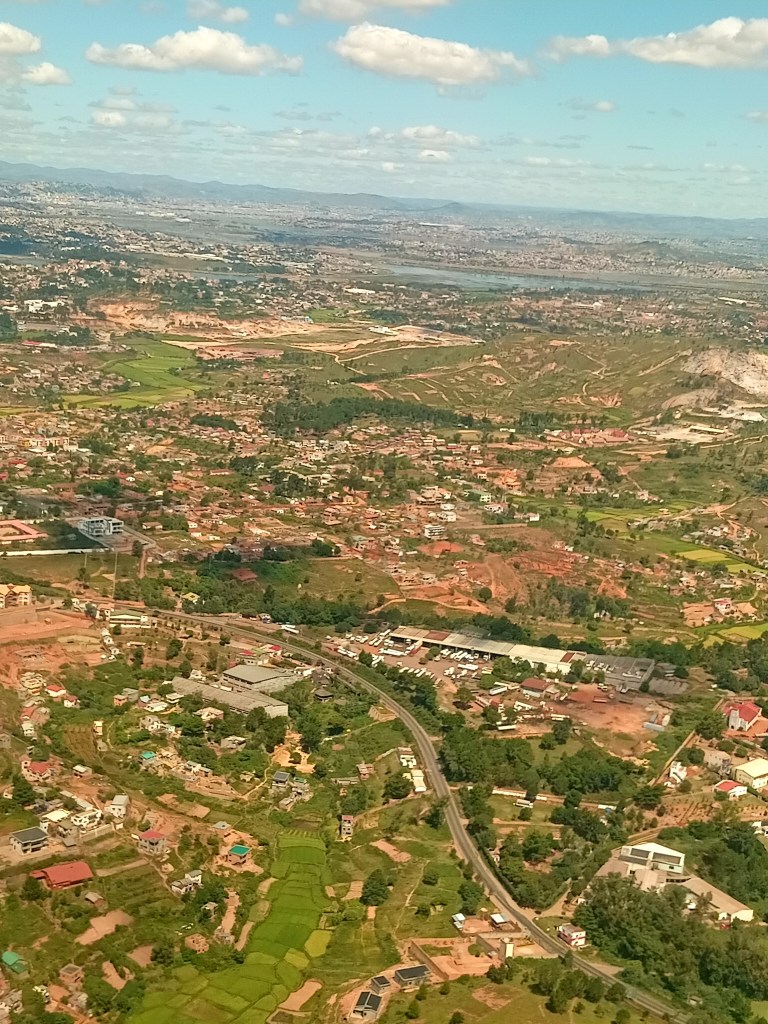
Between 7th and 17th April of 2025, I explored some part of Madagascar including 16 various ecotourism destinations in wet and dry zone of the country. As per One Earth portal, the Madagascar bioregion, part of the Madagascar and Eastern Afrotropics subrealm located in the Afrotropics realm, is separated from the African continent by the Mozambique Channel dominated by humid tropical forests in the east, drylands in the south, and dry forests in the north. The bioregion contains eight ecoregions—Madagascar Humid Forests, Madagascar Subhumid Forests, Madagascar Dry Deciduous Forests, Madagascar Ericoid Thickets, Ile Europa and Bassas Da India Xeric Scrub, Madagascar Spiny Thickets, Madagascar Succulent Woodlands, and Madagascar Mangroves — with a total land area of more than 59 million hectares, making it the fourth largest island in the world.

Aerial view of Madagascar

Out of these eight ecoregions, my exploration covered four ecoregions such as Madagascar subhumid forests, Madagascar humid forests – together in general term called as wet zone and Madagascar succulent woodlands and Madagascar spiny thickets – together in general term called as dry zone.

Exploration Map between 7th and 17th April 2025

I reached Madagascar on 6th April afternoon after change of three flights, from Delhi to Mumbai and then to Adis Ababa and finally to Antananarivo, the capital of Madagascar, or commonly known as Tana. In the morning of 7th April with my local guide John Razafindrakoto from Get Your Guide, after a 65 km of road drive through country side which often turned-out as bumpy ride with multiple off roading, I reached at Mantasoa Lake. As per original schedule we were supposed to start at 7 am, but due to miscommunication between Get Your Guide and John we could eventually start at 9:30 am. In order to explain reason behind dusty and broken condition of road, on the way to Mantasoa, John was telling me, how the current Government is indifferent about infrastructure development in Madagascar. Madagascar’s overall poor infrastructure is negatively affecting its economic growth and development opportunities. While 70 % of primary roads are in good condition, about two-thirds of secondary and tertiary roads are estimated to be in poor condition (as per World Bank report, 2018). In 2018, the World Food Programme and the Global Logistics Cluster classified 64 % of roads in Madagascar as in poor driving condition, 28 % in average condition, and 10 % in good condition; seven-in-ten of the primary roads fall into the latter-most category, which is defined as being navigable throughout all seasons of the year. As natural gravel is not regularly available on the island of Madagascar, many roads are composed of sand lined with crushed stone, (de O.S. Horta, Jose Carlos; Traverso, Carlo R. (1991). “Deterioration and rehabilitation of earth roads in Madagascar”).

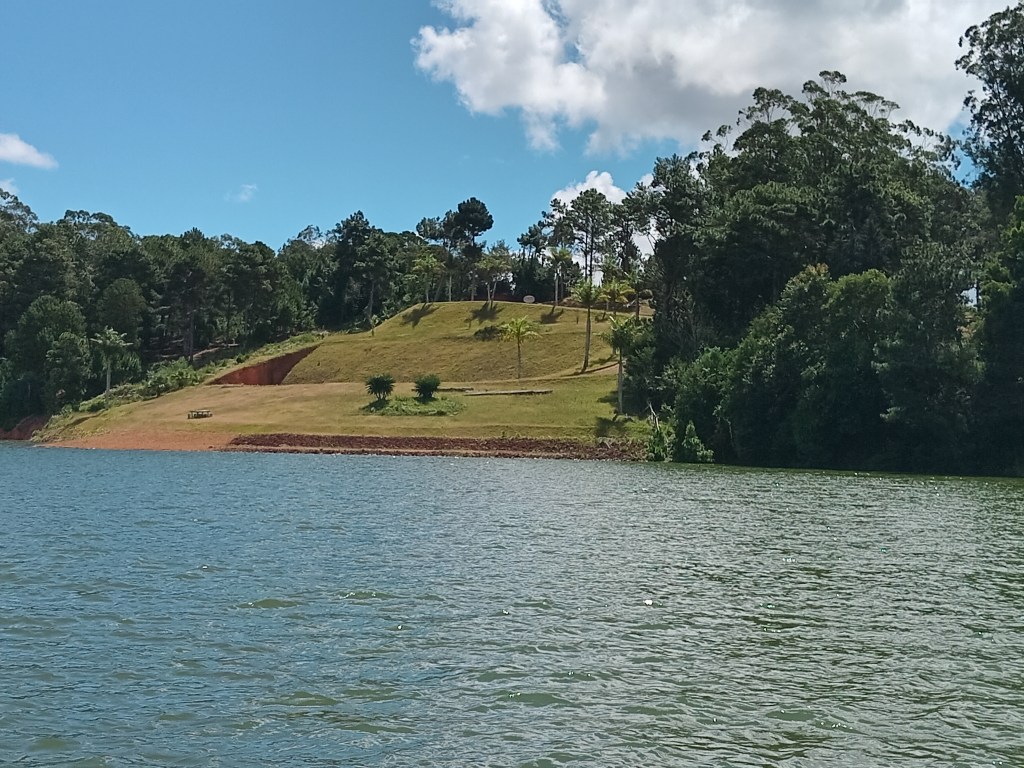
Lake Mantasoa

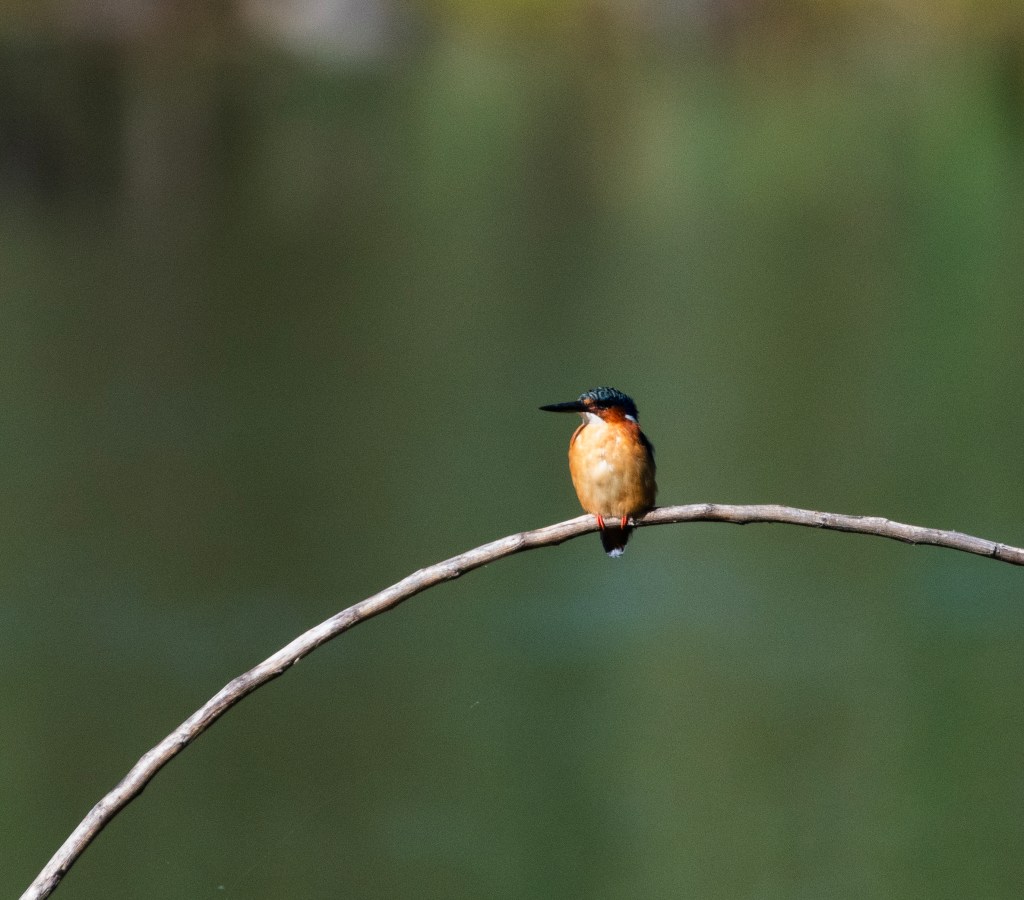
Lake Mantasoa is a large artificial lake with a surface area of 20.05 km2, created by the Mantasoa Dam on the Varahina river (an affluent of the Ikopa) in the municipality of Mantasoa, Analamanga region of Madagascar. It provides immediate irrigation for Betsimitatatra paddies in Analamanga and tabbed water for the capital Antananarivo. The water temperature reaches up to between 13–22 degrees in winter. The lake’s lack of basal microfauna and ferruginous soil provides clear water. While entering the lake area I had my first sighting of Malagasy kingfisher and African stonechat. Although my first sighting of endemic birds of Madagascar had happened in the backyard of San Cristobol Hotel near Tana airport, where I stayed for couple of days. Those were red fody or Madagascar fody and Madagascar wagtail. While crossing the lake on a boat to reach the Nosy Soa park we saw a flock of White-faced whistling duck. Approximately ten-fifteen minutes of boat ride took us to Nosy Soa Park which is a naturalized zoological garden on an island half way along the Great Lake of Mantasoa. Built on an island of one kilometer in circumference in the heart of the lake, the private reserve of Nosy Soa has for main objective the reconstitution of a natural space too often ravaged by human. The fauna and flora have been successfully reintroduced since 2002, transforming the place into a very pleasant zoological garden with an educational vocation. Five species of lemur such as ring-tailed, Coquerel’s sifaka, black and white ruffed, Eastern bamboo and common brown lemur – which were rescued from forest and some of them were bred in captivity could be easily spotted around the park. I also got so see fascinating O’Shaughnessy’s chameleon and giant hog-nosed snake, poisonous Mantella and tomato frogs. Of course, everything was in semi-wild condition kept within a naturally created and anthropogenically transformed habitat.

Malachite Kingfisher

After all these experiences, again after a long drive through bad road, I reached at my hotel at around 7:30 pm. By that time some of our exploration team members had already arrived who were also staying in same hotel. Our main exploration was supposed to start from 9th April. I reached couple of days earlier to see few more ecotourism destinations as it was my first trip to Madagascar and only second to Africa. The exploration was organized by Bangalore based ecotourism and wildlife photography company Darter Photography in collaboration with local Madagascar based ecotour company Cactus Tour. Therefore, my good friend and CEO of Darter Photography, M.V. Shreeram was leading the exploration assisted by a PhD scholar in evolutionary biology and herpetologist Achyuthan Srikanthan. The retired Chief Naturalist of Karnataka’s Jungle Lodge Resort group (JLR), Karthikeyan Srinivasan was also part of that group.

On 8th April morning at 7:30 am, Shreeram, Achyuthan, Karthikeyan and I went for another exploration before our main exploration had started. Located in the heart of Antananarivo, the Tsarasaotra park is known for its 14 species and subspecies of endemic and threatened waterbirds. As the first private Ramsar site in Madagascar, it offers a glimpse into the richness of Malagasy avifauna. The Site consists of a lake of around ten hectares, with an islet, flood zones and wooded edge. The lake is surrounded by eucalyptus and camphor trees, as well as Juncus and Cyperus reeds. It plays an extremely important role in providing a refuge and nesting site amid the urban environment to waterbirds such as herons and ducks. Particularly during the hunting season, the Site is key to the survival of 14 threatened waterbird species and subspecies endemic to Madagascar. It is the only known site on the Malagasy highlands to host the endangered Madagascar pond heron (Ardeola idae), and it is also home to the endangered Meller’s duck (Anas melleri) and the vulnerable Madagascar grebe (Tachybaptus pelzelnii). The lake is privately owned, and a management plan is not yet available to address the eutrophication and erosion problems that are reducing the lake’s surface area and degrading its water quality.

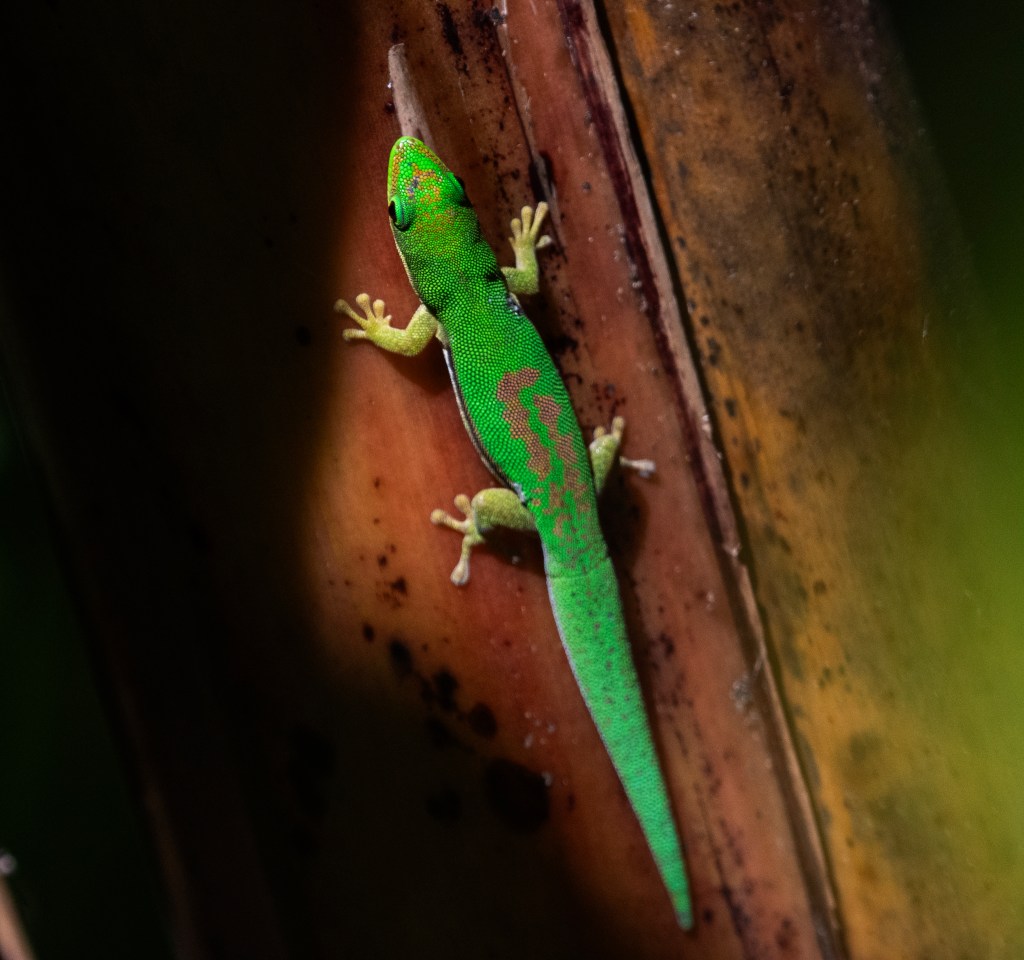
Day gecko

During our three hours of exploration, there we spotted various bird species including black heron, red and blue billed teal, Malagasy white eye, Madagascar hoopoe etc. Some phenomenal reptile sightings were Madagascar day gecko and Lined day gecko.

Our actual exploration started from 9th April, when we started for Andasibe at around 8:30 am. We were 8 people from India, and joined by our local Malagasy nature guide from Cactus Tour – Nandih. We reached at Andasibe at around 1:30 pm. Then after lunch we explored VOIMMA National Park until 5 pm. Then after a quick break and checking in hotel we did a couple of hours of night walk in the park between 6 pm and 8 pm.

VOI M.M.A (Vondron’Olona Miaro Mitia Ala, meaning “the villagers who love and protect the forest” is a community-managed reserve located in Andasibe, about 1.5 km from the Analamazaotra National Park, in the Andasibe region of Madagascar. Created in 2012 by local villagers, this initiative aims to offer a community-based alternative to the nearby national park, while promoting ecotourism and the conservation of primary forest. In short, VOI M.M.A is another forested area in the Andasibe region, managed entirely by the local community and adjacent to the national park. The reserve covers about 0.4 km² of protected primary forest. It is managed by the villagers, and the income generated helps fund community projects such as access to clean water and support for the local health center. The park is well known for sightings of the indri-indri, the largest of all lemurs, but visitors can also encounter the diademed sifaka, the woolly lemur, various frog species (such as Boophis pyrrhus and Boophis viridis), chameleons (Furcifer willsii, Calumma parsonii), geckos (including the famous Uroplatus phantasticus), and unique insects like the giraffe weevil. The flora is just as impressive — a dense, untouched primary forest perfect for nature lovers and botany enthusiasts.

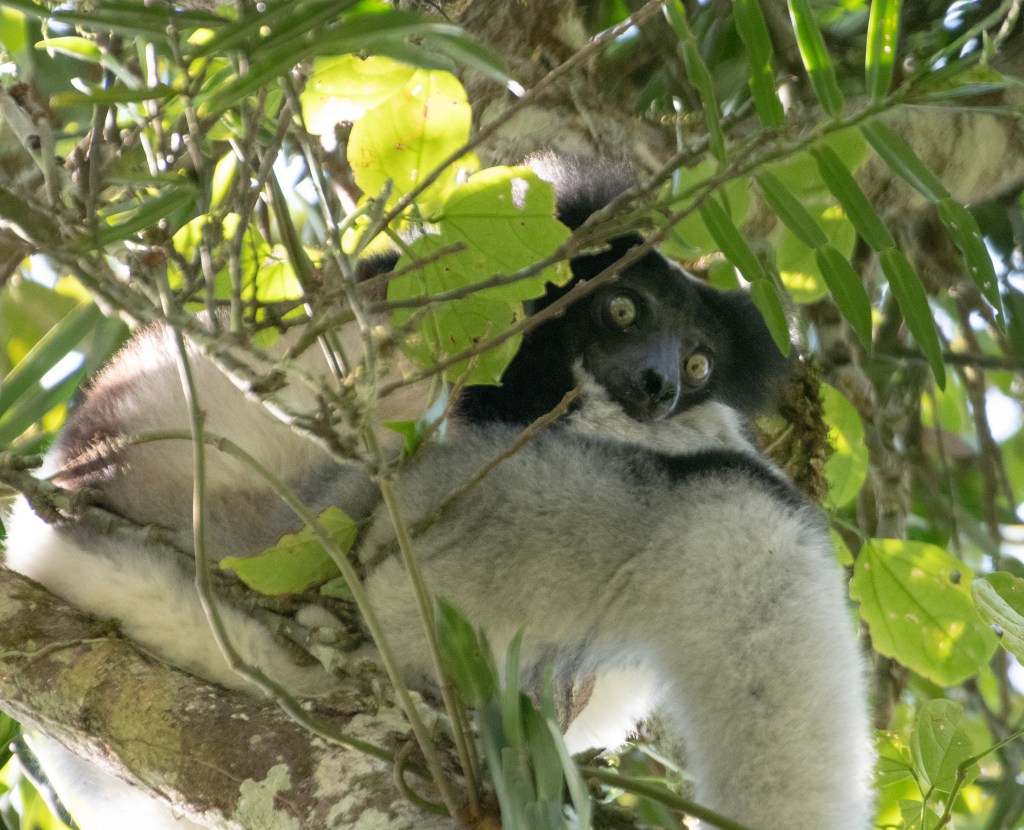
Largest living Lemur – Indri

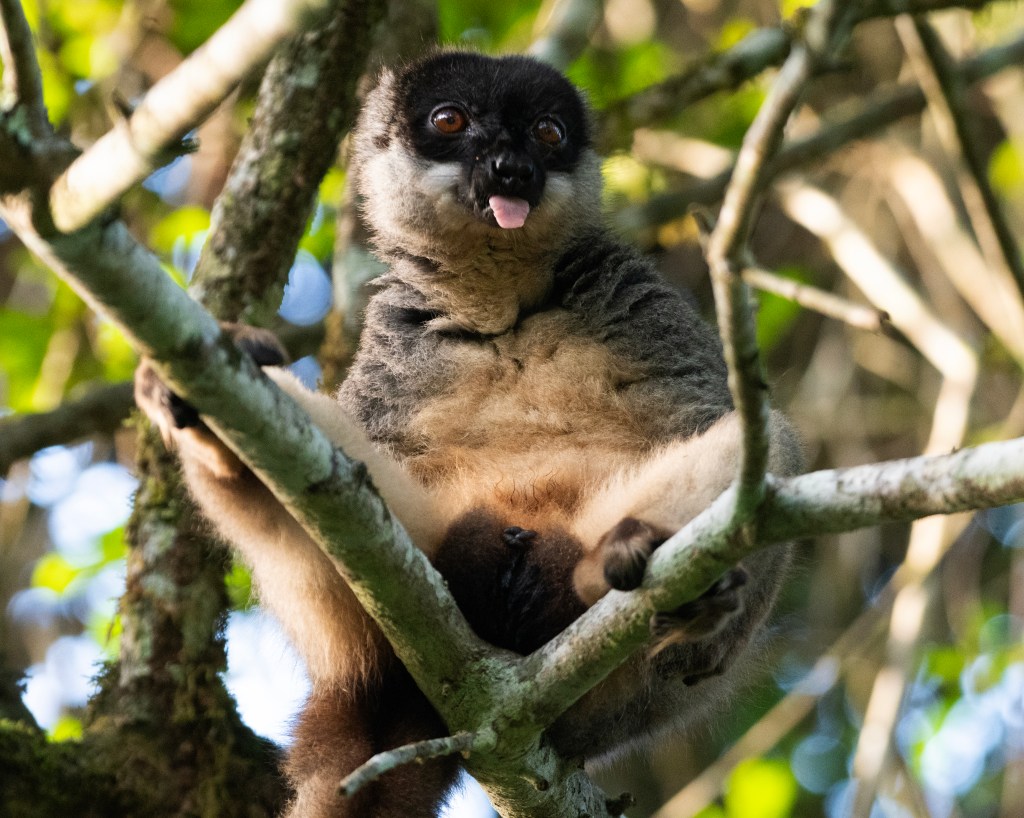
Moment, we entered into the forest during afternoon exploration, we spotted Madagascar paradise flycatcher. Other bird species spotted were Speactacled tetraka, Souimanga sunbird, Nelicourvi weaver etc. But of course, the highlight of the day was sighting of largest species of lemur survived in wild – Indri lemur. Besides that, we also saw common brown lemur. Other highlights were spotting of Parson’s chameleon, mossy leaf-tailed gecko and satanic Leaf-tailed Gecko (Uroplatus phantasticus). Among many insects we spotted there during afternoon and night exploration, the mention worthy was colorful giraffe necked weevil. During night exploration, one more lemur species were added in our lemur sighting list – the mouse lemur.

Next day, on 10th April, our exploration area was Analamazaotra National Park, from 8 am to 12:30 pm. The park is in the eastern portion of Madagascar’s Central Highlands. The neighbouring Analamazaotra Forest Station is a local reforestation effort. It adjoins Andasibe-Mantadia National Park to the north. The reserve is situated in the region Alaotra-Mangoro, close to Moramanga and Andasibe. There we had our first encounter with snakes of Madagascar – Pseudoxyrhophus snake, Fandrefiala (Ithycyphus miniatus), and Malagasy rat snake. The new lemur species added in list was Diademed sifaka.

Person’s chameleon

After lunch break the next destination of the day was lemur’s island, which was similar to Nosy Soa but wilder and bigger. I said wilder because of its high canopy tree and less human intervention. Lemur island is a sanctuary for injured or unwanted pet lemurs. A wide water channel surrounds the island for their own safety. We crossed the channel in a plastic kayak, quickest kayak trip I ever did. One mention worthy bird species immediately after entering into the park we spotted was cuckoo roller. The lemur species we got to see there were black and white ruffed, red ruffed, red-bellied lemur and Eastern grey bamboo lemur.

That day we did night walk at Mitsinjo reserve near Analamazaotra, from 6 pm to 8 pm. Heterixalus madagascariensis or the blue back reed frog, Boophis Pyrrhus, golden mantella (Mantella aurantiaca), and Aglyptodactylus madagascariensis or the Madagascar jumping frog were some of the amphibians we saw there. First time we saw woolly lemur during our night walk. the Mitsinjo Reserve is a community-managed protected area, situated right next to the entrance of the Analamazaotra-Andasibe National Park. It is managed by the Mitsinjo Association, a community-based organization founded in 1999 by local residents with the goal of protecting the surrounding rainforest and wetlands. According to available information, the association also manages the Analamazaotra Forest Station independently of the national park, in collaboration with local communities. The Malagasy word Mitsinjo means looking ahead or planning the future.

Diademed sifaka.

Next day, 11th April was all about long road trip from Andasibe to Antsirabe, via Tana. We started at 7:30 am and reached in hour hotel at 8:30 pm. In Madagascar, Antsirabe is known for its relatively cool climate (like the rest of the central region), its industry and the high concentration of pulled rickshaws or Pousse-Pousse. That reminded us about Eastern Indian city Calcutta and neighboring country Bangladesh. Antsirabe attracts around 30,000 tourists a year. After a night halt in Antsirabe next day morning we headed for Ranomafana National Park. We started at 7:30 am and on the way we stopped by at Manandona community forest by the river Manandona, at around late afternoon. It is located at about 23 km south of Antsirabe on the RN 7, a primary highway in Madagascar running 980 km from the capital Antananarivo to Tulear at the South-West coast of the country. The Manandona river flows by this town. Highest Point of the commune is the Mont Ibity with 2250m, which is a tourism attraction point for local people and a customary stoppage cum bio break point for foreigner tourists.

The majority – 90% of the population of the commune are farmers, while an additional 10% receives their livelihood from raising livestock. As they know, international tourists would stop at this point therefore, they were prepared to welcome them in an unusual way. Tourists correlate Madagascar with its diversified, colorful and unusual looking chameleons. When we arrived at that point and got down from our twelve-seater traveler, we were astonished to see around 10-15 kinds with few adult male and female locals were waiting for us, holding twigs in their hands. All the twigs had at least one chameleon each, of different color. They were providing photo opportunities to foreigners in exchange of some money. Based on the conversation Nandih had with those kids and their adult companions, all those chameleons were captured from their farming lands and kept as pet. They keep them as long as these reptiles are healthy enough to remain as photography subjects and then leave them in farm or at roadside to die. And this cycle continues for ever to support their desperate effort to survive hunger and poverty. This is how human hunger, and poverty can accelerate extinction of other non-human species. Achyuthan identified most of those colorful chameleons were Calumma glawi, already declared as Endangered species by IUCN.

Ecotourism and Climate Change

My ecotourism and photography adventures in the terai region of India were affected by unpredictable weather conditions. I witnessed that supporting the local community in various tiger reserves in terai of Nepal, is a way to become resilient to climate crisis. The nation state of Bhutan by integrating Buddhist philosophy of mindfulness and sustainability with core principles of deep ecology, has conquered climate crisis in ecotourism. And they did so, I noticed, without depending upon a single species, like the tiger.

In December 2020 I travelled to Dudhwa tiger reserve of Indian Terai and then in April 2023 I was in Terai of Nepal. Year later I explored across length and breadth of Bhutan. All these enlightened me role of ecotourism as a climate change resilient activity.

Dudhwa National Park is a national park in the Terai belt of marshy grasslands in northern Uttar Pradesh, India. It stretches over an area of 490.3 km2 (189.3 sq mi), with a buffer zone of 190 km2 (73 sq mi). It is part of the Dudhwa Tiger Reserve in the Kheri and Lakhimpur districts.

The area of today’s Dudhwa National Park was established in 1958 as a wildlife sanctuary for swamp deer. It was notified as a national park in January 1977 thanks to the efforts of Billy Arjan Singh.[3][failed verification] In 1987, Dudhwa National Park together with Kishanpur Wildlife Sanctuary and Katarniaghat Wildlife Sanctuary was declared a tiger reserve named Dudhwa Tiger Reserve.

Forest of Dudhwa in early morning mist

Parsa National Park is a national park in the Terai of south-central Nepal covering an area of 627.39 km2 (242.24 sq mi) in the ParsaMakwanpur and Bara Districts and ranging in elevation from 435 to 950 m (1,427 to 3,117 ft) in the Sivalik Hills. It was established as a wildlife reserve in 1984 and received national park status in 2017. It is surrounded by a buffer zone since 2005 with an area of 285.3 km2 (110.2 sq mi). In 2015, the protected area was further extended by 49 sq mi (128 km2).

A community which protects part of Parsa tiger reserve

Chitwan National Park is the first national park of Nepal. It was established in 1973 as the Royal Chitwan National Park and was granted the status of a World Heritage Site in 1984. It covers an area of 952.63 km2 (367.81 sq mi) in the Terai of south-central Nepal. It ranges in elevation from about 100 m (330 ft) in the river valleys to 815 m (2,674 ft) in the Sivalik Hills.

Tiger sighting at Chitwan

Bardiya National Park is a protected area in Nepal that was established in 1988 as Royal Bardia National Park. Covering an area of 968 km2 (374 sq mi) it is the largest and most undisturbed national park in Nepal’s Terai, adjoining the eastern bank of the Karnali River and bisected by the Babai River in the Bardiya District. Its northern limits are demarcated by the crest of the Siwalik Hills. The NepalgunjSurkhet highway partly forms the southern boundary, but seriously disrupts the protected area. Natural boundaries for human settlements are formed in the west by the Geruwa, a branch of the Karnali River, and in the southeast by the Babai River. Together with the neighboring Banke National Park, the coherent protected area of 1,437 km2 (555 sq mi) represents the Tiger Conservation Unit (TCU) Bardia-Banke that extends over 2,231 km2 (861 sq mi) of alluvial grasslands and subtropical moist deciduous forests.

Barasingha at Bardia

The Kingdom of Bhutan is a small, landlocked nation nestled in the southern slopes of the Eastern Himalaya. To its north lies the Tibet Autonomous Region of China and to the west, south and east lies the Indian states of Sikkim, Bengal, Assam and Arunachal Pradesh.

The terrain is some of the most rugged in the world, characterised by huge variations in altitude. Within the 150 miles between the southern and northern borders, Bhutan’s elevation rises from 150 to more than 7,500 metres. This great geographical diversity combined with equally diverse climate conditions contributes to Bhutan’s outstanding range of biodiversity and ecosystems.

The tiger, one-horned rhinogolden langurclouded leopardhispid hare and the sloth bear live in the lush tropical lowland and hardwood forests in the south. In the temperate zone, grey langurtigerleopardgoral and serow are found in mixed conifer, broadleaf and pine forests. Fruit bearing trees and bamboo provide habitat for the Himalayan black bearred panda, squirrel, sambar, wild pig and barking deer. The alpine habitats of the great Himalayan range in the north are home to the snow leopardblue sheepmarmot, antelope and Himalayan musk deer.

As of 2017 there are 4567 known species of flower plants and another 709 species of ferns and mosses. Regarding vertebrates, there are 736 species of birds, 129 species of mammals and 158 species of amphibians and reptiles.

In Bhutan forest cover is around 71% of the total land area, equivalent to 2,725,080 hectares (ha) of forest in 2020, up from 2,506,720 hectares (ha) in 1990. In 2020, naturally regenerating forest covered 2,704,260 hectares (ha) and planted forest covered 20,820 hectares (ha). Of the naturally regenerating forest 15% was reported to be primary forest (consisting of native tree species with no clearly visible indications of human activity) and around 41% of the forest area was found within protected areas. For the year 2015, 100% of the forest area was reported to be under public ownership.

White bellied heron in Bhutan
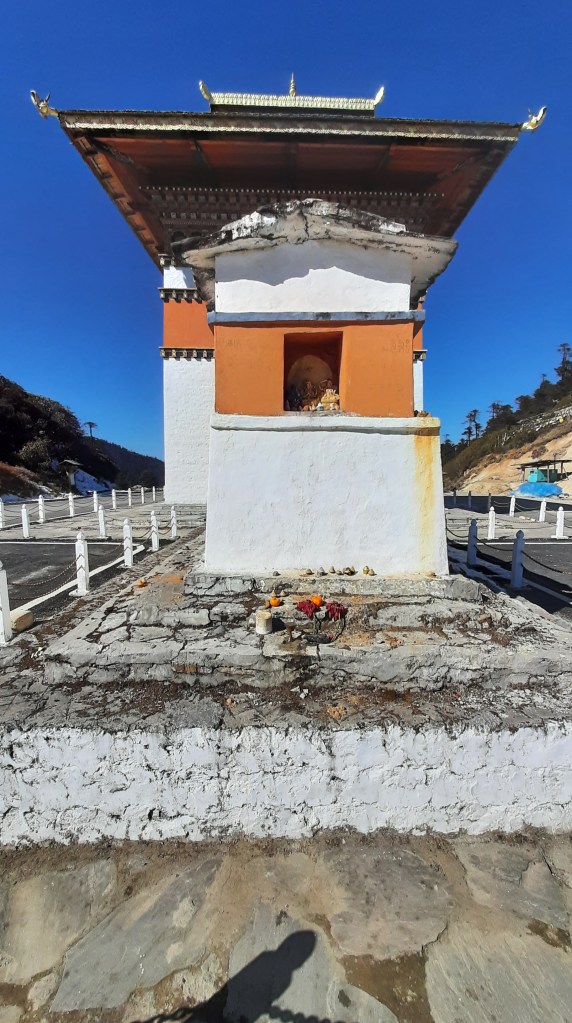
Philosophy of Buddhism influences ecotourism in Bhutan

How ecotourism can be used as effective tool to combat climate change read my book

OECM based Ecotourism

Other effective area-based conservation measures‘ (OECMs) are areas that are achieving the long term and effective in-situ conservation of biodiversity outside of protected areas.

In my opinion nature related activities cannot be considered as mere supplementary pursuits, based on ecotourism in a few glorified destinations, visited by most ecotourists and photographers. I have explored and witnessed the ecotourism and photography potential in various natural areas in northeast hills of India, that are located outside protected areas but are home to endangered and ecologically important species. Thus, the next dimension of inclusive ecotourism, the I reckon, is exploring and understanding these ‘other’ areas.

I have been part of ecotourism based on OECM in the northeast hills and Gangetic plane tiger habitats comprising Buxa, Manas, Orang and Kaziranga.

Buxa Tiger Reserve is a tiger reserve and national park in northern West BengalIndia, covering an area of 760 km2 (290 sq mi). It ranges in elevation from 60 m (200 ft) in the Gangetic Plains to 1,750 m (5,740 ft) bordering the Himalayas in the north. At least 284 bird species inhabit the reserve. Mammals present include Asian elephantgaurSambar deerclouded leopardIndian leopard, and Asian golden cat. The Bengal tiger is also present but rarely seen; as of 2005, Buxa Tiger Reserve had only one resident tiger.

A Burmese python in Buxa tiger reserve

Manas National Park is a national parkProject Tiger reserve, and an elephant reserve in Assam, India. Located in the Himalayan foothills, it borders the Royal Manas National Park in Bhutan. The park is known for its rare and endangered endemic wildlife such as the Assam roofed turtlehispid haregolden langur, and pygmy hog. It also hosts the only known population of pygmy hogs in the world. Manas is also famous for its population of the wild water buffalo. Because of its exceptional biodiversity, scenery, and variety of habitats, Manas National Park is a biosphere reserve and a UNESCO World Heritage Site.

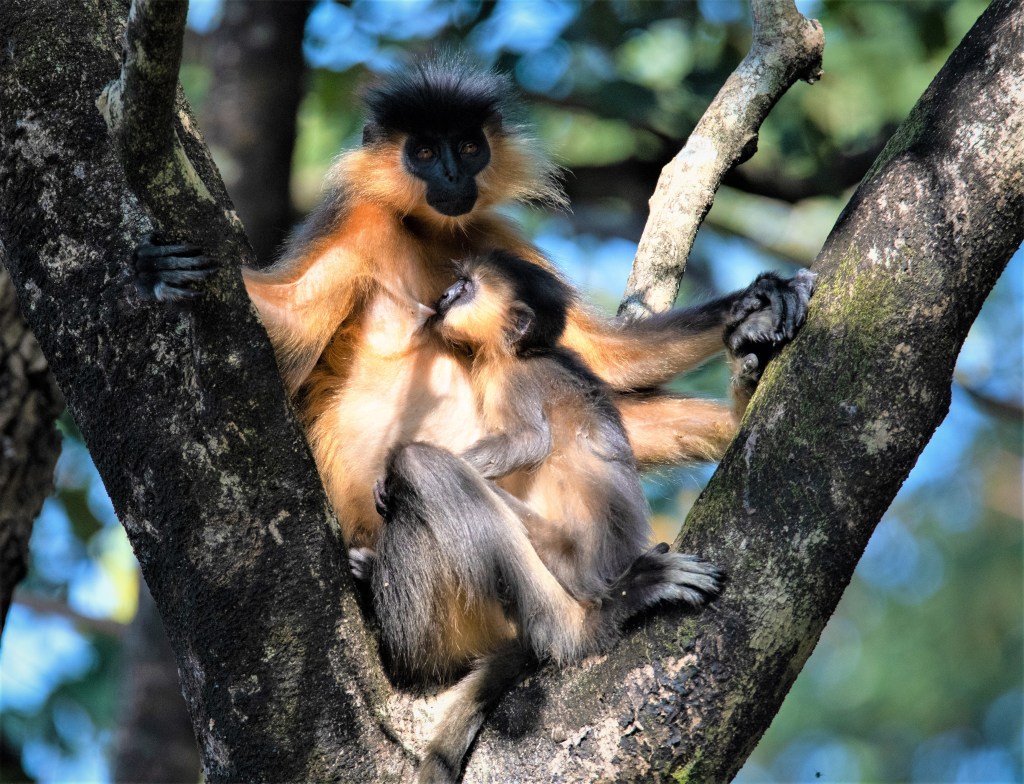
Capped langur in Manas

Orang National Park is a national park in India located on the northern bank of the Brahmaputra River in the Darrang and Sonitpur districts of Assam. It covers an area of 79.28 km2 (30.61 sq mi). It was established as a sanctuary in 1985 and declared a national park on 13 April 1999. It is rich in flora and fauna, including great Indian rhinocerospygmy hogAsian elephantwild water buffalo and the Bengal tiger. It is the only stronghold of the rhinoceros on the north bank of the Brahmaputra.

One horned rhino in Orang

Kaziranga National Park is a national park in the GolaghatSonitpurBiswanath and Nagaon districts of the state of Assam, India. KNP has 5 ranges. The park, which hosts two-thirds of the world’s Indian rhinoceroses, is a UNESCO World Heritage Site. According to a March 2018 census conducted jointly by the Forest Department of the Government of Assam and some recognized wildlife NGOs, the rhino population in Kaziranga National Park is 2,613. It comprises 1,641 adult rhinos and 385 calves.

In 2015, the rhino population stood at 2,401. Kaziranga National Park was declared a Tiger Reserve in 2006. The park is home to large breeding populations of elephantswild water buffalo, and swamp deer. Kaziranga is recognized as an Important Bird Area by BirdLife International for conservation of avifaunal species which refers as the birds or types of birds found in a specific region, period, or environment. When compared with other protected areas in India, Kaziranga has achieved notable success in wildlife conservation. Located on the edge of the Eastern Himalaya biodiversity hotspot, the park combines high species diversity and visibility.

Kaziranga is a vast expanse of tall elephant grassmarshland, and dense tropical moist broadleaf forests, criss-crossed by four major rivers, including the Brahmaputra, and the park includes numerous small bodies of water. Kaziranga has been the theme of several books, songs, and documentaries. The park celebrated its centennial in 2005 after its establishment in 1905 as a reserve forest.

Indo-Chinese roller in Kaziranga

To know, how the ecotourism based on OECM contributes to inclusive ecotourism read Pseudo Ecotourism in the Shadow of the Bengal Tiger.

Ecotourism for sustainability

During my solo journey exploring the deserts of western India, I met two conservation crusaders who have successfully created ecotourism and wildlife photography opportunities in their respective areas. Areas that were otherwise considered wasteland. I realized the power and importance of community involvement in ecotourism and conservation. Then I further refined the concept of alternative ecotourism to regenerative and inclusive ecotourism.

Pseudo Ecotourism was awarded as the Nonfiction book of the year and displayed at Kolkata Literary Carnival 2025

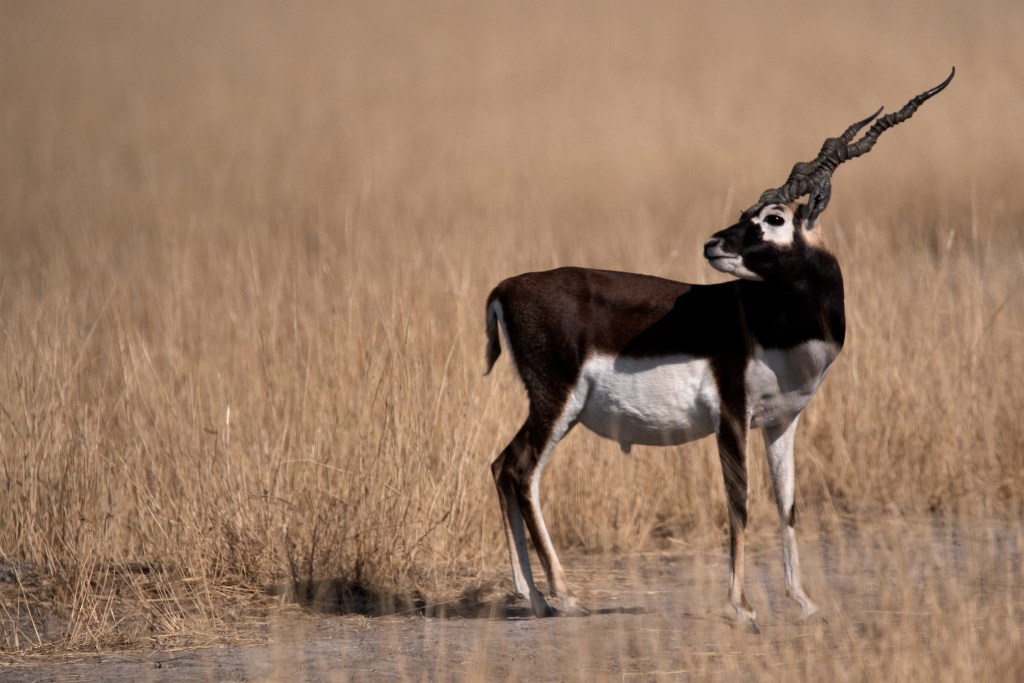
Tal Chhapar Sanctuary is a sanctuary located in the Churu district of Northwestern Rajasthan, in the Shekhawati region of India. It is known for blackbucks and is also home to a variety of birds. The sanctuary is 210 km from Jaipur on the fringe of the Great Indian Desert and situated on road from Ratangarh to Sujangarh. The Tal Chhapar sanctuary lies in the Sujangarh Tehsil of Churu District. It lies on the NokhaSujangarh state highway and is situated at a distance of 85 km from Churu and about 132 km from Bikaner. The nearest railway station is Chappar which lies on Degana-Churu-Rewari line of North Western Railways. The nearest airport is Jaipur which is 215 km from Chappar.

A male black buck at Tal Chhapar
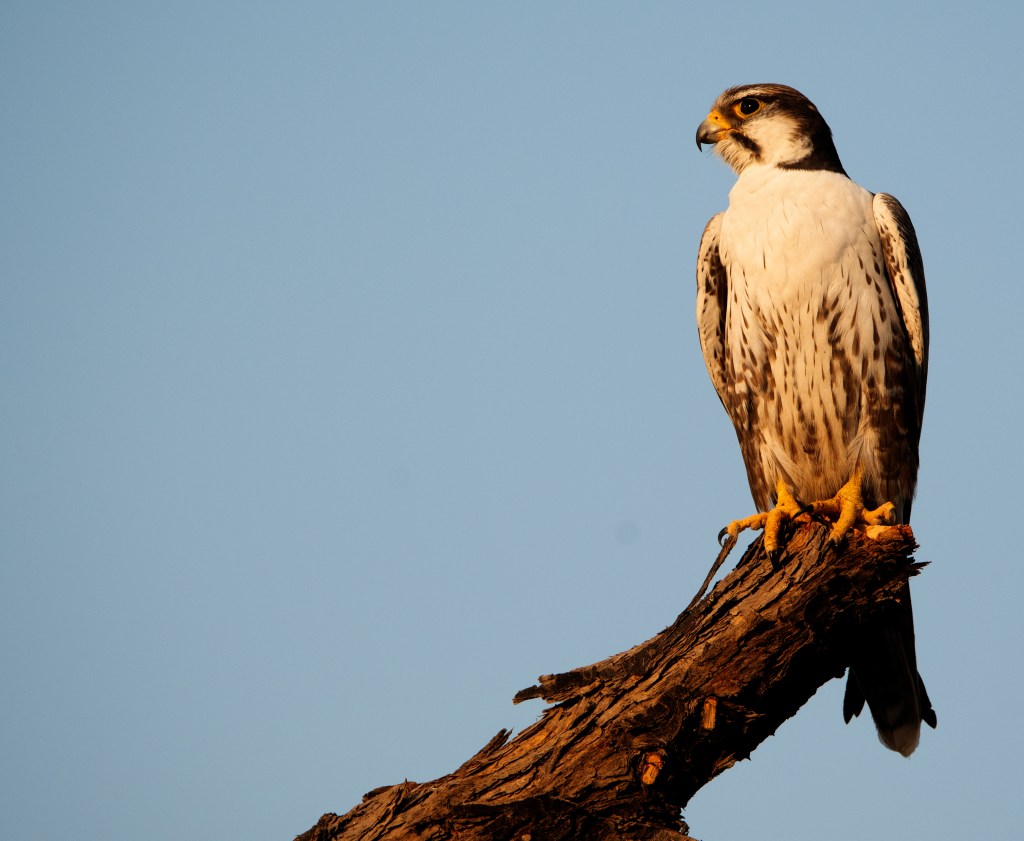
A lagger falcon at Tal Chhapar

Desert National Park is a national park in the Indian state of Rajasthan, near the towns of Jaisalmer and Barmer. It is one of the largest national parks, covering an area of 3,162 km2 (1,221 sq mi) in the Thar DesertSand dunes form around 44% of the park. The major landform consists of craggy rocks and compact salt lake bottoms, intermedial areas and fixed dunes. It was gazetted in 1980. Despite a fragile ecosystem, it harbours an abundance of birdlife, both migratory and resident birds, including short-toed eagletawny eaglespotted eaglelaggar falconkestrelsand grouse and great Indian bustard. Desert National Park has a collection of fossils of animals and plants which are 180 million years old. Some fossils of dinosaurs which are 60 million years old were found in the area.

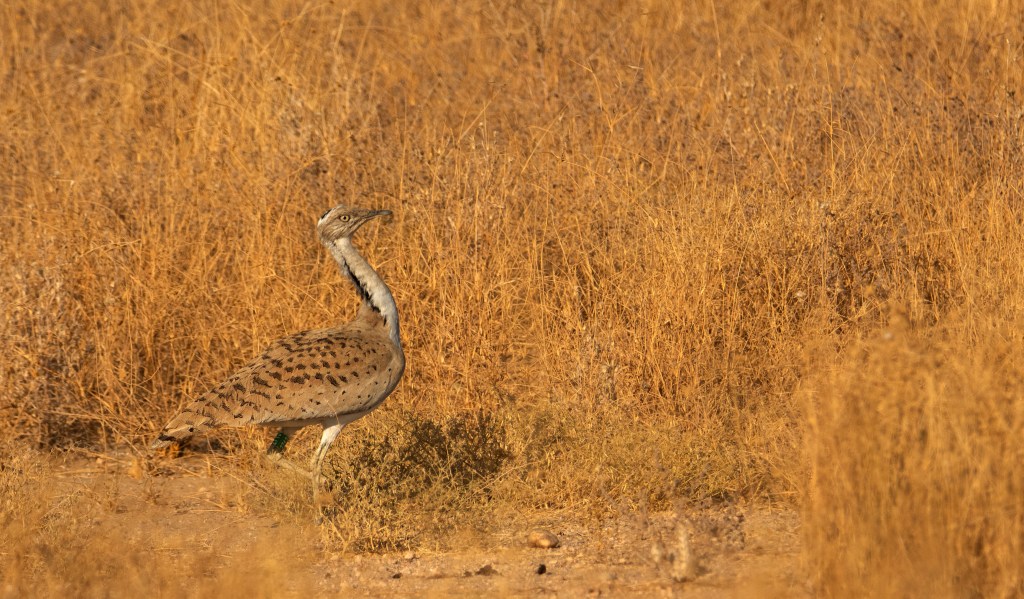
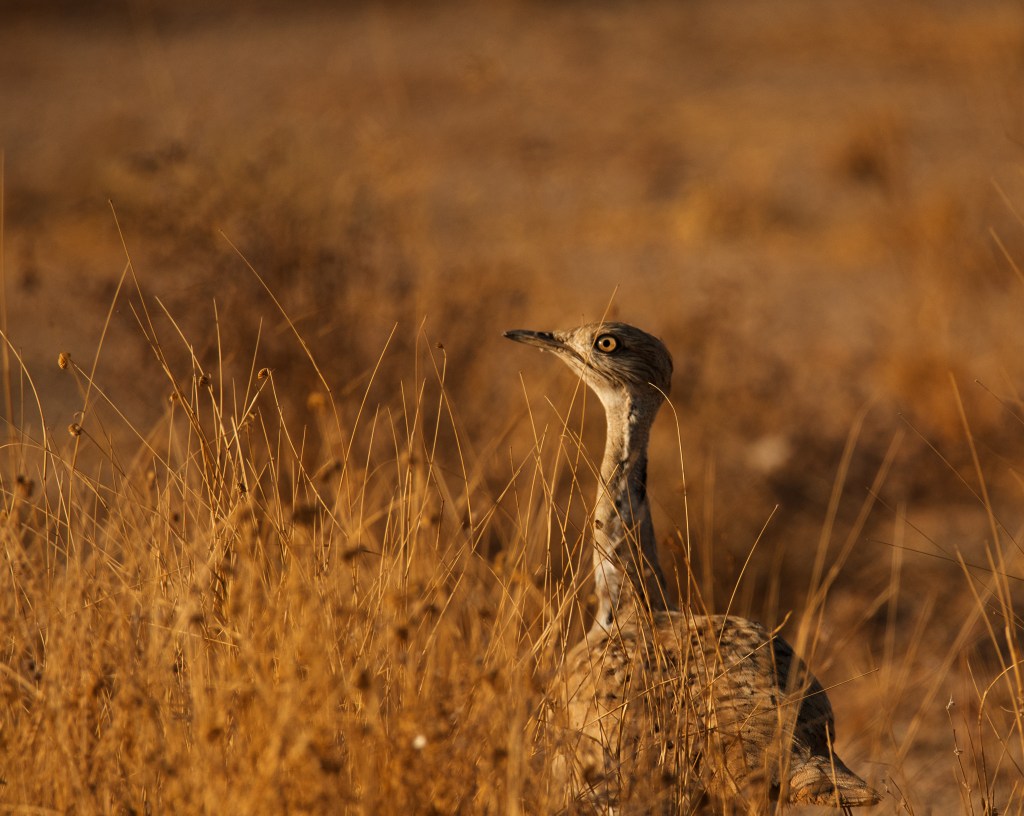
Mcqueen bustard at DNP
GIB at DNP

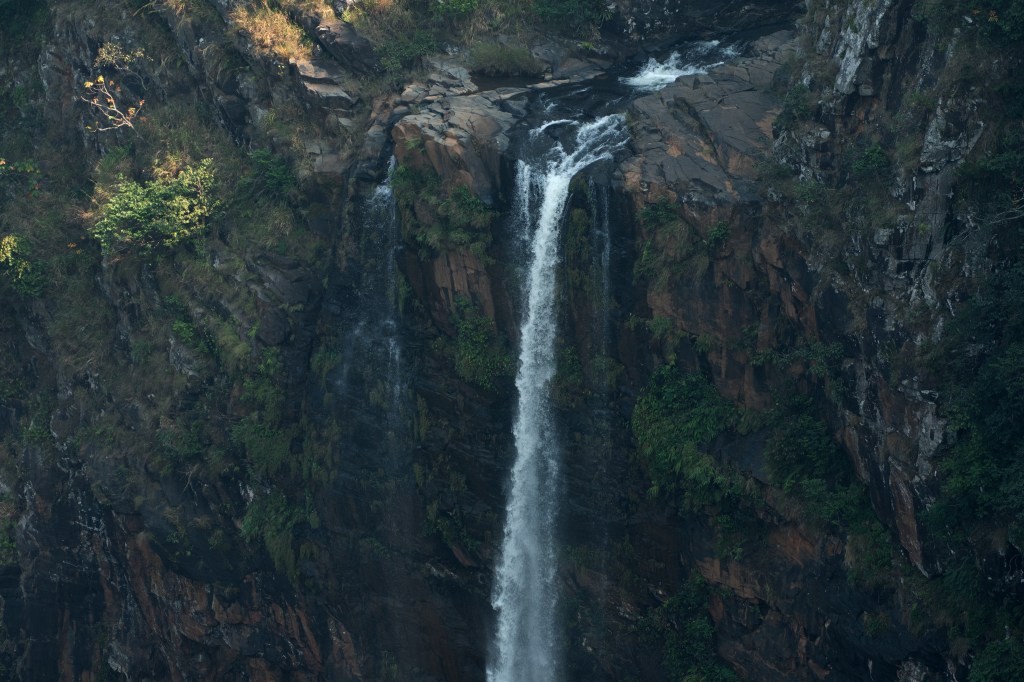
Simlipal National Park (ISOŚimiḷipāḷa Jātīya Udyāna) is a national park and tiger reserve in the Mayurbhanj district in the Indian state of Odisha covering 2,750 km2 (1,060 sq mi). It is part of the Mayurbhanj Elephant Reserve, which includes three protected areas, Similipal Tiger Reserve, Hadgarh Wildlife Sanctuary with 191.06 km2 (73.77 sq mi) and Kuldiha Wildlife Sanctuary with 272.75 km2 (105.31 sq mi). Simlipal National Park derives its name from the abundance of red silk cotton trees growing in the area. The park is home to Bengal tigerAsian elephantgaur, and chausingha. This protected area is part of the UNESCO World Network of Biosphere Reserves since 2009.

water falls inside Simlipal

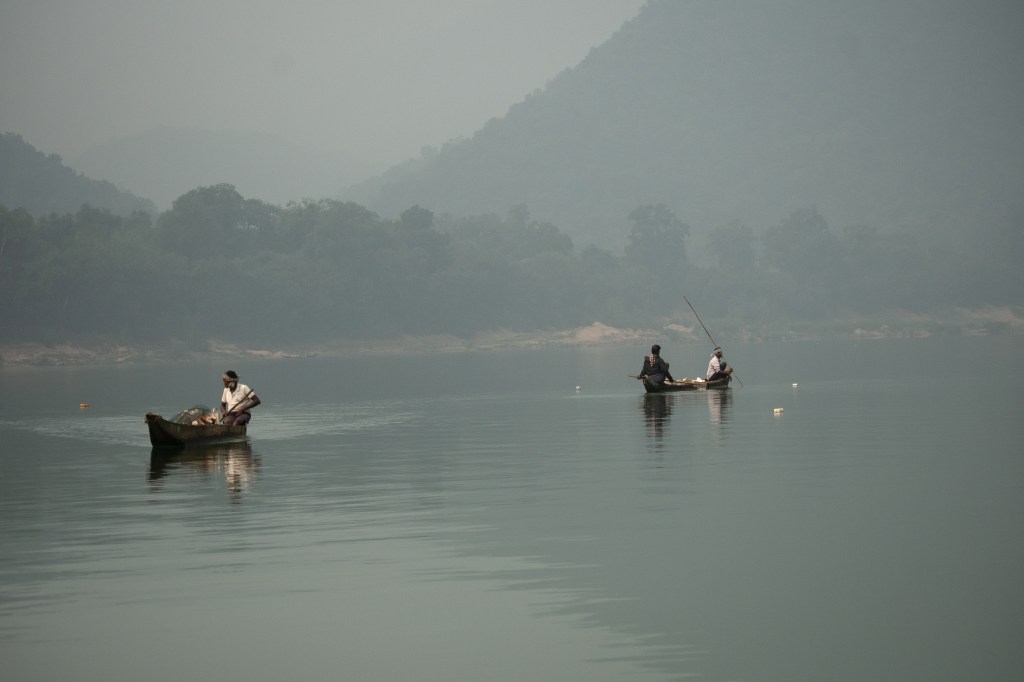
Satkosia Gorge is a gorge in eastern OdishaIndia, carved by the Mahanadi River. The gorge is located within the Satkosia Tiger Reserve which is a United nations Protected area. It is also a Ramsar site designated in 2021.

Satkosia Gorge

To know more on how ecotourism contributes to socio-environmental aspects of this planet, read Pseudo Ecotourism in the Shadow of The Bengal Tiger.

Great Indian Tiger Show

As I continued my tiger tourism and photography in Central Indian tiger reserves, I saw the ugly face of commodity fetishism which had converted ecotourism into pseudo ecotourism. I saw how commodity fetishism stricken urban affluent wildlife photographers and ecotourists do not hesitate to perform unethical practices to get their desired tiger images.

A female tiger of Tadoba

Ranthambore National Park is a 1,334 km2 (515 sq mi) large national park in the Indian state of Rajasthan. It is bounded to the north by the Banas River and to the south by the Chambal River. It is named after the historic Ranthambore Fort, which lies within the park. Ranthambore National Park was established as the Sawai Madhopur Game Sanctuary in 1955, initially covering an area of 282 km2 (109 sq mi). It was declared one of the Project Tiger reserves in 1973.

A female tiger at Ranthambhore snarling at tourists
Territory marking

Bandhavgarh National Park is a national park of India, located in the Umaria district of Madhya Pradesh. Bandhavgarh, with an area of 105 square kilometres (41 sq mi), was declared a national park in 1968 and then became Tiger Reserve in 1993. The current core area is spread over 716 square kilometres (276 sq mi).

This park has a large biodiversity. The park has a large breeding population of leopards, and various species of deer. Maharaja Martand Singh of Rewa captured the first white tiger in this region in 1951. This white tiger, Mohan, is now stuffed and on display in the palace of the Maharajas of Rewa. Historically villagers and their cattle have been at a threat from the tiger. Rising mining activities around the park are putting the tigers at risk. The park derives its name from the most prominent hill of the area, which is said to have been given by Lord Rama to his brother Lakshmana to keep a watch on Lanka (Bandhav = Brother, Garh = Fort). The fort was built by a Gond Dynasty king.

A male tiger at Bandhabhgarh
Chasing tiger by elephant

What was transformed after witnessing this great Indian tiger show and how? To know that read my book on “Inclusive Ecotourism”

Tiger Economy

When a buyer invests in any commodity, they expect a return as promised by the seller. After parting with Vedavyasa, I had emerged as a solo explorer venturing into BRT and Kabini of Western Ghats and Sariska of central India. There I experienced the tiger economy in very different ways and understood the resulting stress on the tiger and its habitat.

After witnessing the commodity fetishism in so-called glamorous tiger reserves of India, I encountered with a Conservation Crusader Couple at Amrabad Tiger Reserve, India’s second largest tiger reserve. They were promoting the concept of “inclusive ecotourism” to counter tiger centric ecotourism.

Listen my conversation with them

Me with Swetha, Akhil and a local Chenchu tribal boy at Amrabad

The Biligirirangana Hills or Biligirirangan Hills (as referred to in biology and geology) is a hill range situated in Chamarajanagar District in south-western Karnataka, at its border with Tamil Nadu (Erode District) in South India. The area is called Biligiri Ranganatha Swamy Temple Wildlife Sanctuary or simply BRT Wildlife Sanctuary. It is a protected reserve under the Wildlife Protection Act of 1972. Being close to the Eastern Ghats as well as the Western Ghats, the sanctuary has floral and faunal associations with both regions. The site was declared a tiger reserve in January 2011 by the Government of Karnataka, a few months after approval from India’s National Tiger Conservation Authority.

A crested serpent eagle at BRT

The Kabini River (Kapila River) is one of the major tributaries of the river Cauvery in southern India, It originates near Kavilumpara in Kozhikode district of Kerala state by the confluence of the Panamaram River and the Mananthavady River. It flows eastward through Wayanad district, entering Mysore district of Karnataka, to join the Kaveri River in Mysore district of Karnataka.

The Kabini Forest Reserve is one of the most popular wildlife destinations of Karnataka, due to its accessibility, green landscape surrounding a large lake, and sightings of herds of elephants and tigers. It is 61 km (38 mi) away from Mysuru and 205 km (127 mi) from Bengaluru, and comprises the south-eastern part of Nagarahole National Park. The reserve is spread over 55 acres (22 ha) of forestland, steep valleys, and water bodies. Once a private hunting lodge of the Maharaja of Mysore, Kabini was a popular shikar hotspot for British Viceroys and Indian royalty. There are around 120 tigers, more than 100 leopards, four types of deer, Sloth bear, Indian Gaurs and elephants in the Nagarahole National Park.

A male tiger at Kabini

Sariska Tiger Reserve is a tiger reserve in Alwar districtRajasthan, India. It stretches over an area of 881 km2 (340 sq mi) comprising scrub-thorn arid forestsdry deciduous forests, grasslands, and rocky hills. This area was preserved for hunting, for the Alwar state and was declared a wildlife sanctuary in 1958. It was given the status of a tiger reserve making it a part of India’s Project Tiger in 1978. The wildlife sanctuary was declared a national park in 1982, with a total area of about 273.8 km2 (105.7 sq mi). It is the first reserve in the world with successfully relocated tigers. It is an important biodiversity area in the Northern Aravalli leopard and wildlife corridor.

The park is a part of the Aravalli Range and the Khathiar-Gir dry deciduous forests ecoregion. It is rich in mineral resources, such as copper. In spite of the Supreme Court‘s 1991 ban on mining in the area, marble mining continues to threaten the environment

A female tiger at Sariska

Nagarjunsagar-Srisailam Tiger Reserve is the largest tiger reserve in India. The reserve spreads over five districts, Nandyal DistrictPrakasam DistrictPalnadu DistrictNalgonda District and Mahabub Nagar district. The total area of the tiger reserve is 3,728 km2 (1,439 sq mi). The core area of this reserve is 1,200 km2 (460 sq mi). The reservoirs and temples of Srisailam are major attraction for many tourists and pilgrims. It is the largest tiger reserve forest in India and is located inside Nallamala forest area.

Vast landscape of Nagarjunsagar Srisailam

Amrabad is a Mandal in Nagarkurnool districtTelangana It is the largest mandal in the district area-wise, but population density is less. Large portions of the mandal is occupied by Nallamala forests. Amrabad also served as the headquarters of the taluka before separate mandals were formed. It is inhabited by tribal population, mostly Chenchus.

Nilgai at Amrabad

To know what I discovered as “tiger economy” read my book

Fame breeds arrogance

This success (of tiger sighting) repeats itself in the forests of Corbett Park, and we conclude that today’s tigers in the wild are not as ferocious as described in stories of Jim Corbett. We were engulfed by commodity fetishism for tiger photography and tourism.

We visited Corbett Park in April 2018 and then in Nameri Tiger Reserve of Assam in December 2018. In Balipara of Assam the miserable side of Vedavyasa was unfolded in front of me.

To know, what was that and what happened after that, read Pseudo Ecotourism in the Shadow of the Bengal Tiger

Jim Corbett National Park is a national park in India located in the Nainital district of Uttarakhand state. The first national park in India, it was established in 1936 during the British Raj and named Hailey National Park after William Malcolm Hailey, a governor of the United Provinces in which it was then located. In 1956, nearly a decade after India’s independence, it was renamed Corbett National Park after the hunter and naturalist Jim Corbett, who had played a leading role in its establishment and had died the year before. The park was the first to come under the Project Tiger initiative

A female tiger looking straight to us
Parade of elephants crossing forest path

Nameri National Park is a national park in the foothills of the eastern Himalayas in the Sonitpur District of AssamIndia, about 35 km from Tezpur. Nameri is about 9 km from Chariduar, the nearest village. Nameri shares its northern boundary with the Pakhui Wildlife Sanctuary of Arunachal Pradesh. Together they constitute an area of over 1,000 km2 (390 sq mi), of which Nameri has a total area of 212 km2 (82 sq mi). Nameri National Park was declared as Tiger Reserve in the year 1999-2000, and is the second Tiger reserve of Assam after Manas Tiger Reserve. It has two core areas: Nameri National Park and Sonai- Rupai Wildlife (Satellite Core of the Nameri Tiger Reserve). The river Jia-Bhoroli is the lifeline of Nameri, which flows along the southern boundary of the park from northwest to southeast. In the east, the river Bor-Dikorai is a tributary of river Jia-Bhoroli, flowing along the southern boundary from northeast to southwest.

Jia Bhoroli river at Nameri
Tokay gecko at Nameri

To know more about my book Pseudo Ecotourism in the shadow of the Bengal Tiger, read reviews at Good Reads

https://www.goodreads.com/book/show/212106582-pseudo-ecotourism

Also read sample chapters from the book

The Urban Affluent folks find the easiest side of their hobby to achieve fame and glory!

We discover a way to evade such hardships and decide to roam the forests from the safety and comfort of a safari gypsy. After six successive failed explorations across the forests of Nagarhole, Bandipur, Periyar, Satpura, Pench and Kanha, finally, we succeed in taking the coveted pictures of Bengal Tigers in the deciduous forest of Tadoba and were convinced that that was the easiest way to achieve fame and glory. On the journey, though, I realize how commoditization has created the concept of tiger tourism and photography, that threatens ecotourism potential involving other wildlife species.

Exploration in “Tiger Terrain”

We started our exploration in most popular tiger tourism destination of subcontinent, the so-called “tiger terrain” – The Central Indian landscape. In the May of 2016, we explored Satpura, Pench and Kanha tiger reserves of Madhya Pradesh state of India and in January of 2017 we visited Tadoba Andhari tiger reserve of Maharashtra state of India.

Entry of Satpura through Madhai gate
A leopard cub at Satpura

Satpura Tiger Reserve (STR) also known as Satpura National Park is located in the Narmadapuram district of Madhya Pradesh in India. Its name is derived from the Satpura range. It covers an area of 524 km2 (202 sq mi). Satpura National Park, along with the adjoining Bori and Pachmarhi wildlife sanctuaries, provides 2,200 km2 (850 sq mi) of unique central Indian highland ecosystem. It was set up in 1981.

Herd of sambar at Pench
A golden jackal at Pench

Pench Tiger Reserve or Pench National Park is one of the premier tiger reserves of India and the first one to straddle across two states – Madhya Pradesh and Maharashtra. The reference to Pench is mostly to the tiger reserve in Madhya Pradesh. The portion of the reserve that is in Madhya Pradesh is nestled in the southern slopes of the Satpura range of Central India. Pench Tiger Reserve comprises the Indira Priyadarshini Pench National Park, the Pench Mowgli Sanctuary and a buffer. It is the same forest area portrayed in the famous “The Jungle Book” by Rudyard Kipling.

Spotting tiger pugmark at Kanha
Barasingha at Kanha

Kanha Tiger Reserve, also known as Kanha–Kisli National Park, is one of the tiger reserves of India and the largest national park of the state of Madhya Pradesh. The present-day Kanha area is divided into two protected areas, Hallon and Banjar, of 250 and 300 km2 (97 and 116 sq mi), respectively. Kanha National Park was created on 1 June 1955 and was designated tiger reserve in 1973. Today, it encompasses an area of 940 km2 (360 sq mi) in the two districts Mandla and Balaghat. Together with a surrounding buffer zone of 1,067 km2 (412 sq mi) and the neighbouring 110 km2 (42 sq mi) Phen Sanctuary, it forms the Kanha Tiger Reserve, which is one of the biggest in the country. This makes it the largest national park in central India.

First tiger sighting at Tadoba
Tiger tourism at Tadoba

The Tadoba Andhari Tiger Reserve is a wildlife sanctuary in Chandrapur district of Maharashtra state in India. It is Maharashtra’s oldest and largest national park. Created in 1955, the reserve includes the Tadoba National Park and the Andhari Wildlife Sanctuary. The reserve consists of 577.96 square kilometres (223.15 sq mi) of reserved forest and 32.51 square kilometres (12.55 sq mi) of protected forest. Legend holds that Taru was a village chief who was killed in a mythological encounter with a tiger. Taru was deified and a shrine dedicated to Taru now exists beneath a large tree on the banks of Tadoba Lake. The temple is frequented by adivasis, especially during a fair held annually in the Hindu month of Pausha (December–January).

After our first tiger sighting at Tadoba, we were confident about our path chosen to achieve fame and glory through ecotourism/wildlife photography.

But something was not quite right! What was that? To know read my newly published book Pseudo Ecotourism in the Shadow of the Bengal Tiger.

You can read the review of the book at Good Reads:

https://www.goodreads.com/book/show/212106582-pseudo-ecotourism

The book is available with 20 global distributors. The free sample chapters can be read at:

When urban affluent folks start considering their hobby as the most unique one!

Stricken by the desire for being the most interesting person in the room, after a successful first trip in Gir, we decide to further strengthen this new hobby of wildlife photography, by creating opportunities to live in proximity to nature. Hardships in the tropical rainforest of Periyar tiger reserve made us realize our limitations in living close to nature. However, driven by a hunger for fame and glory, all we desire is to take pictures of the Bengal Tiger in the wild to distinguish ourselves as unique.

Rafting through Periyar River

We named this exploration as “Hiking in Highlands” as Western Ghats can very well be considered as highlands of Indian subcontinent, because of floral and faunal diversity, rain clad mountains, and evergreen forests. The exploration had five segments – Rangnathettu bird sanctuary, Nagarhole National Parks, Bandipur National Park, Eravikulam National Park and Periyar National Park.

Rout map of “Hiking in Highland”

Ranganathittu Bird Sanctuary (also known as Pakshi Kashi of Karnataka), is a bird sanctuary in the Mandya District of Karnataka in India. It is the largest bird sanctuary in the state, 40 acres (16 ha) in area, and comprises six islets on the banks of the Kaveri river. The sanctuary has been designated on 15 February 2022 as a protected Ramsar site since 2022. Ranganathittu is located 3 km (1.9 mi) from the historic town of Srirangapattana and 16 km (9.9 mi) north of Mysore. The sanctuary attracted about 3 lakh visitors during 2016–17.

A spot-billed pelican at Ranganathettu

Nagarahole National Park is a national park located in Kodagu district and Mysore district in Karnataka, India. This park was declared the 37th Tiger Reserve of India in 1999. It is part of the Nilgiri Biosphere Reserve. The Western Ghats Nilgiri Sub-Cluster of 6,000 km2 (2,300 sq mi), including all of Nagarhole National Park, is under consideration by the UNESCO World Heritage Committee for selection as a World Heritage Site. The park has rich forest cover, small streams, hills, valleys and waterfalls, and populations of Bengal tigergaurIndian elephantIndian leopardchital and Sambar deer.

Spotted deer at Nagarhole
Herd of elephants in Nagarhole

Bandipur National Park is a national park covering 868.63 km2 (335.38 sq mi) in Chamarajnagar district in the Indian state of Karnataka. It was established as a tiger reserve under Project Tiger in 1973. It is part of the Nilgiri Biosphere Reserve since 1986. The Maharaja of the Kingdom of Mysore created a sanctuary of 90 km2 (35 sq mi) in 1931 and named it the Venugopala Wildlife Park. The Bandipur Tiger Reserve was established under Project Tiger in 1973 by adding nearly 800 km2 (310 sq mi) to the Venugopala Wildlife park.

Leopard on tree at Bandipur

Eravikulam National Park is a 97 km2 national park located along the Western Ghats in the Idukki and Ernakulam districts of Kerala in India. The park is situated between 10º05’N and 10º20′ north, and 77º0′ and 77º10′ east and is the first national park in Kerala. It was established in 1978. Eravikulam National Park is administered by the Kerala Department of Forests and Wildlife, Munnar Wildlife Division, which also runs the nearby Mathikettan Shola National ParkAnamudi Shola National ParkPambadum Shola National ParkChinnar Wildlife Sanctuary and the Kurinjimala Sanctuary.

Nilgiri Tahr at Eravikulam

Periyar National Park and Wildlife Sanctuary (PNP) is a protected area located in the districts of Idukki and Pathanamthitta in KeralaIndia. It is an elephant and a tiger reserve. The protected area encompasses 925 km2 (357 sq mi), of which 305 km2 (118 sq mi) of the main zone was declared as the Periyar National Park in 1982. The park is a repository of rare, endemic, and endangered flora and fauna and forms the major watershed of two important rivers of Kerala: the Periyar and the Pamba. The park is located high in the Cardamom Hills and Pandalam Hills of the south Western Ghats along the border with Tamil Nadu. It is 4 km (2.5 mi) from Kumily, approximately 100 km (62 mi) east of Kottayam, 110 km (68 mi) west of Madurai and 120 km (75 mi) southeast of Kochi.

Source of Information: Wikipedia

Hiking in Highlands – through dense forest of Periyar

In real sense the quest for Bengal Tiger was started by my friend and me, at 6:30 in the morning of 2nd December 2015 from the Bandipur National Park. Although Bandipur National Park was our first dedicated venture in the shadow of Bengal Tiger, but technically the exploration in tiger habitat started from another national park of Western Ghats – the Nagarhole National Park. The Kabini side of the park is famous for sighting of melanistic leopard – commonly known as Black Panther. However, we did not go to Kabini. In the morning of 30th November 2015, both of us with our driver cum “Man Friday” Purushottam, reached at the Veeranahosahalli range of Nagrahole National Park from our base camp at Jungle Inn resort. Before coming to Nagarhole, en route, we visited Ranganathettu, the largest bird sanctuary of Karnataka, situated on the bank of Cauvery River.

After finishing our exploration in Bandipur, on same day afternoon, we came back to Bangalore and took an overnight bus to reach Munnar on next day morning. After spending next whole day, exploring Eravikulam National Park, we reached forest rest house at Thekkady in the evening of 4th December. On 5th December at 9:00 am we reached at the check post of Periyar Tiger Reserve to start one of the most adventurous and challenging forest hiking of this country, the Periyar Tiger Trail, with a hope that our bad luck for sighting tiger would end there.

To know what happened in that exploration, in the Highlands of Indian subcontinent, and how my life started changing after that trip, read my recently published book.

The book is now available through seventeen global distributors:

Read the review of books in GoodReads:

https://www.goodreads.com/book/show/212106582-pseudo-ecotourism

You can read free sample Chapters at :